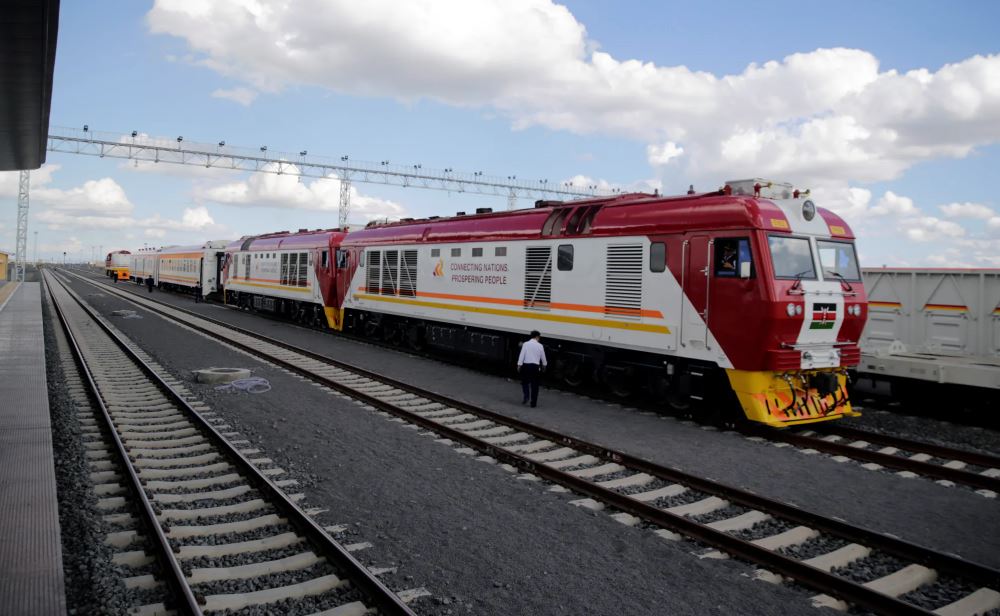
A shift in China’s international Belt and Road Initiative (BRI) from focusing on massive projects such as roads, railways and ports to “small but beautiful” ones has been announced by President Xi Jinping.
Launched in 2013, the initiative provides loans to build infrastructure in partner countries worldwide, with connectivity as its main focus.
Indonesia is BRI’s biggest recipient in Southeast Asia The initiative has helped the country finance Southeast Asia’s first high-speed train project and poured billions of dollars of investment into nickel processing, unlocking a critical mineral asset.
As a scholar in political economy and a former government relations consultant working closely with the Indonesian business sector, I’ve been cosidering what the “small-but-beautiful” approach means for Chinese investment in Indonesia.
What does “small-but-beautiful” BRI mean?
This shift in BRI strategy signifies a focus on projects that are of a smaller scale more efficient and less risky. It is a sensible move for China, considering the global economic slowdown, the country’s moderating domestic economy, and trade tensions with the US.
It is also an attempt to repair China’s global image, amid fears it is seen as a loan shark. Several countries, such as Zambia and Sri Lanka, have already gone into default. China’s reputation will suffer if too many countries fail to pay debts.
Defaults are a liability for the BRI cash flow and the Chinese economy. Beijing should find reliable debtors with solid and promising economic performance. That is precisely what Beijing sees in Jakarta: stable politics, a growing domestic market and pragmatic economic policies.
Chinese state investment in Indonesia
China’s state-driven investment in Indonesia focuses on public infrastructure project run by Indonesian state-owned enterprises and funded by Chinese state-owned lenders. The Jakarta-Bandung high-speed train is an example of China’s investments in Indonesia.
Indonesia received a loan from the China Development Bank for the project and began construction in 2016. The project hit a US$2 billion cost overrun due to problems in its land acquisition and feasibility study.
Due to the ballooning costs, China asked for financial reassurance from the Indonesian government. This prompted the use of the state budget the public having been promised that the project would not touch any government funds.
This might set a precedent for future Chinese investment requiring state collateral – especially given Indonesia’s plan to persuade China to invest in Indonesia’s new capital project in East Kalimantan.
Indonesia has asked China to chip in to the US$35-billion project, which has struggled to secure investment. There has been no formal answer from the Chinese on the request thus far. However, investing in the new capital – which is far bigger and riskier than the high-speed railway project – does not fit the “small-and-beautiful” approach due to its high risks.
China may still opt to invest in the mega-project, but a more modest input seems more likely. And as part of risk sharing, Indonesian government collateral will be likely critical for its willingness to invest.
The Chinese private sector
While Chinese state-owned firms focus on funding public infrastructure projects, its private sector is more profit-oriented. This means that changes in BRI – which now emphasises more on less risky, bankable projects – is unlikely to affect Chinese private investment in Indonesia.
One of the critical projects between the two countries’ private sectors is a joint venture between Tsingshan Holding Group Company Limited, the China-based biggest private investor in nickel processing, and Merdeka Copper and Gold.
Close relationships with domestic tycoons have helped Chinese private sector firms navigate Indonesia’s planning rules and guide the engagement with the country’s domestic politics.
Chinese private companies such as Tsingshan are also backed by their state-owned firms in their Indonesian ventures. The Morowali Industrial Park in Central Sulawesi, Tsingshan’s most prominent project and the largest nickel processing park in Asia, is funded with loans from Chinese state-owned banks. The park’s processing technology contractor is mainly run by a Chinese state-owned subsidiary.
The Chinese state-owned companies find Tshinghan and other Chinese private sector operators successful in navigating their investment in complex and highly political sectors such as natural resources and critical minerals processing due to their strong links with Indonesia’s powerful politicians and business people.
Chipping in via profit-oriented projects run by private companies makes more sense for some Chinese state-owned firms than being directly involved in Indonesia’s public infrastructure projects. The investments driven by Chinese private sectors are relatively more risk-averse and commercially sound.
In the future, we will likely see a continuing trend of Chinese private sectors, supported by their state-owned firms, partnering with domestic business groups to invest in Indonesia’s profitable critical minerals and other sectors.