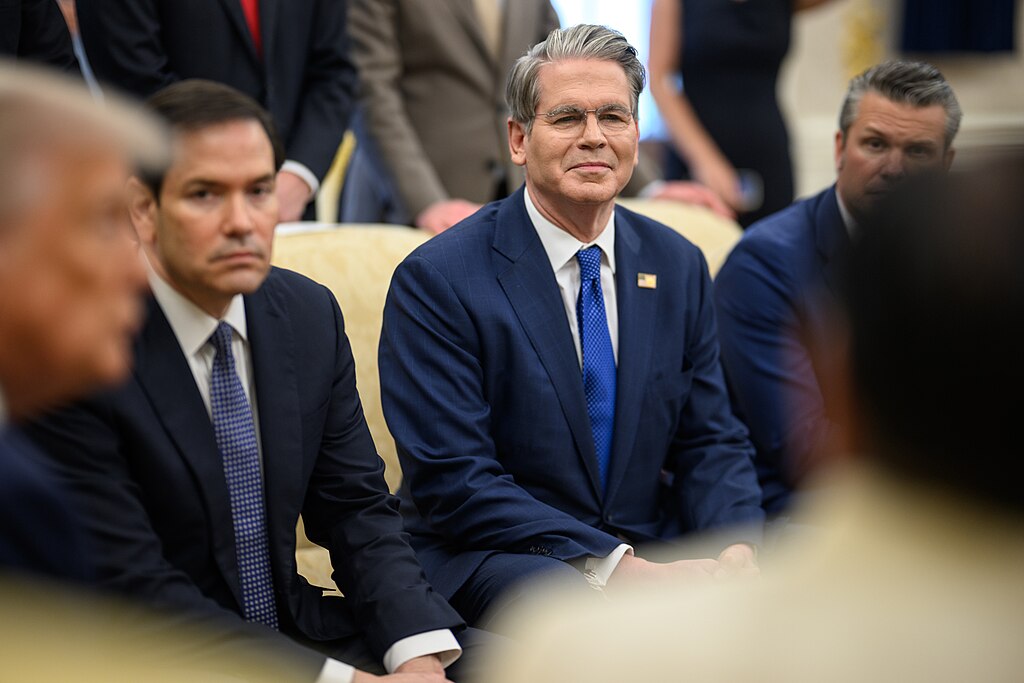
U.S. Treasury Secretary Scott Bessent has urged American allies to intensify efforts against Iran’s financing networks, calling for stronger international coordination to disrupt Tehran’s economic operations and terrorist funding channels.
Speaking at an anti-terrorism financing conference in Paris following the G7 finance leaders meeting, Bessent said European, Middle Eastern, and Asian partners must work closely with Washington to dismantle Iran’s shadow banking system. He emphasized the need to target Iranian financiers, shell companies, front businesses, and overseas banking operations that allegedly help Tehran evade sanctions.
Bessent specifically called on European nations to shut down Iranian bank branches operating within their borders, even if they are not actively taking deposits. According to him, these offices may still play a role in facilitating financial activity tied to Iran’s sanctions evasion efforts.
The remarks came as the U.S. Treasury Department announced new sanctions against Iran’s shadow tanker fleet, a foreign currency exchange network, and several front companies accused of helping the country bypass restrictions. The sanctions are part of the Trump administration’s broader “Economic Fury” campaign, which aims to weaken Iran’s financial infrastructure and pressure Tehran amid escalating regional tensions.
The Treasury Department has also intensified actions targeting cryptocurrency transactions linked to Iran, reportedly freezing nearly $500 million in digital assets connected to the Iranian regime.
Bessent said the Treasury plans to modernize its sanctions framework by removing outdated or ineffective designations from the Specially Designated Nationals (SDN) List. The goal is to help financial institutions focus on more advanced terrorist financing and sanctions evasion schemes.
He stressed that sanctions should remain strategic and flexible rather than punitive toward civilian populations. Bessent added that long-term sanctions without measurable behavioral changes can create unintended humanitarian and economic consequences.
The Treasury chief cited recent policy adjustments toward Syria and Venezuela as examples of how the U.S. may revise sanctions policies when political conditions change.