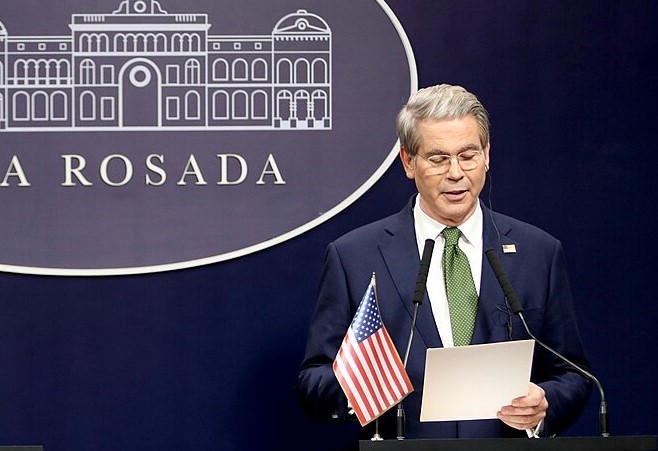
U.S. Treasury Secretary Scott Bessent announced on Monday that he plans to encourage G7 finance ministers to strengthen and maintain a coordinated sanctions regime aimed at cutting off funding tied to Iran’s military activities. Bessent stated that the sanctions effort is intended to prevent financial resources from supporting what he described as Iran’s “war machine,” highlighting Washington’s continued focus on increasing economic pressure on Tehran.
The comments come as global leaders continue to monitor geopolitical tensions in the Middle East and evaluate the effectiveness of international sanctions policies. Bessent emphasized the importance of cooperation among G7 nations, suggesting that unified financial restrictions could play a critical role in limiting Iran’s access to global funding channels.
During his remarks, Bessent also discussed recent diplomatic engagement between the United States and China. He described last week’s trip involving a U.S. delegation to China, led by President Donald Trump, as “very successful.” While he did not provide detailed outcomes from the visit, the statement signals optimism surrounding ongoing communication between the world’s two largest economies.
The visit reportedly focused on economic cooperation, trade relations, and broader international financial issues. Analysts view the positive tone from U.S. officials as a possible indication of improved dialogue between Washington and Beijing following periods of economic uncertainty and trade tensions.
Bessent’s remarks underscore the Trump administration’s continued emphasis on international coordination in addressing global security and economic challenges. The upcoming G7 finance ministers’ discussions are expected to include topics such as sanctions enforcement, global economic stability, inflation, and international trade policies.
As geopolitical developments continue to shape global markets, investors and policymakers will closely watch both the G7 meetings and future U.S.-China negotiations for signals on international economic strategy and diplomatic relations.