New Zealand’s government is preparing deep public sector spending cuts as it aims to strengthen its economic reputation before the country’s closely contested November 2026 election. Finance Minister Nicola Willis announced on Tuesday that the government plans to reduce thousands of public service jobs while avoiding pre-election cash handouts in the upcoming national budget.
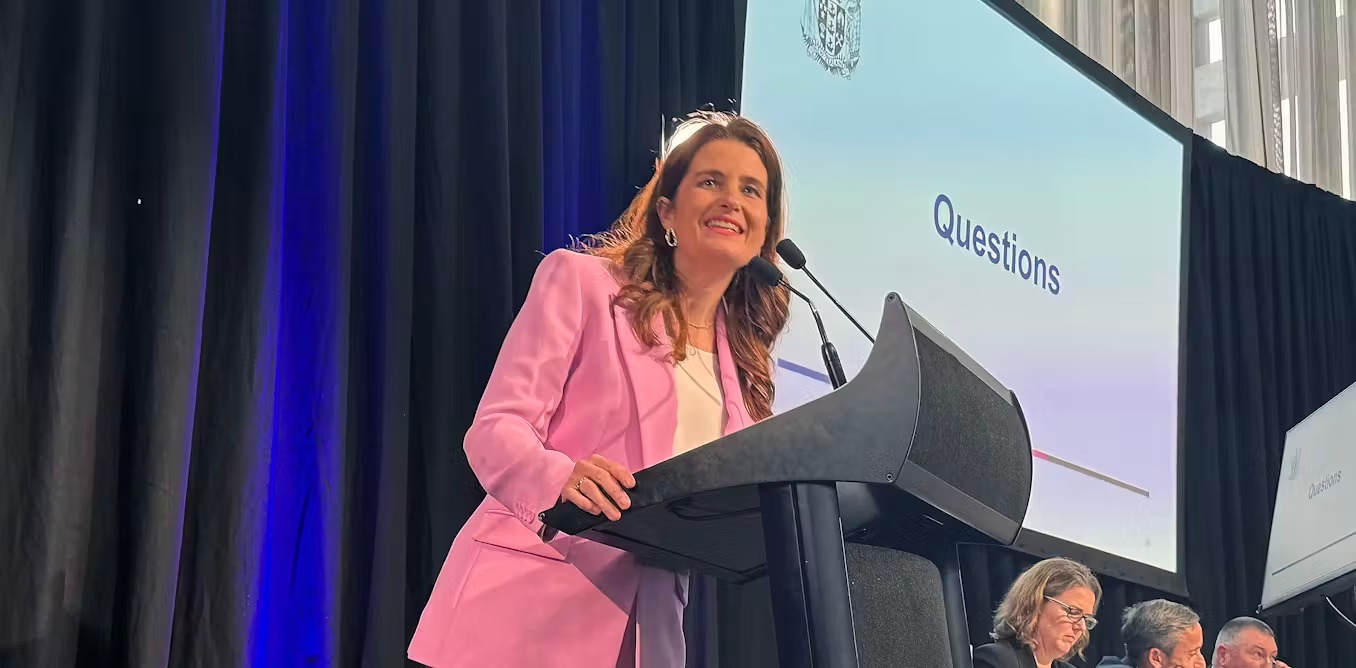
Speaking at a Business North Harbour event, Willis said the coalition government intends to lower the number of core public service employees to no more than 55,000 full-time workers by July 2029. The move would cut around 8,700 positions compared to figures recorded in December last year.
According to Willis, the goal is to return the size of New Zealand’s public service workforce to roughly 1% of the national population, which she described as a historic benchmark. Essential frontline sectors including healthcare, education, and law enforcement will not be affected. Teachers, nurses, doctors, police officers, and employees of Crown entities are excluded from the planned reductions.
The New Zealand budget, scheduled for release on May 28, will also include operating budget cuts for most government agencies. Departments are expected to reduce spending by 2% next year, followed by additional 5% cuts over the following two years. The government expects these measures to save approximately NZ$2.4 billion during the forecast period.
Willis defended the fiscal tightening by pointing to rising public debt, global economic uncertainty, and annual debt servicing costs estimated at NZ$9 billion. She stressed that the government would avoid “free” spending promises or election giveaways, arguing that New Zealand cannot afford another period of excessive public spending.
The government recently confirmed that operating spending for the 2026-27 fiscal year would be set at NZ$2.1 billion, lower than previous forecasts, while capital spending will increase to a net NZ$5.7 billion.