


 Anthropic Expands Claude Access for Cyber Defense Teams
  LG Electronics Shares Slide as Q3 Profit Misses Estimates
  Jay Clayton Named Trump’s AI Czar as XRP Past Resurfaces
  BofA Raises Coinbase Stock Target to $203 on Stablecoin Growth
  Intel Reaffirms Role in Elon Musk’s Terafab Chip Project
  Founders Fund Leads $5M Anvil Token Purchase
  Lucid Q3 Deliveries Miss Estimates as Production Falls 38%
  Fairshake Backs 32 Pro-Crypto House Candidates
  Stellar Leads RWA Tokenization Growth With $36.4M Inflow
  Bitcoin Outflows From Binance Hit Three-Year High as Whales Accumulate
  Ethereum Outperforms Bitcoin as ETH Liquidity Declines
  Peter Brandt Flags Key XRP Breakout at $1.6572
  Meta and Microsoft Cut Internal Claude AI Use
  Marvell Stock Surges on $90 Billion AI Revenue Outlook
  JPMorgan CEO Jamie Dimon Warns Mythos AI Raises Cyber Risk Tenfold
  Clearpool Expands to XRP Ledger, Plans CLEAR Token Migration
  Robinhood Buys $25 Million in Bitcoin for Corporate Treasury


 Add as a preferred source on Google

Do you prefer Black Friday or Cyber Monday? The January sales or Amazon’s Prime Day? Or perhaps you like to hold out for a good old fashioned everything-must-go shop clearance.
For whatever your shopping habits, there’s a good chance that you like the idea of bagging a bargain.
The days and weeks before Black Friday reflect this feverish appetite. You can’t look anywhere online without being bombarded with adverts and offers of supposedly special deals in the run up to Christmas.
And bricks-and-mortar retailers love putting on a sale too. Joining a long queue of fellow bargain hunters outside big shops the day after Christmas has become something of a festive tradition.
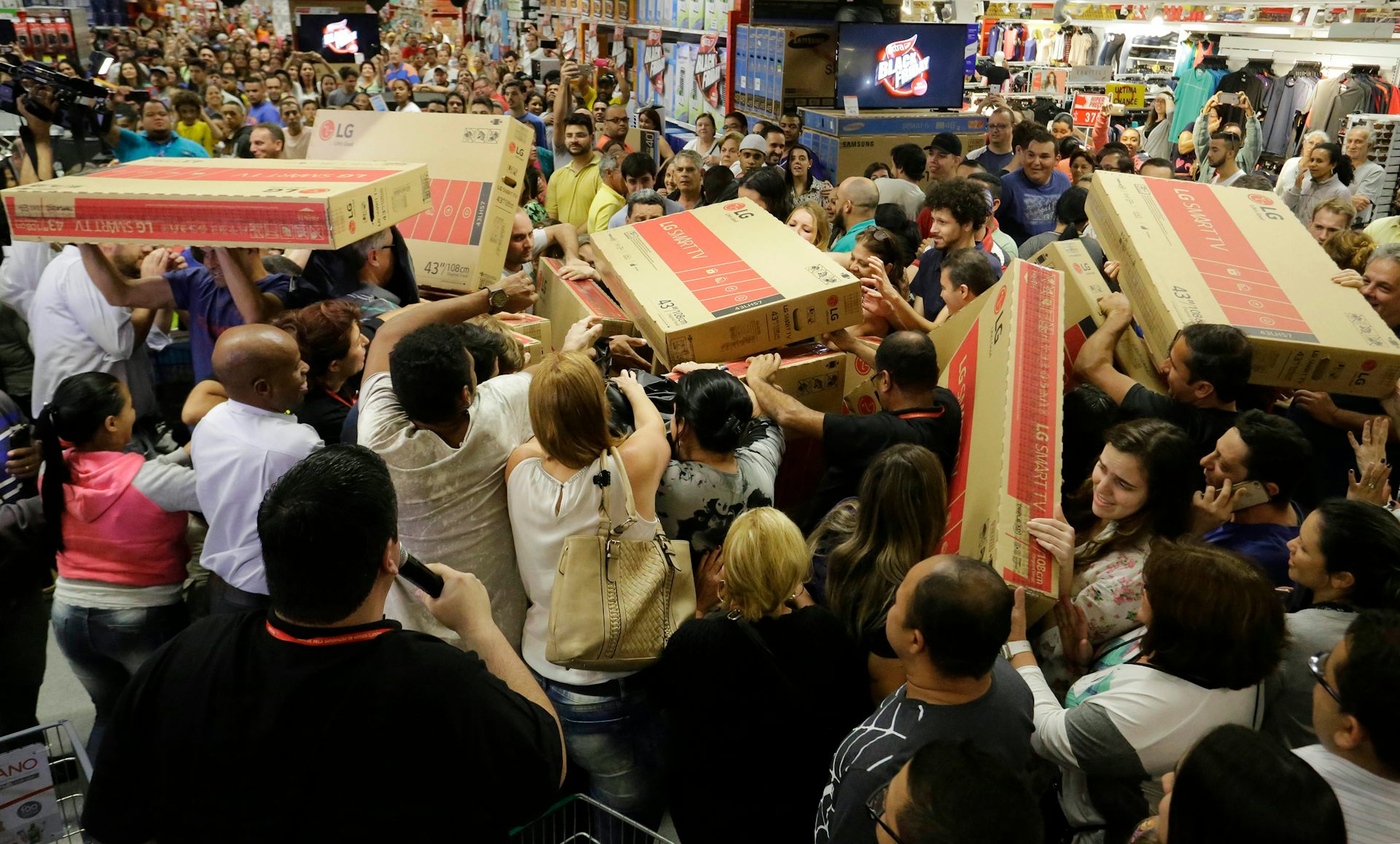
But it is not always an entirely civil event. Just recently, when the premium French kitchenware brand Le Creuset held a flash sale in the English town of Andover, police were called to manage the crowds. People had travelled from miles away and waited for hours to get their hands on some discounted swanky pots and pans.
Previous Black Friday sales have seen bargain hunters embroiled in physical battles over the most popular products. In the US a website was once set up to keep note of injuries – and even deaths – which happened over the course of the annual shopping event.
It seems then, that discounted goods, whether they are televisions, kitchen gadgets or handbags, are a highly prized feature of modern society.
This is partly down to a chemical response in our brains, which urges us to buy something when we come across reduced prices. When we see a price tag that we perceive as a good deal, the part of our brains that deals with pleasure (the nucleus accumbens) is activated.
This means that people experience a high level of satisfaction when they find and buy a bargain. The nucleus accumbens, together with other reward-related brain regions, also plays a role in emotional processing, largely in combination with the neurotransmitter dopamine.
Dopamine is a neurotransmitter that helps control the brain’s reward and pleasure centres, and is associated with feelings of happiness. When people see pictures of things they wish to buy, the region of the brain with dopamine receptors is activated. They get a dopamine “hit” when shopping, so feel good about what they are doing. Couple this with the fact that dopamine also makes people more impulsive in their decision making, and it is easy to understand why consumers get excited about discounts.
The thrill of the hunt
So if consumers like to feel rewarded and gratified, it’s up to retailers to provide the rewards and gratification. And they work hard to do this, using a variety of strategies to help customers get their dopamine hit. Understanding the psychological underpinnings of shopping is like having a toolkit of persuasion for stores big and small.
One of these tools involves shopping deals that are only available for short periods of time, to generate an extra sense of urgency. This brings even higher levels of adrenaline arousal which makes people feel giddy with excitement at the prospect of landing a bargain, and is one of the reasons we see sales pegged to a particular day or week or month.
A countdown timer on a website has a similar effect, making consumers feel like they might miss out unless they act immediately.
The good news is that consumers can in fact resist their biological urges and restrain themselves not to fall for the appeal of a bargain. However, it does take some self-control.
When faced with a low-priced product, don’t give in to temptation and instantly buy it. Take time to decide.
If you are physically in the shop, and worried about someone else buying it, take the item with you and walk around for a while. Over time, the urgency of your initial reaction will subside. And as the rush settles, you are likely to feel less compelled to buy it.
The same principle applies online. Stop for a moment, move away from your screen and do something else for a while to let the urge to bag a bargain reduce a little. Whatever the item, and however big the discount, you may end up realising that it’s not as essential to your life as your brain initially thought.







