


 Blue Origin New Glenn Rocket Explodes During Launch Pad Test, Delaying Space Ambitions
  NASA Cuts Boeing Starliner Missions as SpaceX Pulls Ahead
  Neuralink Plans High-Volume Brain Implant Production and Fully Automated Surgery by 2026
  SpaceX Prioritizes Moon Mission Before Mars as Starship Development Accelerates
  Trump Administration to Launch Autism Initiatives Targeting Acetaminophen Use and New Treatment Options
  Tabletop particle accelerator could transform medicine and materials science
  FDA Adds Fatal Risk Warning to J&J and Legend Biotech’s Carvykti Cancer Therapy
  Trump and Merck KGaA Partner to Slash IVF Drug Costs and Expand Fertility Coverage
  Is space worth the cost? Accounting experts say its value can’t be found in spreadsheets
  SpaceX’s Starship Completes 11th Test Flight, Paving Way for Moon and Mars Missions
  Trump Administration Releases New UFO Files and Apollo Mission Records


 Add as a preferred source on Google
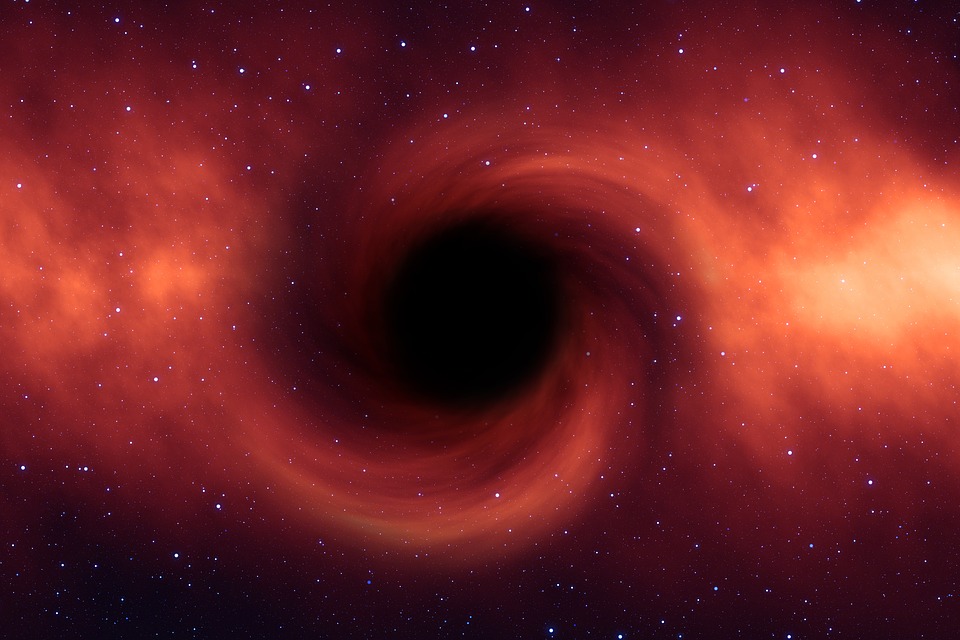
Despite everything that is known about the space phenomenon known as a black hole, this still remains a mystery to scientists due to the endless discoveries made. Recently, some Chinese astronomers discovered a certain kind of black hole that may potentially be a neutron star.
A group of Chinese astronomers claimed to have discovered a certain kind of black hole unlike any other. The black hole they claimed to discover had 70 solar masses, compared to the usual stellar black hole, which normally has a mass 10 times more than the Sun. They discovered this so-called black hole indirectly from the motion of a companion star, and was seen to be orbiting around an invisible object over the course of 80 days. As word broke out of this claim, other astronomers naturally began to assess the discovery for themselves. If this was proven to be true, then it would become a game-changer in the field of stellar evolution.
According to astronomers from the University of Potsdam and the University of Erlangen-Nurnberg, the object that was discovered may not be a black hole per se. Instead, the astronomers say that this may be a massive neutron star or even an ordinary star. However, a group of researchers from Belgium said that the measurements were inaccurate and the mass of this black hole remains undetermined. It is down to the important aspect, which is the companion star referred to as LS V+22 25. It should be noted that the bigger the star, the bigger the black hole should be.
Meanwhile, another discovery was made regarding this enigmatic celestial entity. Researchers from the University of Birmingham said that astronomers should look forward to a breakthrough in terms of spotting and understanding black holes in deep space. This announcement is in line with the European Space Agency or ESA, announcing that they will be unveiling its two major space observatories in 2030. With the launch of these observatories is also the unveiling of the x-ray space telescope.
This decision to begin preparations for this observatory over the course of the current decade would help provide astronomers with the opportunity to further study and understand the events that occur within the universe.







