


 Neuralink Expands Brain Implant Trials with 12 Global Patients
  Eli Lilly’s Inluriyo Gains FDA Approval for Advanced Breast Cancer Treatment
  FDA Pilot Program Eases Rules for Nicotine Pouch Makers
  Blue Origin New Glenn Explosion Could Delay Launch Operations Until 2028
  NASA Partners with Katalyst to Save Swift Observatory with Innovative Docking Mission
  Is space worth the cost? Accounting experts say its value can’t be found in spreadsheets
  Cogent Biosciences Soars 120% on Breakthrough Phase 3 Results for Bezuclastinib in GIST Treatment
  Trump Administration to Launch Autism Initiatives Targeting Acetaminophen Use and New Treatment Options
  Trump Administration Releases New UFO Files and Apollo Mission Records
  China vs. NASA: The New Moon Race and What's at Stake by 2030
  Tabletop particle accelerator could transform medicine and materials science


 Add as a preferred source on Google
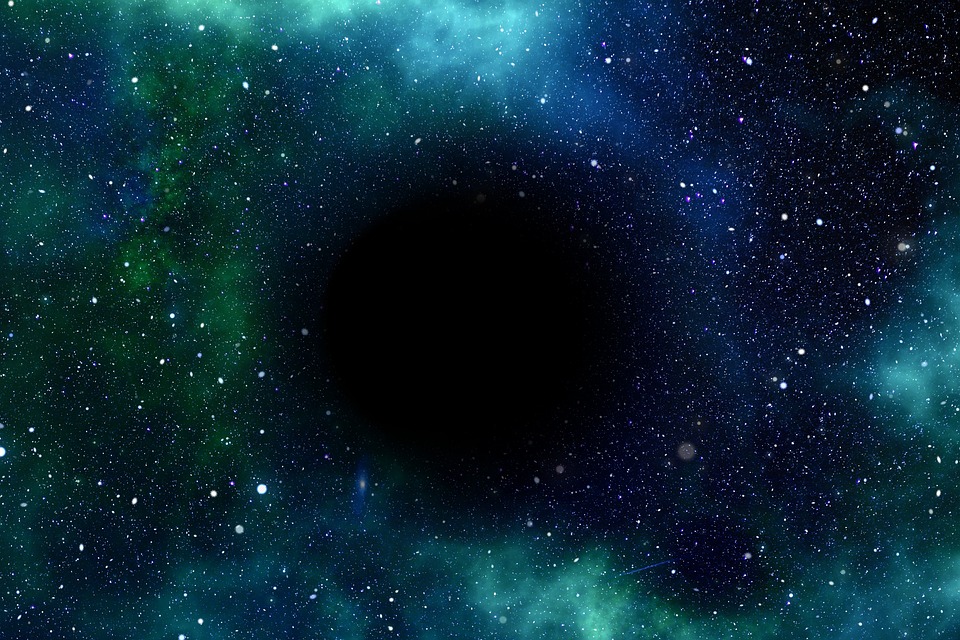
Black holes reside in the heart of galaxies, and in a span of billions of years, can consume everything it can come across, including light. Recently, some scientists have spotted strange celestial objects lurking around the milky way galaxy, seemingly approaching the supermassive black hole.
Express reports that astronomers from UCLA discovered unusual objects close to Sagittarius A. The objects in question look like clouds or clusters of gas but they exhibit the same behavior as stars. Under observation, they found that these objects are getting stretched out and compacted in their orbits because of the gravitational pull of the black hole. The scientists have estimated that the orbital time of these unusual objects is within the range of 100 to 1000 years.
This is not the first time astronomers found strange beings or objects lurking within the galaxy. The first was back in 2005, and the scientists that discovered it have formally referred to it as G1, and five more were found since then, from G1 to G6. According to the researchers, G2, in particular, had a strange signature when it approached the black hole.
While they were not unusual enough for scientists to really take notice, their behavior towards the black hole’s gravitational pull was what got their attention. What these objects are is yet to be determined but the UCLA scientists have theorized that these may be binary stars. Binary stars are two stars that orbit each other and form a cluster of larger stars when they merge.
Meanwhile, black holes, in general, have always been elusive in nature. Now, a report reveals that astronomers have discovered a way to further learn about these celestial entities. Scientists from the European Southern Observatory found clouds of gas that surround these supermassive black holes. Dr. Emanuele Paolo Farina said that these gases are what these black holes consume.
It also bears noting that some of these beings or primordial black holes go back 12 billion years or 12 billion light-years away. These very old black holes are thought to be the remains of the first stars that lit up the universe called the Cosmic Dawn.
Dr. Farina stated, “We are now able to demonstrate for the first time, primordial galaxies do have enough food in their environments to sustain the growth of supermassive black holes and vigorous star formation.”







