


 Dollar Retreats From 18-Month High as Euro Rebounds
  BOJ Raises Interest Rate to 31-Year High as Yen Weakens
  RBI Uses $10 Billion Currency Swaps to Drain Excess Rupee Liquidity
  China Shuts 670 Banks as Bitcoin Eyes Financial Risks
  Fed’s Williams Signals One More Rate Hike Before Year-End
  Zcash Privacy Demand Rises as AI Exposes Bitcoin Transactions
  Robinhood Buys $25 Million in Bitcoin for Corporate Treasury
  Oil Prices Rise as Hormuz Risks Offset IEA Stock Release
  Sector Spotlight: Data Availability and Storage Lead 24-Hour Market Gains
  Kazakhstan and Tether Explore Tenge Stablecoin and RWA Tokenization
  UK House Prices Flat in September as Mortgage Rates Weigh
  Gold Prices Fall as Fed Signals Another Rate Hike
  Oil Prices Rise as Hormuz Attacks Fuel Supply Fears


 Add as a preferred source on Google
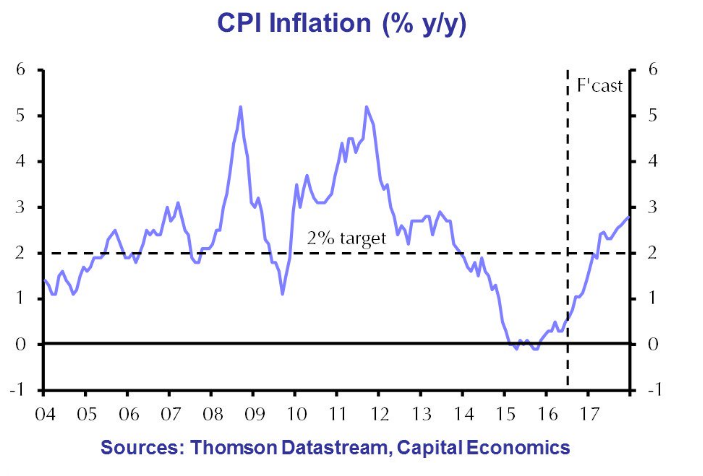
Data released by the Office for National Statistics on Tuesday showed that UK annual inflation rate as measured by the Consumer Prices Index (CPI) rose to 0.6 percent in July from 0.5 percent in June, beating expectations at 0.5 percent. The core inflation gauge (excluding energy, food, alcohol and tobacco) eased a bit to 1.3 percent in July versus 1.4 percent last, in line with expectations.
Today’s inflation report is the first official government data that covers the period after the EU referendum. There was no obvious impact from Brexit on today’s consumer price data, but it’s probably too early to spot signs of Brexit damage. It will be some time before the full effect of the fall in sterling following the Brexit vote feeds into the headline inflation rate. A weaker pound will cause inflation to rise more sharply in the coming months.
The pound is down by more than 12 percent since the EU referendum and almost 19 percent since its 2015 peak. Fall in the value of the pound had increased the cost of imports for manufacturers. Input prices faced by manufacturers rose 4.3 percent in the year to July, compared with a fall of 0.5 percent in the year to June. The cost of imported food materials rose 10.2 percent, and the price of imported metals rose 12.4 percent.
"There is no obvious impact on today's consumer prices figures following the EU referendum result, though the Producer Prices Index (PPI) suggests the fall in the exchange rate is beginning to push up import price faced by manufacturers," said Mike Prestwood, head of prices at the ONS.
Higher inflation will make it harder for the Bank of England to cut interest rates any further. The previously statically low headline inflation reading is now beginning to bounce higher in the first real set of data following the EU referendum vote. Joshua Mahony, of IG says "Inflation data doesn’t yet move the dial for the Bank of England’s monetary policy makers, who have arguably shifted their focus to growth and jobs in the wake of the referendum result."
The pound rallied after inflation rose faster than expected. The pound has gained almost one cent against the US dollar since the inflation report was released, to $1.2993. It has also recovered from three-year low against the euro, and was trading at €1.1506 at around 11:00 GMT, up from €1.1464 earlier.







