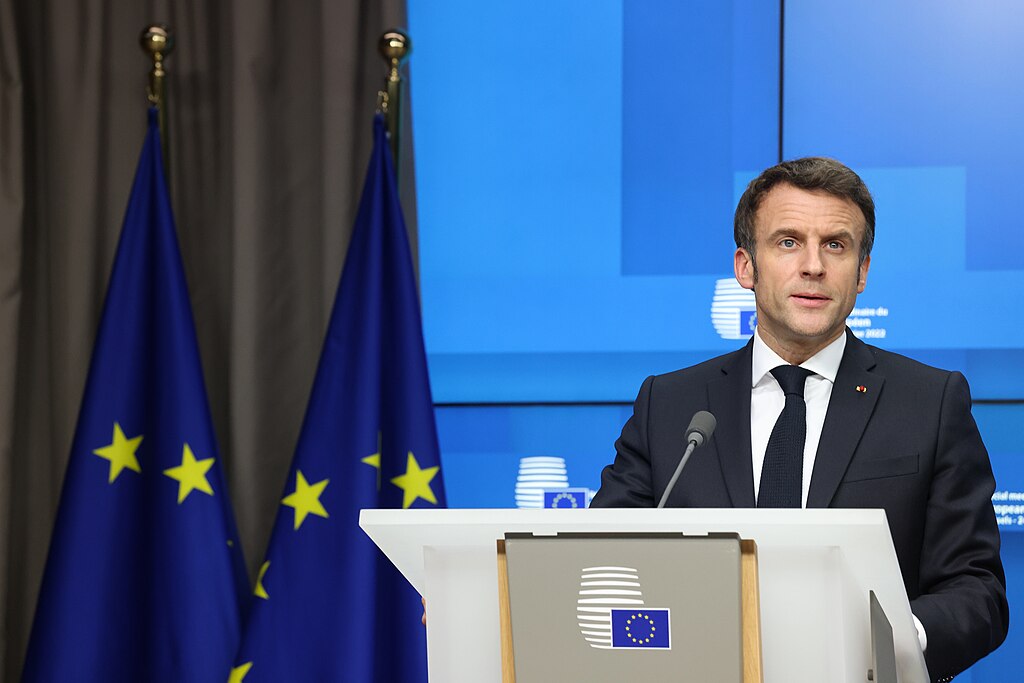
Canadian Prime Minister Mark Carney and French President Emmanuel Macron have agreed to expand defense and industrial cooperation, reinforcing Canada’s growing partnership with Europe as trade tensions with the United States continue to impact the Canadian economy.
During talks in Paris on Friday, Carney announced that Canada and France signed a new agreement to facilitate the exchange of classified information across key sectors, including defense, aerospace, artificial intelligence, and space technology. The deal is expected to improve collaboration between businesses, researchers, and government agencies in both countries while supporting long-term security and innovation goals.
The Paris meeting marked the first stop of Carney’s European trip before traveling to Ireland for a two-day visit. The visit reflects his broader strategy of strengthening alliances with like-minded middle powers, a policy direction he first outlined during the World Economic Forum in Davos earlier this year.
Carney’s approach comes as Canada seeks to reduce economic vulnerabilities caused by ongoing US trade measures. Tariffs on Canadian steel, aluminum, automobiles, and lumber have placed pressure on key industries, prompting Ottawa to diversify its international partnerships and expand market access beyond North America.
Macron emphasized France’s role as a gateway between Canada and the European Union, highlighting opportunities for deeper economic and strategic cooperation. The two leaders also discussed growing defense collaboration as Canada increases military spending and participates in the European Union’s SAFE defense procurement initiative.
Canada is actively evaluating major defense acquisitions, including potential purchases of European-made fighter jets and submarines. Ottawa is reportedly reconsidering its planned procurement of US-built F-35 aircraft and exploring alternatives such as Saab’s Gripen fighter jet from Sweden.
Beyond defense, energy cooperation is also gaining momentum. Several German utility companies have expressed interest in purchasing Canadian liquefied natural gas as new LNG export projects move forward. These developments underscore Canada’s efforts to strengthen economic ties with Europe while reducing reliance on the US market amid an increasingly unpredictable global trade environment.