
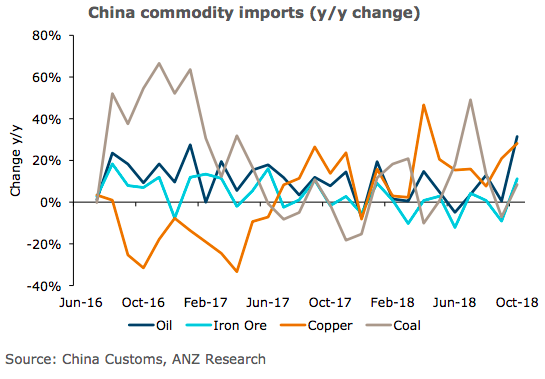
China’s appetite for imported commodities remained strong in October. While most commodities recorded m/m falls, growth remained high on a y/y basis. Copper and crude oil demand was particularly strong, while iron ore and coal recorded solid growth.
"We suspect a combination of robust underlying demand (including a rebound in infrastructure spending) and supply-side reform measures will continue to drive strong volumes," ANZ Research commented in its latest report.
Crude oil imports rose 9.6 percent from September to 40.8mt (~9.97mb/d) in October, as uncertainty around tariffs on US imports and sanctions on Iran eased. Growth was even more impressive on a seasonal basis, at 31.5 percent y/y.
The imposition of tariffs on US imports had little impact on its insatiable appetite for natural gas. Imports rose 25.7 percent y/y to 7.3mt. Imports of copper continued to rebound after a soft patch mid-year. Total volumes reached 423kt, down from September but 28.2 percent, higher than October 17. This backs-up other data – such as falling inventories (included bonded warehouses) and rising premiums – which suggest fundamentals are strong.
Tight scrap markets would also have contributed to this strength. Iron ore imports were marginally down from September but rose 11.2 percent y/y to 88.4mt in October. There is likely to have been so restocking, prior to planned curbs on steel production over the upcoming winter, the report added.

