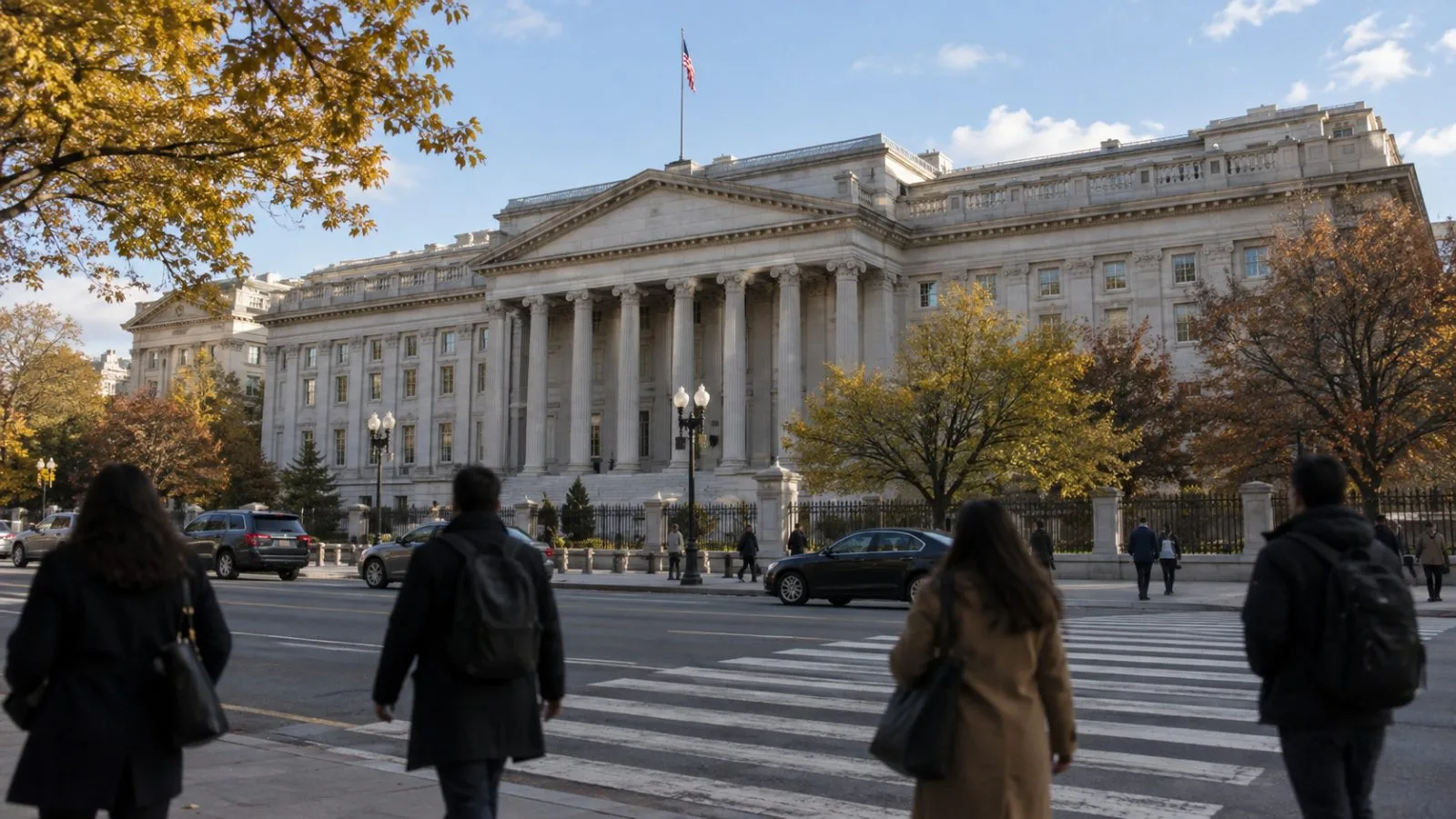
China will issue 300 billion yuan ($45 billion) in special treasury bonds to strengthen the capital positions of eight major state-owned financial institutions, as Beijing looks to bolster financial stability and expand lending to the economy.
The Ministry of Finance said Monday that the capital injection will benefit Industrial & Commercial Bank of China (ICBC), Agricultural Bank of China, China Export-Import Bank, China Export & Credit Insurance Corp., People’s Insurance Company of China, China Life Insurance, China Taiping Insurance Group and China Reinsurance Group.
Officials said the institutions remain financially sound, with stable asset quality and major regulatory indicators within acceptable ranges.
The announcement follows fundraising plans unveiled by leading state lenders. Agricultural Bank intends to raise up to 160 billion yuan, while ICBC plans to secure 100 billion yuan through A-share placements. Both banks will use the proceeds to replenish core Tier 1 capital.
China’s banking sector has been struggling with record-low net interest margins, reducing lenders’ ability to generate capital through retained profits. The sector’s average capital adequacy ratio stood at 15.26% at the end of June, while its average core Tier 1 ratio was 10.72%, according to Bloomberg.
The recapitalization expands Beijing’s broader campaign, launched in 2024, to reinforce the balance sheets of major financial institutions. Bank of China and Postal Savings Bank of China were previously among four lenders receiving a combined $69 billion capital injection financed through sovereign bonds.
Under the latest measures, the government plans to invest 130 billion yuan in Agricultural Bank and 70 billion yuan in ICBC. Additional funding includes 35 billion yuan for China Life, 30 billion yuan for China Eximbank and 15 billion yuan for People’s Insurance.
Stronger capital buffers could allow banks and insurers to provide more financing to households, businesses, infrastructure projects and strategic industries.
The initiative also comes as China tackles risks stemming from its prolonged property downturn, local-government debt and sluggish household demand.
Hong Kong-listed financial stocks showed a muted response, with ICBC and Agricultural Bank declining in early trading while People’s Insurance was broadly unchanged.