


 European Stocks Rally on Chinese Growth and Mining Merger Speculation
  US Futures Rise as Investors Eye Earnings, Inflation Data, and Wildfire Impacts
  U.S. Stocks vs. Bonds: Are Diverging Valuations Signaling a Shift?
  US Gas Market Poised for Supercycle: Bernstein Analysts
  U.S. Banks Report Strong Q4 Profits Amid Investment Banking Surge
  Moody's Upgrades Argentina's Credit Rating Amid Economic Reforms
  Moldova Criticizes Russia Amid Transdniestria Energy Crisis
  Lithium Market Poised for Recovery Amid Supply Cuts and Rising Demand
  Oil Prices Dip Slightly Amid Focus on Russian Sanctions and U.S. Inflation Data
  UBS Predicts Potential Fed Rate Cut Amid Strong US Economic Data
  Stock Futures Dip as Investors Await Key Payrolls Data
  Indonesia Surprises Markets with Interest Rate Cut Amid Currency Pressure
  Bank of America Posts Strong Q4 2024 Results, Shares Rise
  Energy Sector Outlook 2025: AI's Role and Market Dynamics
  China’s Growth Faces Structural Challenges Amid Doubts Over Data
  Geopolitical Shocks That Could Reshape Financial Markets in 2025
  S&P 500 Relies on Tech for Growth in Q4 2024, Says Barclays


 Add as a preferred source on Google
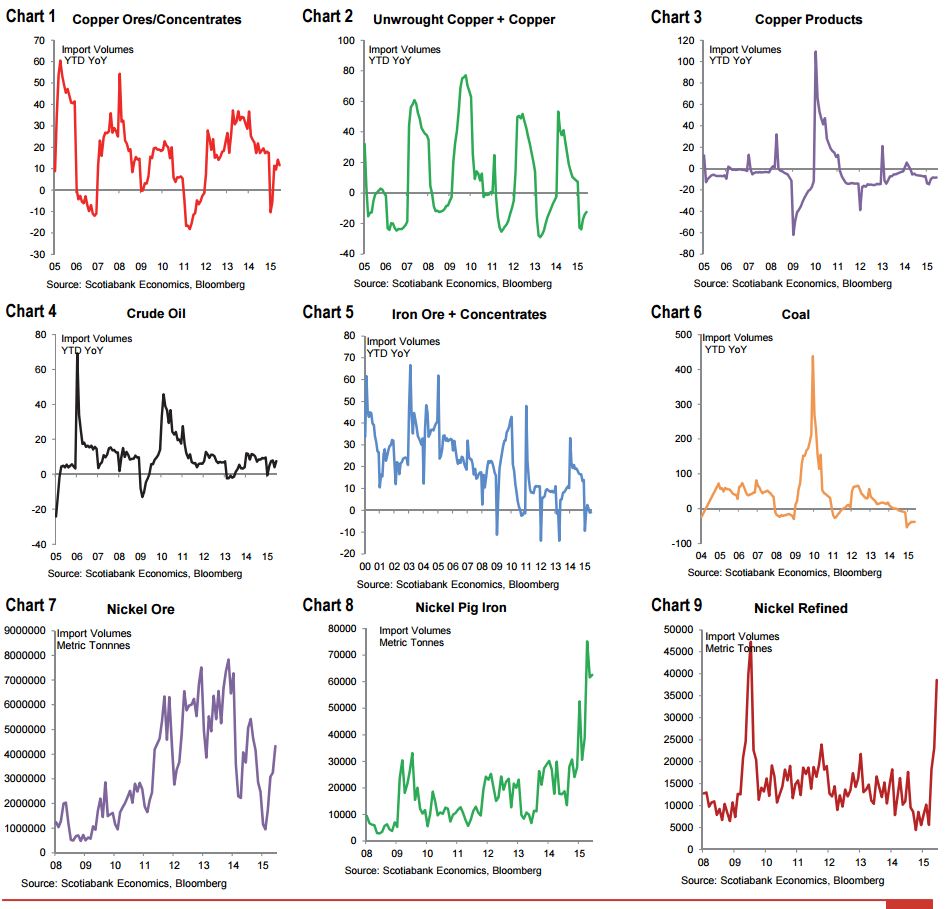
Charts from Scotiabank team, show us China’s resource imports by commodity type up to June with the caveat that July data is pending and key. Three points emerge:
- One is that it is not clear that Chinese demand for oil has been faltering in 2015 and so look elsewhere for explanations of weak oil prices.
- Two is that China’s resource demands are heavily differentiated across other commodities. Crude oil, nickel and copper ores are growing solidly but copper products and unwrought copper plus coal are falling sharply.
- This leads to the third point in that China is a patchwork of multiple economies and commodity markets unto itself and its commodity appetite cannot be treated as having uniform consequences across all markets.
Thus, frequent references to how Chinese growth concerns are impacting commodities should succumb to a greater degree of market segmentation. What also jumps out is the extent to which Australia is impacted here through weak Chinese imports of iron ore and coal.







