


 US to Review Iran World Cup Travel Restrictions Ahead of Egypt Clash
  Mexico President Claudia Sheinbaum Reconsiders Early School Closure Plan Ahead of 2026 World Cup
  White House Defends Trump’s FIFA Peace Prize Amid Global Criticism
  FBI Faces Historic Security Challenge Ahead of 2026 FIFA World Cup
  DOJ Launches Antitrust Investigation Into the NFL Over Broadcast Restrictions
  Los Angeles Mayor Says White House Must Reassure Fans Ahead of FIFA World Cup
  US Seizes Nearly 400 Illegal World Cup Streaming Domains in Global Anti-Piracy Crackdown
  Ovechkin Faces Scrutiny Over United Russia Campaign Video
  Spying, Southampton and economic pressure cooker of the ‘richest match in football’
  Milei Pushes for Formula 1 Return to Argentina
  Trump Urges Hall of Fame Induction for Roger Clemens Amid Renewed Debate
  World game at war: why some European nations have threatened a World Cup boycott
  FIFA Defends Balogun Ban Suspension After Trump Praise Sparks World Cup Controversy
  NBA Returns to China with Alibaba Partnership and Historic Macau Games
  U.S. Plans $115 Million Counter-Drone Investment to Secure FIFA World Cup and Major National Events
  US Reviewing Visa Denial for Venezuelan Little League Team Barred from World Series
  Trump to Host UFC Event at White House on His 80th Birthday


 Add as a preferred source on Google
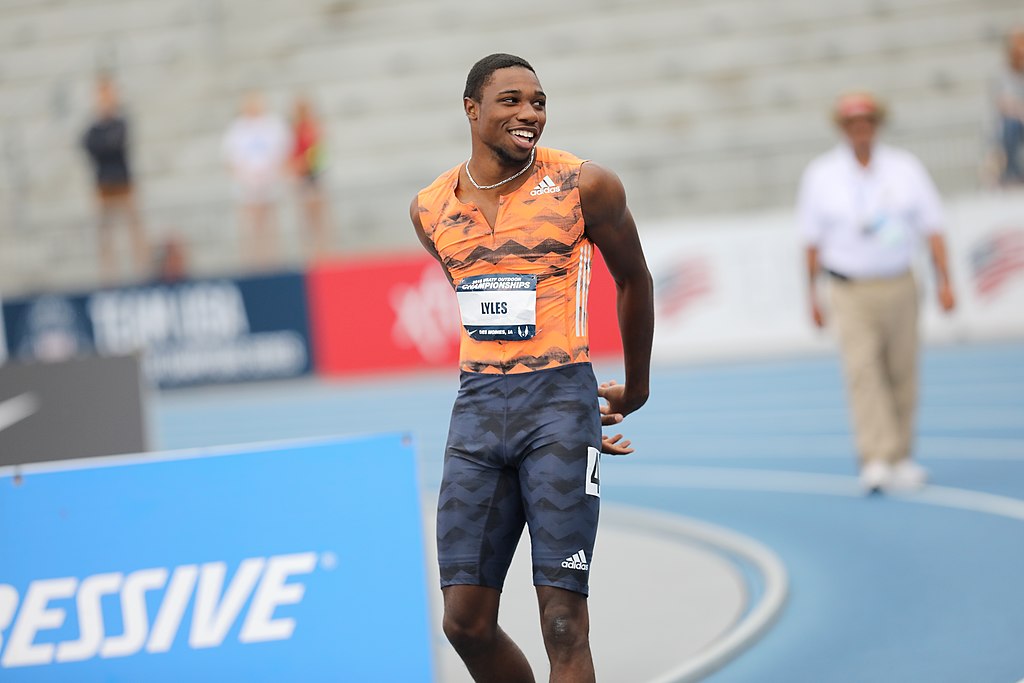
In the wake of the Tokyo Olympics, a storm of controversy has erupted surrounding U.S. sprinter Noah Lyles, whose bronze medal victory has been overshadowed by divisive and derogatory comments. Lyles, a world champion known for his speed and charisma, faced a barrage of criticism after a social media user made disparaging remarks that some argue violate the principles of the Olympic spirit.
The incident centers on a comment that dismissed Lyles’ achievement, suggesting that his success was undeserved despite testing positive earlier in the week—a reference many interpreted as a jab at his athletic integrity. The comment quickly became a flashpoint for debate, with defenders of the sprinter arguing that the criticism was baseless and rooted in misunderstanding or language barriers. At the same time, detractors doubled down, questioning Lyles' legitimacy as an Olympic medalist.
Lyles, who tested positive for COVID-19 on Tuesday but went on to secure a bronze medal on Thursday, has become a polarizing figure in this ongoing debate. His critics have seized on the timing of his positive test and subsequent medal win, insinuating his performance was tainted. However, his supporters have rallied around him, emphasizing his resilience and talent, arguing that his achievements should be celebrated, not questioned.
The broader controversy touches on deeper issues of fairness, sportsmanship, and the role of language in international competitions. Some have pointed out that the comments against Lyles not only undermine his accomplishments but also reflect a troubling disregard for the inclusivity and respect that the Olympics are supposed to embody. Others argue that the criticism of Lyles is symptomatic of a larger trend of hyper-scrutiny faced by athletes in the social media age, where every aspect of their performance is dissected and debated by a global audience.
The incident has also reignited discussions about the pressures on athletes to perform at the highest levels, especially under the extraordinary circumstances of a pandemic-impacted Olympic Games. For Lyles, who has been open about his mental health struggles, this criticism adds another layer of complexity to the challenges he faces as a top-tier competitor.
As the debate rages on, it serves as a reminder of the fine line between constructive criticism and harmful rhetoric. While sports have always been a realm of intense competition and strong opinions, the spirit of the Olympics has traditionally been one of unity, respect, and celebration of human achievement. The controversy surrounding Lyles highlights the tension between these ideals and the reality of modern sports discourse, where athletes are often subject to the harshest scrutiny.
The International Olympic Committee has yet to comment on the situation. Still, the incident has certainly sparked conversations about the need for more supportive environments for athletes, both online and off. As Lyles continues his athletic career, the controversy will likely follow him, serving as a stark example of the challenges athletes face in an era where social media can amplify praise and criticism to unprecedented levels.







