
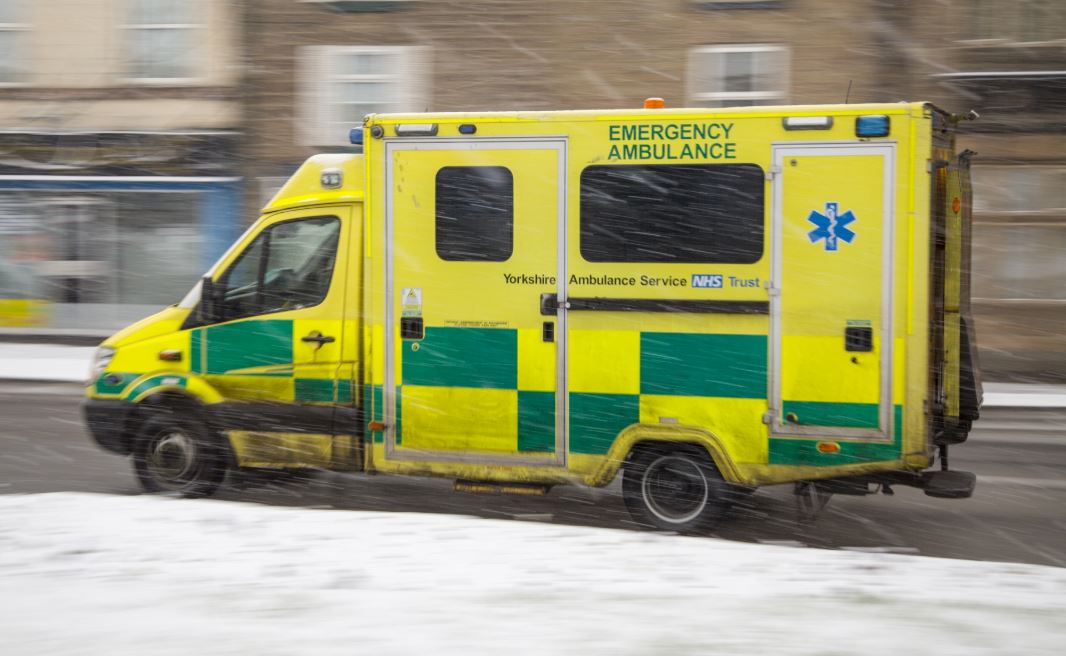
It’s hard to imagine anything more transformative for the NHS than the coronavirus crisis. The health and social care system has been making enormous efforts to address the pandemic while the number of deaths continue to rise across the UK. Even now, it is safe to say that 2020 feels like a turning moment in the NHS and beyond.
Our thoughts and efforts may be directed elsewhere at this time but it’s also helpful to take stock of the profound changes that are happening and what these may mean for future health service delivery and policy.
NHS staff
We often consider health services in terms of workforce and organisations. In the past few years, NHS staffing has become a significant issue, including a high turnover of senior staff in recent years. Following Brexit uncertainty and the junior doctor strikes in 2016, the Conservatives were re-elected on the promise of “50,000 more nurses” just three months ago. Proposals to restrict (international) migration among “low skilled workers” had presaged further workforce challenges. For some NHS frontline workers, though, visas have now been extended.
The response of staff to COVID-19 has been widely praised by politicians and the general public. Previous cries of support were often rhetorical, but coronavirus has arguably made visible the extent of the professionalism and commitment of staff. If faith in the NHS - the closest thing the British have to a religion as was once said - had been waning, the response of those working in health and social care to tackle coronavirus has surely reaffirmed it.
Flexibility under strain
The NHS has clearly demonstrated incredible flexibility at times of stress. The construction of the Nightingale Hospital in London (and plans for others) illustrates the NHS’s (and UK military’s) ability to respond. An election promise of 40 “new” hospitals has, however, been pushed back.
A focus on building new hospitals captures political attention and tends to increase a fixation on acute services (rather than primary or social care). But staffing roles are being rapidly reshaped by coronavirus responses; the boundaries between and within clinical professions (especially in clinical settings) are being blurred in ways that would have seemed unimaginable a short while ago.
Staff shortages and staff sickness mean clinical staff are also having to work in unfamiliar ways to respond to the volume of coronavirus cases, for example eye surgeons working in intensive care units. This also entails a shift in the balance between specialist and generalist practice, which will, in turn, determine how centralised services will become.
Other impacts
There has been much less focus on the impact and consequences of coronavirus for social care and its staff. For example, the discharge of patients from hospital into settings such as nursing homes, where protective equipment is less widespread, is unknown. The short and long-term effect on health and care staff wellbeing is also likely to be significant during a period of new roles and high stress.
The NHS has also been running at an increasing tempo in recent years, with service very near full capacity. Targets have been missed, for example, on A&E waiting times for some time (70% of patients at major emergency departments were seen within four hours, against a standard of 95%), while the number of beds in English NHS hospitals has halved in the last 30 years (from 299,000 in 1987-88 to 141,000 in 2018-19)8. Likewise, the UK has 2.8 doctors per 1,000 population compared to 4.0 in Italy or 4.3 in Germany.
Operational shifts
The NHS had entered the pandemic phase in an exposed state. As financial deficits grew, so-called “winter pressures” began affecting the NHS all year round (though this winter was a mild one). Nonetheless, operational responses have been swift and/or profound:
• Coronavirus has rapidly increased the spread and reach of telephone and video consultations in primary and secondary care. It’s highly unlikely that normal (non-digital) service will be resumed – with possible increases in demand (video consultations don’t necessarily reduce demand).
• The private sector has previously been used to alleviate pressures, such as waiting times for elective procedures. But this time the two sectors have been more closely bound, including the private sector providing more extensive cancer care.
• The commissioning role of the NHS has effectively been centralised. Clinical Commissioning Groups, which planned and commissioned health services for local areas, have been taken over by NHS England. Many had already been merged or amalgamated, and could spell the end of this commissioning experiment. Long-term plans now look redundant.
A period of incremental and transitional change in the NHS is over; coronavirus has instead introduced dramatic and transformational change. To navigate this, the NHS is relying on the resilience and ingenuity of staff, but the high turnover of senior staff and in turn the loss of organisational memory will hamper this. In a post-COVID era, public finances will also be extremely strained, possibly heralding a new era of austerity, despite the government recently “writing off” £13 billion of historic NHS providers’ debts. And the NHS still has the impact of Brexit to negotiate.
Coronavirus presents an immediate crisis for the NHS but there will be longer-term changes that for now, remain unknown. What we do know is that 2020 will register as a seminal turning point in British health policy.
This article was co-authored with Charles Tallack, a health analyst from the Health Foundation.
 Mark Exworthy receives funding from the National Institute of Health Research


