


 Europe can’t achieve space sovereignty alone. Here’s why
  What is Zionism? The different meanings of a contested term
  Unsustainable – or manageable? We don’t yet know how data centres will impact Australia’s environment
  Big AI wants to slow down AI research. Is it a safety pause or a strategic retreat?
  1 in 3 uni students experience serious financial hardship. Could concession cards for all help?
  Who should own the knowledge that underpins AI technology?
  Banking scandal rocks Brazil’s politics and the country’s presidential election in October
  Gold Slides to $4,262 as Hawkish Fed Rate Hike Triggers Technical Breakdown


 Add as a preferred source on Google
Market participants remain worried about potential fallout in talks between Greece and Euro zone creditors. Euro zone finance ministers are scheduled to meet in Riga, Latvia on 24th of April in a bid to resolve ongoing crisis.
- Recent communique from finance ministers notably German Wolfgag Schäuble and Greece counterpart Yanis Varoufakis suggests that this week's meeting might not resolve the crisis.
According to Euro zone officials, Grexit is still unlikely, however we review what could be the potential cost and how much to whom should such happen.
Most of the bailout debt given to Greece is held by European Financial Stability Facility (EFSF).
What is EFSF?
- EFSF is a € 780 billion fund, which was setup during height of 2011/12 Euro zone debt crisis to stabilize the crisis and debt market. Amount is not given in cash, but by explicit guarantee given by the nations as per their paid up capital in European Central Bank.
What is the potential cost of Grexit?
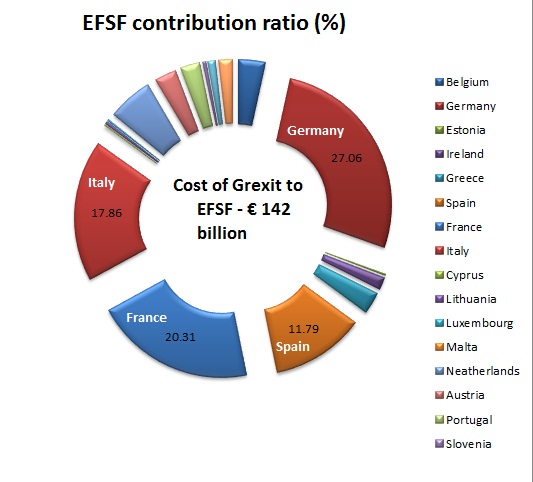
- Under the hypothetical situation of a Greek exit from Euro and default on the loans available, potential total cost to be the money given and forgone interest, which as of now stands at € 142 billion. Actual cost might differ depending on recoverable and asset sales.
Top Losers -
- Top four losers will be Germany (€ 38.4 billion), France (€ 28.9 billion), Italy (€ 25.3 billion) and Spain (€ 16.7 billion).
- Italy and Spain may not be in position to afford such a loss.







