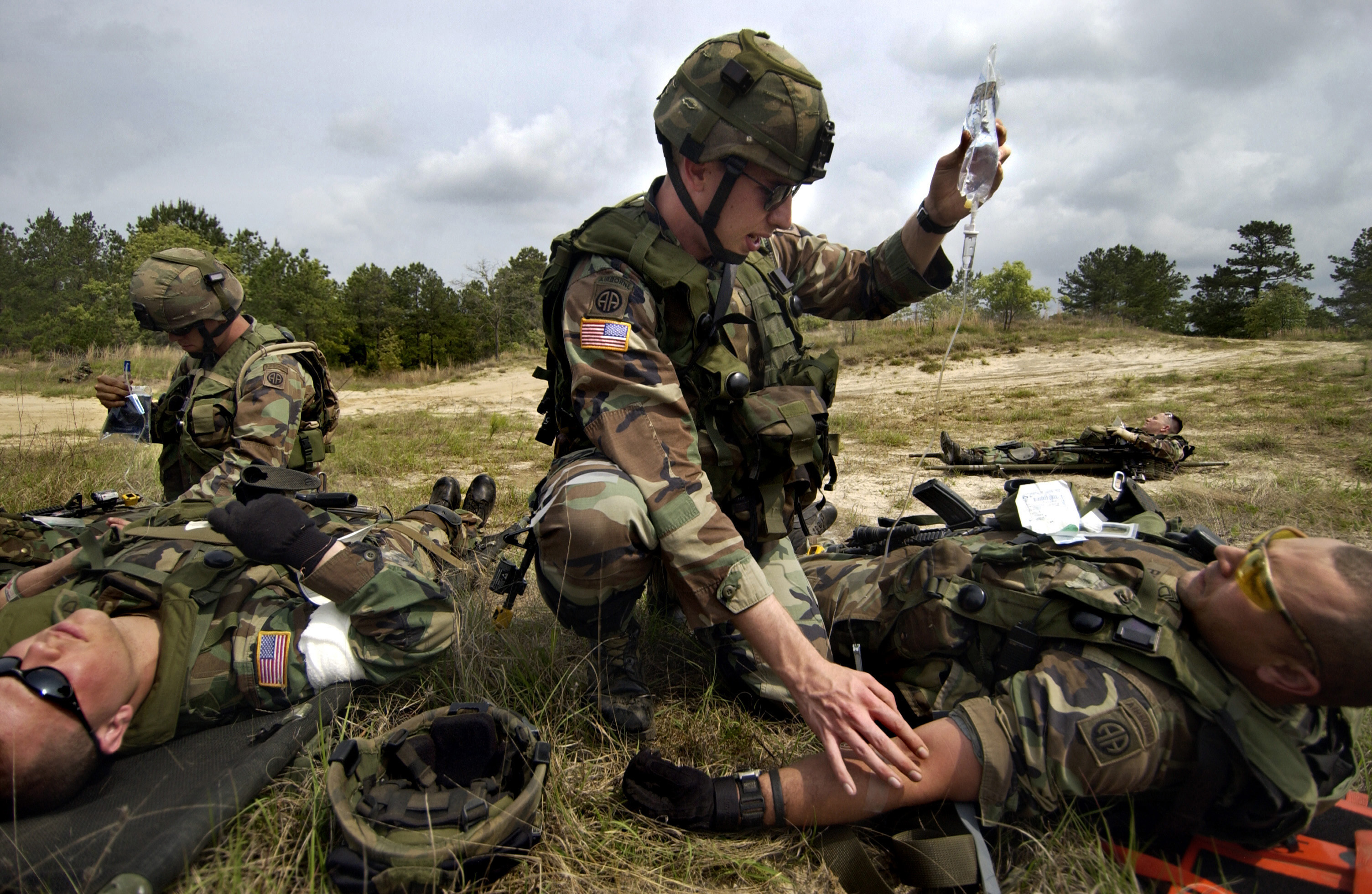
Whenever soldiers go to war, there’s always a high probability of mass casualties. Field medics often lose patients despite their best efforts due to the short amount of time they have to work with. Called the “golden hour,” it’s basically the 60 minutes or less that medics have to save a life. This is what the Department of Advanced Projects Agency (DARPA) wants to exchange by altering the biology of soldiers.
For the longest time, the main goal of the Department of Defense with regards to medical response on the battlefield was to speed up the process of treating wounded soldiers, Futurism notes. This involved developing more efficient practices, better equipment, and improving training. However, at some point, responders have to deal with the ceiling that is time.
The human body can only withstand so much before it shuts down and this often happens because human physiology simply can’t keep up with the amount of damage. At least, not in a natural way.
Launching a new initiative called the Biostasis program, DARPA intends to extend the amount of time that soldiers have that will allow medics to work on their wounds by essentially altering their biology. This process isn’t at all unnatural, either, with several other species actually being capable of altering their bodies on a cellular level to achieve any number of purposes.
Tardigrades, for example, are microscopic organisms capable of surviving extreme temperatures and conditions. They do so by manipulating their cells so that they can avoid death via dehydration and freezing, Engadget reports.
This is what the Biostasis program will attempt to effect on the biology of soldiers. By stabilizing their cells, the hope is that medics will have much longer to address the damage done to patients, thus increasing the chances that veterans will be able to come home.
If the program proves successful, it could eventually make its way to civilian hospitals. This will then help to prevent deaths caused by accidents or violent actions.