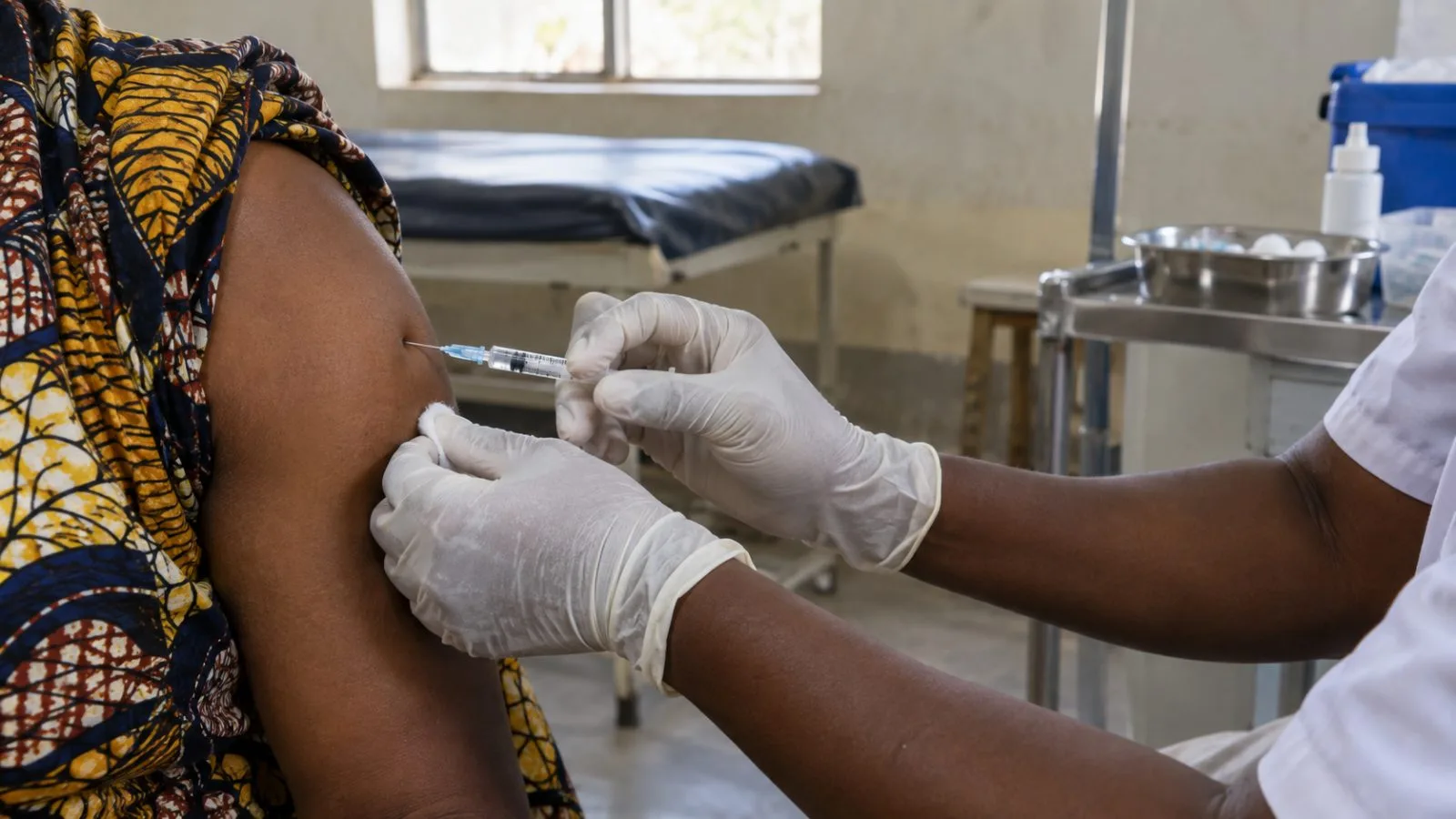
The Democratic Republic of the Congo (DRC) has begun a Phase 2/3 trial of vaccines for Bundibugyo virus disease, as the World Health Organization (WHO) counted 4,687 outbreak deaths through Oct. 20.
The Coalition for Epidemic Preparedness Innovations (CEPI) said a participant received a vaccination in Bunia on Oct. 23. WHO said participants were enrolled in the city that day. The sponsors did not identify which vaccine the participant received.
WHO’s Oct. 23 bulletin listed 9,704 confirmed cases and 4,687 deaths through Oct. 20 across 66 health zones in eight provinces, with a crude case-fatality ratio of 48.3%. The DRC epidemic dashboard showed 9,552 cases and 4,602 deaths through Oct. 21; CEPI cited those figures in its announcement. The later-dated tally was lower, and the announcements did not explain the difference. EconoTimes has also covered the outbreak’s case totals and contact-follow-up response.
The study, called Tumaini, will compare vaccine candidates’ safety, immune response and efficacy. Its name means “hope” in Swahili. The adaptive design lets researchers assess multiple candidates in one trial, while ring vaccination focuses on exposed contacts considered at highest risk. WHO says these approaches have been used in previous outbreaks. The sponsors say the intended beneficiaries include people at high risk of infection and affected communities. No vaccine is approved for Bundibugyo virus disease.
Ervebo is the first candidate in the study. It is approved for Ebola virus disease caused by Zaire ebolavirus, but WHO says protection against Bundibugyo virus has not been established. Sponsors are preparing candidates from Moderna and from the University of Oxford in collaboration with Serum Institute of India; both are designed for Bundibugyo.
The DRC Ministry of Health oversees the trial. The Institut National de Recherche Biomédicale and the University of Antwerp’s Global Health Institute co-lead and co-sponsor it, while CEPI funds the work. Gavi, the Vaccine Alliance, committed up to US$40 million for manufacturing readiness so successful vaccines can be available at scale after approval.
Prof. Steve Ahuka-Mundeke, the DRC Ebola response Incident Manager, said the effort should “stop transmission and save lives.” The sponsors say the study is intended to support the current outbreak response and future preparedness. They expect the two Bundibugyo-specific candidates to join shortly but have not announced a date.