


 US Bans Canadian Alcohol, Motorcycles as Trade War Escalates
  US-China Experts Push AI Nuclear Safeguards to Prevent Military Escalation
  Synthetic data could ease people’s concerns about privacy breaches. But who gets to create it?
  Trump Threatens EU Tariffs Over Canada Membership Proposal
  ‘Buy now, pay later’ doesn’t feel like debt. For young people, that can be a big problem
  FCC Approves Foreign Investment in $110B Paramount-Warner Bros. Deal
  US Immigration Arrests Surge as Deportations Lag Behind
  Trump Administration Pauses Visa Appointments Worldwide
  FAA Allows Boeing to Sell 35 More 777F Freighters Beyond 2028
  Japan, U.S. Discuss $19 Billion GlobalFoundries Chip Plant
  Pentagon Restarts Testosterone Testing for US Troops
  US Resumes Immigrant Visa Processing for Hungary, Poland
  What is Zionism? The different meanings of a contested term


 Add as a preferred source on Google
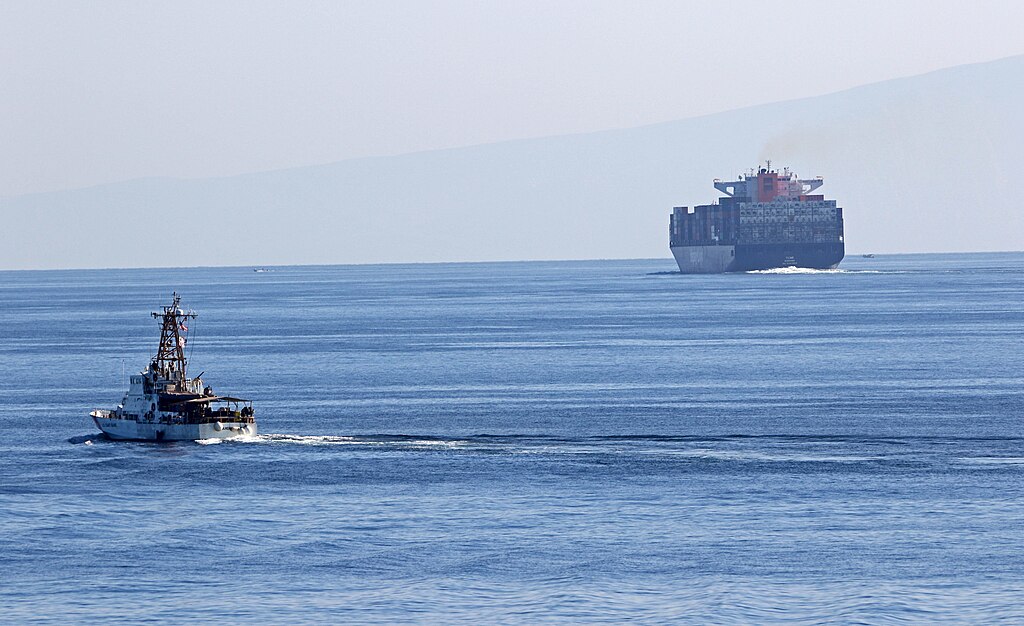

It follows reports of an Iranian drone attack on a cargo ship trying to transit through the strait. Both the US and Iran have accused each other of breaking the agreed 60-day interim peace deal.
Since Iran was attacked by the US and Israel it has increasingly signalled its intent to make control of the Strait of Hormuz a permanent feature. This has raised fears that after the conflict, it could permanently impose tolls on the roughly 130 ships that transit the strait each day.
While Iran may desire a guaranteed source of revenue, the region is unlikely to accept it tolling the strait. More importantly, it would not work. The Strait of Hormuz is not a canal.
No legal way
The world is right to be concerned. Since the war began, Iran has sought to deter ships from transiting the Strait of Hormuz, attacking more than 40 neutral merchant vessels and killing several innocent merchant mariners.
Combined with missile and drone attacks and the placement of sea mines in the strait, commercial shipping has effectively ground to a halt for more than three months, with significant economic consequences.
Concern has been further fuelled by the wording of the recent 14-point interim deal, which stated that Iran would use its “best efforts” to ensure the safe passage of commercial vessels “with no charge, for 60 days only”.
The plan says Iran would discuss future arrangements with Oman and other Gulf states, “in line with applicable international law and the sovereign rights of coastal states of the Strait of Hormuz”.
Under the United Nations Convention on the Law of the Sea, the Strait of Hormuz is an international strait where all ships enjoy a right of transit passage that coastal states cannot suspend.
While parts of the strait pass through Iranian territorial waters, the main traffic separation scheme lies within Omani waters. Traffic separation schemes are routes established by the International Maritime Organisation to safely manage traffic in busy chokepoints. Think of them as recommended roadways.
Despite concerns about the wording of the deal, Iran could not lawfully impose a toll on transit passage.
But also no practical way
But the real question is whether Iran could practically impose a toll, particularly given it has effectively halted most commercial shipping through the Strait of Hormuz for more than three months.
At first glance, there are obvious precedents. Ships pay to transit canals such as the Suez and Panama canals.
But these are fundamentally different waterways. They lie within the territory of a single state and are narrow, controlled transit routes. The navigable channel of the Suez Canal, for example, is typically around 200 metres wide.
The Strait of Hormuz is different. At its narrowest point it is approximately 39 kilometres across, including areas of both Omani and Iranian waters.
The scale of the waterway makes it far more difficult to physically stop, inspect and control vessels that refuse to pay a toll. Imposing a toll is one thing; enforcing it against unwilling ships is another entirely.
Ships transiting the Suez Canal enter via Port Said in the north or Suez in the south, then Suez Canal Authority pilots get onboard the vessels and join a tightly controlled convoy system for the transit.
The canal’s confined and highly regulated nature makes it virtually impossible for vessels to transit without complying with canal authorities and paying the required tolls.
For the Strait of Hormuz, international law aside, shipping companies and states are unlikely to voluntarily accept a permanent toll on transit through an international strait.
The issue is not simply cost, but the precedent it would set for freedom of navigation and the governance of straits around the world.
Leverage or long-term control?
Iran would not be charging ships for a service, as occurs in the Suez or Panama canals. It would be charging vessels for exercising a pre-existing right of transit through an international strait. Oman and other Gulf states have warned that tolling arrangements would undermine free passage and set a dangerous precedent.
Companies would therefore have to be coerced into paying. But unlike the Suez or Panama canals, the Strait of Hormuz is far larger and more difficult to police, making enforcement challenging.
During the current conflict, Iran has deterred shipping through the use of weapons, killing innocent mariners and disrupting global trade.
While the international response has at times been muted, such actions are not a sustainable means of enforcing a permanent toll in peacetime.
Unless Iran is willing to continue attacking innocent merchant vessels after the conflict ends, an approach that would attract significant diplomatic pressure, sanctions and criticism, including from countries such as China, it is unlikely to have either the incentive or the enforcement mechanism required to compel ships to pay a toll that is inconsistent with international law.
Iran is using its success in disrupting shipping through the Strait of Hormuz as leverage in negotiations. But leverage and long-term control are not the same thing. While Iran can disrupt shipping, it is unlikely to permanently toll the Strait of Hormuz.
 Jennifer Parker does not work for, consult, own shares in or receive funding from any company or organisation that would benefit from this article, and has disclosed no relevant affiliations beyond their academic appointment.







