


 Trump Touts $5,000 Checks if Republicans Win Congress
  New Zealand Labour Backs Social Media Ban for Under-16s
  South Korea’s Cho Hyun to Meet Rubio in Washington
  France Targets Shein, Temu With Fast-Fashion Fees
  Australia Defends Social Media Algorithm Law Amid US Concerns
  Brazil Warns EU of Retaliation Over Animal Products Ban
  U.S. Imposes New Visa Restrictions Over South Africa Policies
  Mahmoud Khalil Sues Columbia Over Alleged Pro-Palestinian Harassment
  China’s Global Times Slams Anthropic CEO’s AI Slowdown Plan as ‘Cold War’ Strategy
  What is Zionism? The different meanings of a contested term
  SEC Seeks ISS Client Voting Records in Proxy Adviser Probe
  US Immigration Arrests Surge as Deportations Lag Behind
  US Confirms Weapons in Orbit as Space Tensions Rise
  Australia Plans New Rules Giving Users Control Over Social Media Feeds
  Trump Administration Pauses Visa Appointments Worldwide
  Trump Rejects Calls for Tougher AI Regulation


 Add as a preferred source on Google
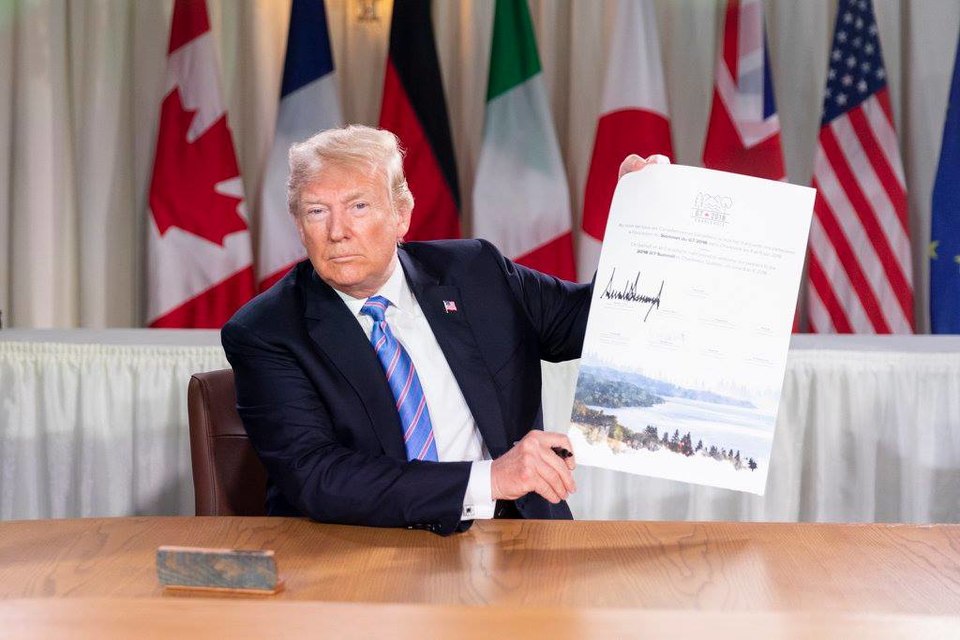
President Donald Trump signed an executive order on Friday directing federal officials to install temporary signs outside the Smithsonian’s National Museum of American History, escalating his administration’s campaign against what it calls biased portrayals of U.S. history.
The order follows a White House Domestic Policy Council report that accused the museum of promoting "thinly veiled anti-Americanism" and "extreme political activism." Trump said the signs, to be placed on sidewalks maintained by the National Park Service, would provide visitors with what his administration considers accurate historical context in response to information presented inside the museum.
Although the National Park Service falls under the Department of the Interior, the Smithsonian Institution operates independently. Trump argued in the executive order that the current leadership of both the Smithsonian and the National Museum of American History "cannot be trusted to tell America’s story with honesty and gratitude."
The White House report, released on July 4, recommended posting a notice at the museum’s entrance stating that the exhibits were created by individuals who "don’t want you to love your country."
Museum director Anthea Hartig and Smithsonian Secretary Lonnie Bunch have rejected the report’s conclusions. During testimony before a House oversight subcommittee this week, Hartig said the museum’s mission is to inspire patriotism through education rather than instruction.
The Organization of American Historians, the nation’s largest association of U.S. history scholars, also criticized the 162-page White House report, arguing that it misrepresented the museum’s work. The Smithsonian declined to comment on Trump’s latest executive order.
The directive is part of a broader effort by the Trump administration to reshape how American history is presented at federally supported institutions. Previous actions have included dismantling slavery-related exhibits, restoring Confederate monuments, and reviewing museum programs that the administration says promote "anti-American ideology."
Civil rights organizations and historians argue these measures risk minimizing important chapters of U.S. history and reversing decades of progress in historical interpretation.
The Smithsonian Institution remains one of the world's largest museum and research networks, operating 21 museums and galleries, along with the National Zoo, and serving as a leading destination for American history, culture, science, and education.







