


 XRP Rises as Evernorth Merger Vote Clears Key Nasdaq Hurdle
  Bitcoin Holds Above $83,700 as High Treasury Yields Limit Rally
  Crypto Rallies as CLARITY Act Failure Opens Door to Faster SEC Rules
  Standard Chartered Sees Ethena ENA Hitting $2 by 2028
  NEAR Intents Hack Drains $3.8 Million, NEAR Price Falls 7.5%
  Ethereum Price Eyes $3,000 as Fed Rate Hike Odds Drop
  Robinhood Stock Nears $114 as Jobs Data Boosts Risk Appetite
  Midnight NIGHT Token Surges 86% as Smart Contract Launch Nears
  Michael Saylor Sees Strategy, Strive Expanding Bitcoin Credit Market
  XRP Asia Launches to Accelerate XRPL Adoption Across Asian Banks
  Ripple and Cardano Expand Blockchain Adoption in Brazil
  Ripple Locks 700 Million XRP Back in Escrow After October Release
  Hyperliquid Sets $856 Million HYPE Token Unlock for October
  Citi Raises Bitcoin Target to $113,000 as Crypto Outlook Improves
  Evernorth Set for Nasdaq Debut With 473 Million XRP Treasury
  AI Agents Could Disrupt Financial Services, Bernstein Says
  Zcash Awards $8 Million in Grants After Orchard Bug Crisis


 Add as a preferred source on Google
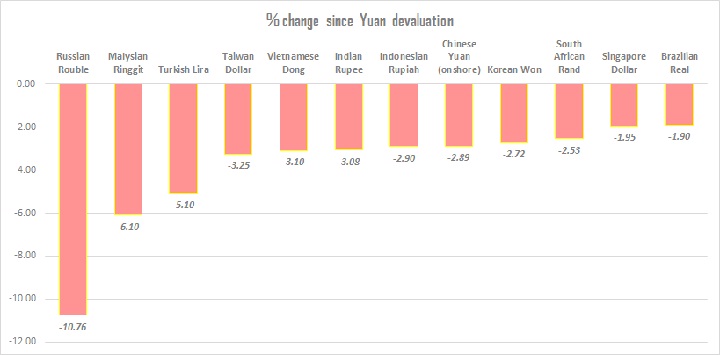
For some of the emerging market currencies, recent rout has been worst since financial crisis (2008/09), for some worst since Asian currency crisis (1997), for some worst since Taper Tantrum (2013) and for some, worst on record.
China's recent devaluation of Yuan just increased the pain of emerging market FX, which lost further grounds and fast since China's devaluation. Debasing Yuan just pulled an anchor for emerging market currencies, especially Asian ones.
Market participants are worried that China might be weaker than many had originally assumed, which is overall bad news for emerging markets. China consumes lot of exports of emerging market and with further slowdown in mainland, risks emerging markets.
Moreover, speculation has been going up for further devaluation from China, either controlled or uncontrolled.
The chart represents some of the prominent emerging market's currencies since first devaluation of Yuan on August 11th. Drop would be larger if today's move is considered, data till Friday.
- Rouble is leading the way with-10.76% drop (oil price drop has contributed to the fall), followed by Malaysian Ringgit (-6.10%), Turkish Lira (-5.10%), Taiwan Dollar (-3.25%), Vietnamese Dong (-3.10%), Indian Rupee (-3.08%), Indonesian Rupiah (-2.90%), Korean Won (-2.72%), South African Rand (-2.53%), Singapore Dollar (-1.95%) and Brazilian Real (-1.9%).







