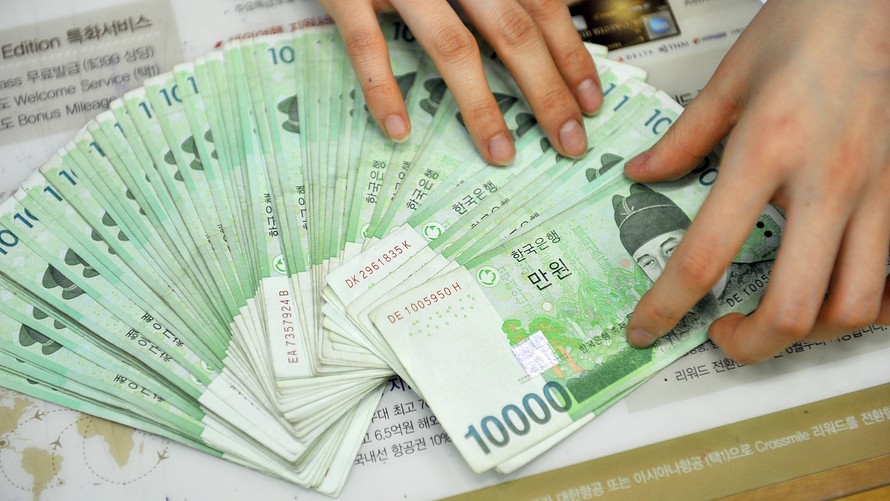
South Korea and Turkey have signed a three-year currency swap agreement for 2.3 trillion won to boost trade between them.
The agreement was signed by the Bank of Korea and the Central Bank of the Republic of Turkey.
The BOK said the agreement is designed to promote bilateral trade through a swap-financed trade settlement facility and the two countries' financial cooperation for economic development.
The deal is renewable through a bilateral agreement, according to the BOK.
A currency swap allows countries beset by a liquidity crunch to borrow money from other countries by using its currency.
South Korea has bilateral currency swap arrangements with seven other countries, including the US, Australia, and China.
In June, the BOK and the US Federal Reserve agreed to prolong their $60 billion currency swap, set to expire on Sept. 30, by another three months to ease market uncertainties in South Korea over the pandemic.



Gold Prices Drop Amid Iran War Concerns, Rising Oil Costs, and Hawkish Central Bank Signals
China’s Ultra-Cheap EV Boom: Why Electric Cars Cost Far Less Than in the U.S.
U.S. Demand for Alternative Satellite Providers Remains Strong Amid SpaceX Regulatory Push
DeepSeek Slashes AI Model Pricing to Boost Adoption and Challenge Global Rivals
Araqchi Leads Iran’s Diplomatic Push as U.S. Talks and Oil Market Tensions Rise
European Stocks Slip as U.S.-Iran Tensions and Earnings Season Weigh on Markets
Bank of England Set to Hold Interest Rates as Inflation Risks and Iran War Impact Loom
Spirit Airlines Gains Key Creditor Support for $500M Bailout Deal
Australia Targets Meta, Google, and TikTok With New News Payment Tax Proposal
Advantest Stock Falls on Weak Outlook Despite Strong AI-Driven Results
Toyota Global Vehicle Sales Decline in March Amid RAV4 Transition and Middle East Slowdown
Brazil Pension Fund Crackdown After Banco Master Collapse Raises Investment Concerns
Oil Prices Rise Amid U.S.-Iran Tensions and Strait of Hormuz Deadlock
Google Secures Pentagon AI Deal for Classified Projects
Micro Systemation Reports Q1 Loss Amid Strategic Investments and Revenue Growth
Dollar Holds Firm as Middle East Tensions and Central Bank Decisions Keep Markets on Edge
Brazil Current Account Deficit Widens in March as FDI Misses Expectations 


