


 Australia Consumer Confidence Plunges as RBA Rate Hike Hits Households
  Oil Prices Fall as Middle East Exports Recover, G7 Eases Supply Fears
  European Stocks Diverge as French Fiscal Crisis Hits CAC 40
  Dollar Retreats From 18-Month High as Euro Rebounds
  US Stock Futures Rise as Weak Jobs Data Eases Fed Hike Bets
  Gold Prices Rise as Dollar Weakens, Treasury Yields Ease
  Europe EV Sales Hit Record as Affordable Models Boost Demand
  Samsung, SK Hynix Shares Fall Ahead of Q3 Earnings
  German Industrial Orders Plunge 10.6% in August
  Japan Real Wages Rise 1.5%, Supporting BOJ Rate Hikes
  Euro Hits 17-Month Low as France Debt Fears Boost Dollar
  Gold Prices Slip as Strong Dollar and High Treasury Yields Weigh
  Thailand Plans Dual-Class Shares to Revive IPO Market
  Iran Tanker Attacks Surge as Hormuz Oil Flows Near Prewar Levels
  Ukraine Faces $56 Billion Budget Gap as War Costs Soar
  Asian Stocks Rise as Fed Rate Hike Bets Fade
  Trump Plans Diesel Tax Relief as Fuel Prices Hit Record Highs


 Add as a preferred source on Google

Australia’s three-decade run of near continuous economic growth is set to end, with treasury warning of a hit to growth of “at least” 0.5% in the first quarter of this year, potentially followed by a “prolonged downturn”.
If it came to pass, treasury’s preliminary assessment would most likley mean economic growth vanished and went backwards for several quarters, producing what is commonly known as a “technical recession” – two quarters or more in which economic activity shrank.
Providing the assessment to a Senate estimates committee on Thursday morning, treasury secretary Steven Kennedy said the COVID-19 coronavirus would take “at least half a percentage point” from economic growth during the current March quarter and more beyond that.
In recent quarters economic growth has been about half a percentage point.
Quarterly GDP growth
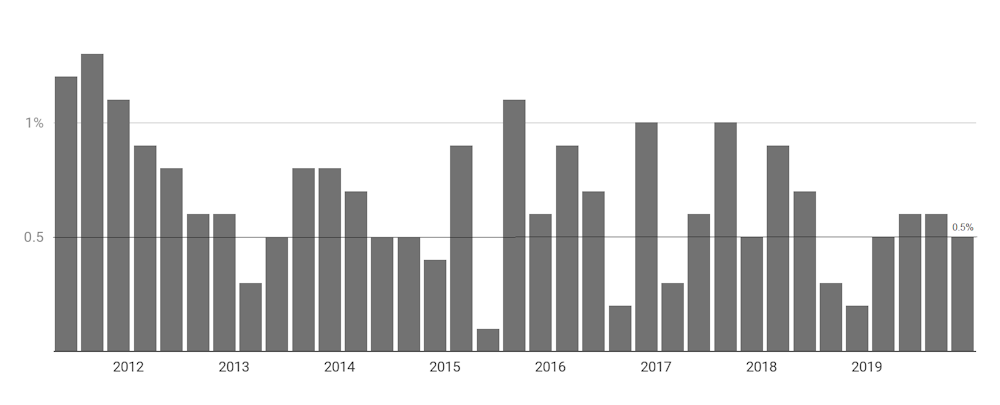
Treasury’s preliminary estimate of a hit of at least half a per cent took into account only the direct impacts of the virus on tourism and education, and some exchange rate effects.
It did not take into account broader economic effects or the impact of the coronavirus on supply chains.
The half a percentage point hit to growth would come on top of a hit of 0.2% from the summer bushfires, most of which would be felt in the March quarter.
Dr Kennedy, a former nurse who retrained as an economist, stressed that the impact of the bushfires would extend well beyond the immediate hit to economic growth.
“Evidence from past episodes suggest bushfires can lead to long-lasting physical and mental health effects and destroy cultural heritage,” he said.
“Research by the University of Melbourne after the Black Saturday bushfires in 2009 found mental health problems continued for three to four years.”
The bushfires made clear the increased probability of such events in a world of climate change.
“The CSIRO predicts climate change will make bushfires more likely, as fire weather patterns worsen as a result of an increase in weather patterns with hot and dry winds and fuel becoming drier.”
Deeper, wider and longer lasting than SARS
As on Tuesday there had been 91,868 confirmed COVID-19 cases worldwide and 3,131 deaths, most in China. COVID-19 had spread to 77 countries.
When the virus first emerged in China in December, the treasury saw it through the lens of the 2002-04 Severe Acute Respiratory Syndrome (SARS) pandemic.
It was now clear COVID-19 would be different.
The impact of SARS took on a V shape, a relatively contained reduction in activity, mostly in Asia, followed by a quick bounce back.
The economic impact of COVID-19 is likely to be deeper, wider and longer when compared with SARS.
It will create more risk of a prolonged downturn, and fiscal support will be needed to accelerate the recovery of the economy, especially once the health and health management effects of COVID-19 begin to fade.
The first phase of the economic support package to be delivered next week would target assistance to the businesses and sectors most affected in order to keep people in jobs.
After that, support for aggregate demand (overall spending) would become more important.
“A very substantial part of the impact is actually confidence among consumers and the business sector because of the uncertainty,” Dr Kennedy said.
“Frankly, effective health management will be very important. The economy is actually quite solid. One of the key things will be to to explain to the community how well placed the economy is to manage such a short-term shock.”
The shock would last for some time but the economy would “recover on the other side”.
Keeping workers employed be very important.







