


 Gold Prices Hit One-Week High as Oil Falls, Fed Rate Outlook Weighed
  Asian Currencies Steady as Dollar Nears 18-Month High Ahead of US CPI
  UK Finance Minister Healey Calls for Fiscal Discipline Amid Global Risks
  Trump Calls for Zelenskyy Replacement Amid Russian Diesel Deal
  European Auto Stocks Rise as EU-China Trade Deal Targets Hybrid Imports
  European Stocks Rise as Oil Prices Fall Ahead of US CPI
  Global Stocks Mixed as Oil Falls Ahead of US Earnings
  Oil Prices Rise as Houthi Attacks Threaten Middle East Supply
  Bank of America Predicts Yen Rebound as USD/JPY Faces Risks
  Asian Stocks Plunge as AI Chip Selloff Hits South Korea and Japan
  IMF Maintains 2027 Global Growth Forecast at 3.4% Amid Rising Risks
  Nasdaq Falls as Oil Prices Surge Ahead of Bank Earnings
  Gold Prices Rebound as Dollar Weakens Ahead of US Inflation Data
  Trump Secures Russian Diesel Deal as US Fuel Prices Surge
  Deutsche Bank CEO Urges Faster German Economic Reforms


 Add as a preferred source on Google
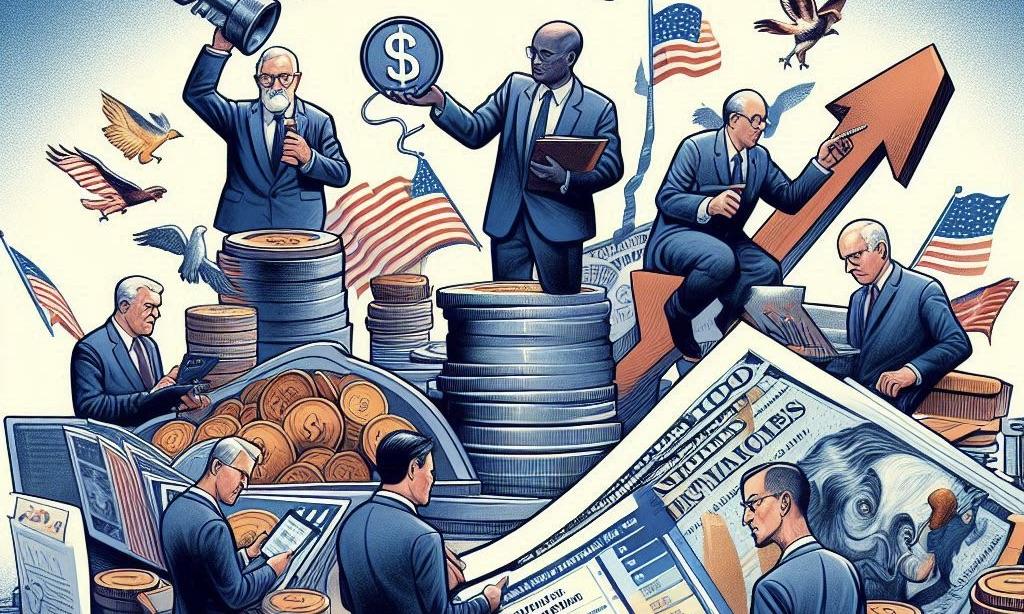
A recent Wall Street Journal survey reveals that most economists anticipate higher inflation, deficits, and interest rates under a second Trump administration compared to a Biden presidency. The survey, conducted among 68 professional forecasters, highlights concerns over Trump's policy preferences on immigration and trade.
WSJ Survey: Economists Expect Higher Inflation, Deficits Under a Second Trump Administration
According to a report published by The Wall Street Journal this week, most economists anticipate that inflation, deficits, and interest rates would be higher under a second Trump administration than if Biden remains in the White House.
The Wall Street Journal reported that 68 professional forecasters from academia, Wall Street, and business responded to its quarterly survey of forecasters, which was conducted between July 5 and 9.
"Of the 50 who answered questions about Trump and Biden, 56% said inflation would be higher under another Trump term than a Biden term," said the WSJ. This is said to be compared to 16% who said the opposite, with the remainder seeing no material difference.
The publication elucidates that Trump's policy preferences, particularly immigration and trade, primarily contribute to economists' perspectives on inflation and interest rates.
However, they note that it is "unlikely those assessments would change substantially with a different Democratic candidate."
Analysts at the Economic Outlook Group informed the Wall Street Journal that there is a genuine possibility that inflation will reaccelerate during a Trump presidency.
The WSJ further states that economists anticipate a 1.7% increase in the U.S. gross domestic product this year following the most recent inflation data, a decrease from the 3.1% growth achieved in 2023 (based on the fourth quarter compared to the previous year).
Furthermore, they predict that unemployment will continue to hover slightly above 4% until 2026 and that payrolls will increase by approximately 131,000 monthly jobs over the next year.
Economists generally estimate a recession likelihood within the next year is 28%. According to the Wall Street Journal, the forecasts have undergone minimal modification since their most recent survey in April.
Investors Hesitant in 2024 Amid High Valuations, ProPicks' AI Identifies High-Potential Stocks
Many investors are hesitant to allocate additional funds to equities in 2024 due to the significant increase in valuations. Are you uncertain? Do you need more certainty about the next investment to make? Gain access to our portfolios that have been demonstrated successful and identify high-potential opportunities
According to Investing.com, ProPicks' AI identified two stocks that experienced a 150% increase in 2024, four additional stocks that experienced a 30% increase, and three additional stocks that experienced a 25% increase. That is an extraordinary record.
With portfolios that are customized for Dow stocks, S&P stocks, Tech stocks, and Mid Cap stocks, you have the opportunity to investigate a variety of wealth-building strategies.







