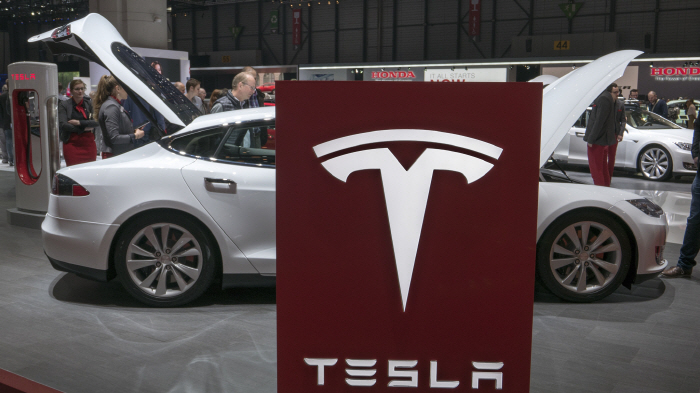
Tesla Motors, the American electric car manufacturer, released its new software version 7.0 in October that enables autopilot feature. The software employs a variety of tools – a forward radar, a forward-looking camera, 12 long-range ultrasonic sensors positioned to sense 16 feet around the car in every direction at all speeds, and a high-precision digitally-controlled electric assist braking system – to enable automated driving capabilities.
In a recent interview with Fortune CEO Elon Musk said that he believes Tesla will have a fully autonomous vehicle on the road in approximately two years.
“I think we have all the pieces, and it’s just about refining those pieces, putting them in place, and making sure they work across a huge number of environments—and then we’re done,” Musk told Fortune. “We’re going to end up with complete autonomy, and I think we will have complete autonomy in approximately two years.”
The U.S. Department of Transportation’s National Highway Traffic Safety Administration has categorized vehicle automation in five levels. At level 0, the driver is completely in control, while at level 4, the vehicle should be capable of performing all safety-critical driving functions and monitor roadway conditions for an entire trip.
When Tesla rolled out its software in October, it urged drivers to exercise caution with the self-driving features.
“We tell drivers to keep their hands on the wheel just in case, to exercise caution in the beginning,” Musk said at the time. “Over time, long term, you won’t have to keep your hands on the wheel—we explicitly describe this as beta.”
Musk did not reveal any details about the next generation of autopilot, but said that it “would be a major announcement.”
“When I say level 4, I mean level 4 autonomy with the probability of an accident is less than that of person,” he says.
However, he expects regulators will lag behind the technology and estimates that it will take an additional year for regulators to determine the safety and give approval. In some jurisdictions, it may take five years or more, he added.