Tesla's boss decided to invest $1.5 billion in the most popular cryptocurrency, pushing it close to $50,000. But not only that: he is considering using it in his company transactions, paving the way for others to follow very soon. Elon Musk is one of the two wealthiest people on the planet (along with Jeff Bezos) and the owner of Tesla, the company that plays a leading role in plans for the future of e-mobility. Many have claimed to date that Tesla's stock (and therefore much of Musk's fortune) is a "bubble" that will burst sooner or later - without, however, being confirmed so far.
What is certain is that his power is increasing while he is continually trying to open new avenues of entrepreneurship and profitability. In such a move, Musk shows that he has decided to form an alliance that can change the balance under certain conditions. However, he has proven that he can take risks, and he will be rewarded later, like playing with the best casino bonus.
How Elon Musk launched Bitcoin with one move
The electronics company revealed the investment ten days after its CEO Elon Musk pushed the cryptocurrency price up as he added the "#bitcoin" tag to his Twitter profile page. A few days later, Musk removed it from his personal Twitter account but continued to praise bitcoin and other cryptocurrencies, especially dogecoin, to his 46 million followers.
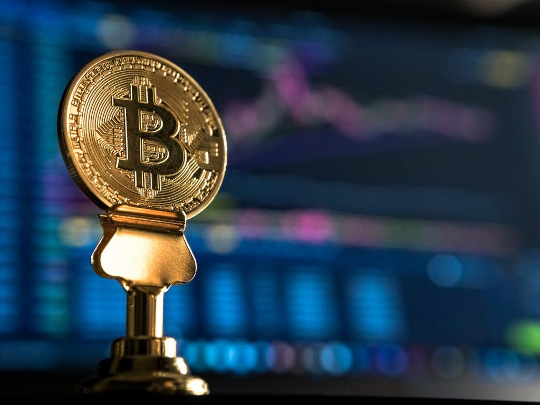
Bitcoin has strengthened almost 50% since the beginning of the year, while its price increased by more than 300% last year.
What happened in the last days testifies to the truth of the matter. Tesla has announced that it has invested $1.5 billion in Bitcoin and plans to make it acceptable to its customers as a means of payment for the purchase of its models "on a limited basis in the initial stage." Not only did it make sense, but it pushed the exchange rate of the most popular cryptocurrency to a new record, close to $50,000. To be precise, it reached $48,216, having strengthened by 1,150% in less than a year. Tesla would be the first major automaker to accept cryptocurrency as a means of trading with its customers.
You buy Tesla with Bitcoin!
Here's what it means, very practical: That with just one Bitcoin, one could today acquire one of Tesla's most popular models, the Model Y SUV. In other words, if he had invested $5,000 in cryptocurrency in March 2020, today, he would not only be able to acquire the above car, but he would have pocketed both his initial capital and a few thousand more!
Obviously, the decision of Tesla and its owner does not come like a thunderbolt, as Musk is known to be cryptocurrency-friendly (while he is rumored to be the anonymous strongman who hid behind Bitcoin from the beginning). "At this point, I think Bitcoin is a good thing," he said in an interview with Clubhouse earlier this month, an app designed specifically for wealth tycoons. "It simply came to our notice then. I may have entered the dance late, but I support it. "I think it is close to being widely accepted by conventional market people," he added.
The last secret seems to be hidden in this previous finding: Musk's move could completely change the rules of the game for Bitcoin. "Tesla can only be the beginning," notes the Bloomberg analysis, emphasizing that its adoption by a company with such an enormous scope and bright prospects will lead others on the same path and, in fact, immediately.
According to CNBC, the company announced that it bought Bitcoin with the aim of "more flexibility to diversify further and maximize its cash returns," according to the relevant entry. In the aftermath of the development, bitcoin's price made a strong rally, over 13%, and reached $43,844 while at the high of the day, it had reached the new record of $44,801 according to CoinDesk.
Respectively, Tesla's share in pre-conference trading increased by 2.5%.
The "elevator" effect does not help
This, after all, is a prerequisite for Tesla's plan to trade in Bitcoin, as this is practically impossible as long as the "exchange rate" of the cryptocurrency behaves like an elevator and can't be a reliable unit of value.
It is also certain that central banks can no longer be indifferent to this sector. Even if they reject Bitcoin, they have already begun plotting to create digital currencies - such as the ECB and China's central bank. The future of transactions will not be very similar to their present.
What about the energy?
According to data from the University of Cambridge, the thousands of computers around the world that process Bitcoin transactions consume 2.1 times more electricity than all of Greece.
Bitcoin's infrastructure devours 121.6 terawatt-hours (billions of kilowatt-hours) each year, compared to 57 Twh for Greece.
The popular cryptocurrency also exceeds the consumption of Argentina (121 Twh), the Netherlands (109 Twh), and the United Arab Emirates (113 Twh). It is now approaching the annual consumption of Norway (122.2 Twh), according to the Cambridge online application.
But how does a coin that does not even exist in physical form consume so much energy?
The answer lies in the way. Bitcoin transactions are confirmed. Theoretically, anyone can use their computer to process transactions. But to win this right, the computer is called upon to solve complex mathematical problems that require time and energy. Mathematical problems are not directly related to trading, but they do ensure that the Bitcoin system remains secure from outside interference.
As a reward for their services, computer owners who have earned the right to confirm transactions, known as "miners," are paid with Bitcoin that produces the system from scratch. And the higher the value of Bitcoin, the greater the interest of miners. As a result, the game is now controlled by individuals with effective computer systems - even entire warehouses full of computers.
Elon Musk's company is now being criticized for its energy-intensive investment. "Of course, we are concerned about carbon dioxide emissions from Bitcoin mining," Ben Diar, chief executive of Osmosis Investment Management, an investment firm that has bought shares in Tesla, told Reuters.
This article does not necessarily reflect the opinions of the editors or management of EconoTimes