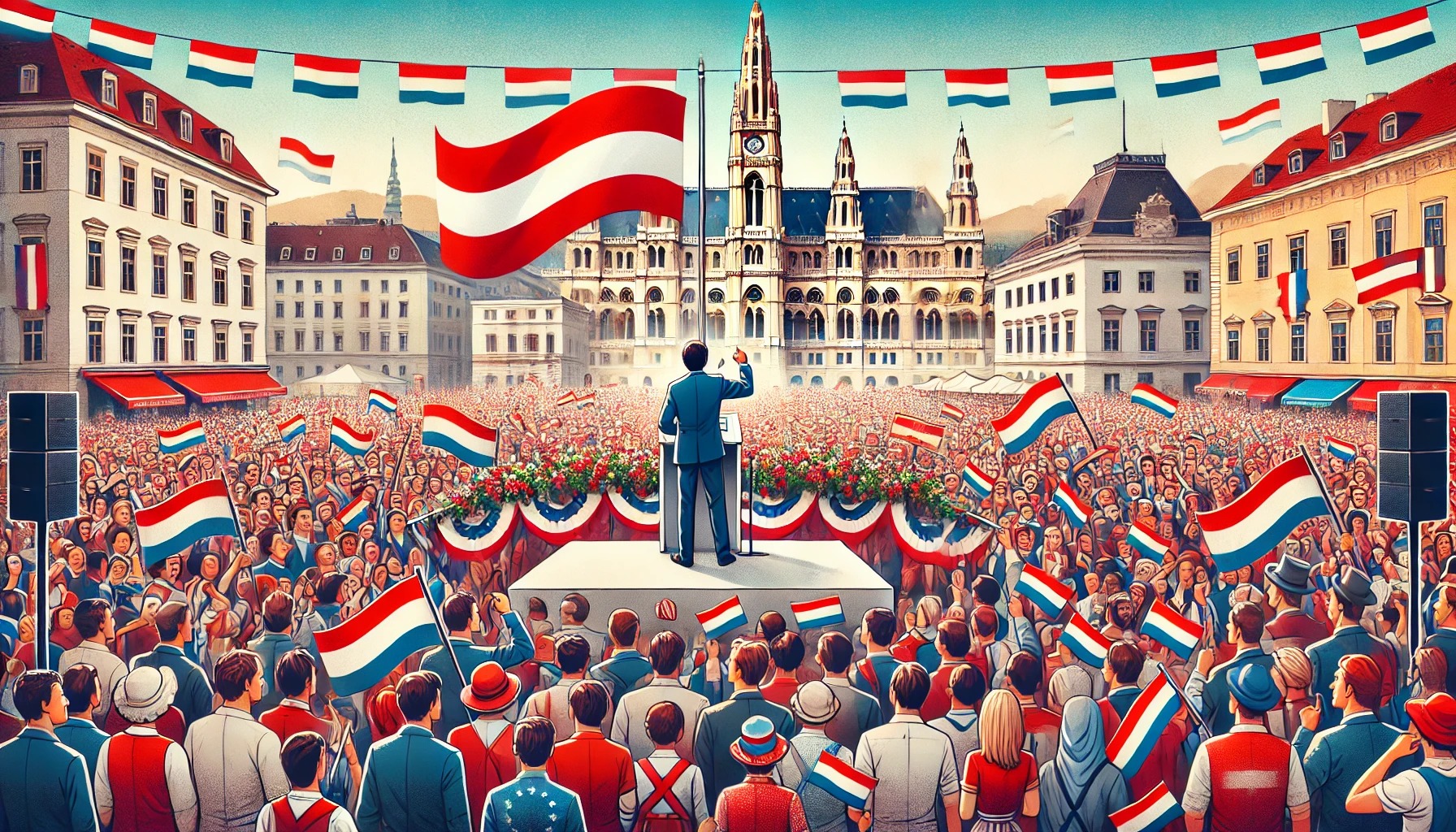
The European right celebrated the parliamentary election win of Austria’s Freedom Party (FPO) on Sunday, seeing it as a triumph for national conservatives across the continent. Under Herbert Kickl's leadership, the FPO won around 29% of the vote — a record result that positions the party to play a key role in the next Austrian government, amid growing concerns over immigration and a misfiring economy.
Coalition Challenges and International Support
While the FPO’s victory sets the stage for a potential role in governing, Kickl must secure a coalition partner to establish a stable government. He faces strong resistance from other Austrian party leaders, many of whom have rejected the idea of serving under his leadership. Alternative coalitions are being discussed to potentially bypass an FPO-led government.
However, European allies quickly voiced their support. The FPO is part of the Identity and Democracy (ID) group in the European Parliament, which includes France’s far-right National Rally (RN). RN leader Marine Le Pen praised the election results, framing them as part of a broader trend toward national sovereignty and populist sentiment. “After the Italian, Dutch, and French elections, this tidal wave...confirms the triumph of the people everywhere,” Le Pen wrote on X (formerly Twitter).
European Right Sees Growing Momentum
Other right-wing European leaders echoed Le Pen’s sentiments. Bjoern Hoecke, a leader of Germany’s far-right Alternative for Germany (AfD), called the FPO’s win a “sensation.” Dutch nationalist Geert Wilders, whose PVV party has seen gains in the Netherlands, responded to the FPO’s success with optimism, stating: “We are winning! Times are changing!”
Implications for EU Policy and International Relations
The FPO’s Eurosceptic stance could have significant implications for EU policies, particularly about Ukraine. Kickl opposes sending aid to Kyiv, and critics argue that parties within the right-wing Identity and Democracy group have been too lenient toward Moscow amidst Russia's ongoing invasion of Ukraine.
Earlier this year, Kickl allied with Hungary’s Fidesz party, led by Prime Minister Viktor Orban, who has frequently delayed or blocked major EU decisions on sanctions against Russia and aid for Ukraine. Hungarian Foreign Minister Peter Szijjarto celebrated the FPO’s success, while Italy’s Deputy Prime Minister Matteo Salvini hailed the vote as a “historic day in the name of change.”