


 Cardano Hits Record 436 TPS as Network Scaling Advances
  US Government Moves $1 Billion in Bitcoin Amid Sale Speculation
  XRP Price Eyes $1.50 as ETFs Attract $8.17M Inflows
  XRP Ledger Activates New Security Feature for Banks and Stablecoins
  Zcash Plans Quantum-Resistant Security Upgrade for January
  DWF Labs Sues BitGo for $114 Million Over Alleged Token Sales Breach
  XRP Whale Activity Drops 27% in Eight Days Amid Market Sell-Off
  Bitcoin Rebounds to $82K as Trump Eases Iran War Fears
  Ledger Investigates Alleged $86 Million Crypto Wallet Theft
  XRP Holds Steady at $1.39 as Crypto Market Faces Heavy Liquidations
  MSTR Stock Rises as Barclays Raises Price Target to $175
  Crypto Liquidation Flush: BTC & ETH at a Glance
  Cardano Price Drops 14% as ADA Funding Rate Hits Four-Month Low


 Add as a preferred source on Google
Reserve Bank of Australia (RBA) has held policy rates steady since May and as of latest indication, policy is likely to remain steady in the near term.
Australian Dollar has also stabilized in the near term as Reserve Bank of Australia (RBA) changed its tone and guidance towards Aussie. Weaker Aussie attracted inflows, especially from China to its housing sector, leading to massive price rise, especially in Sydney and Melbourne. In recent days, it might also be leading to worsening of Australia's terms of trade as weaker Aussie makes the imports more costly.
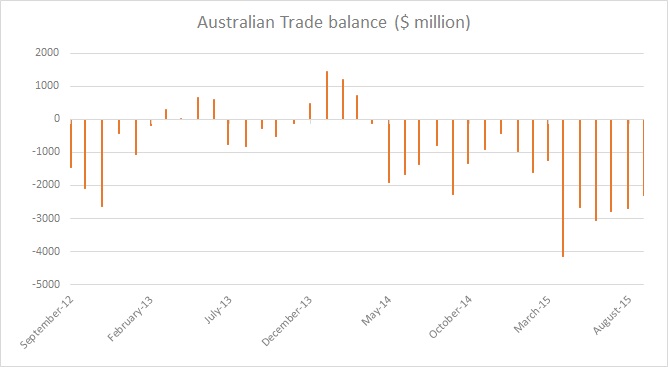
However, looking at Australia's trade balance and state of the miners, it would not be unfair to say, further weakness in Aussie would be beneficial.
- Latest report shows, marginal improvement in the trade balance but overall in in deep negative territory. Trade balance for September came at -$2.31 billion. Last time, Australian trade balance came positive was back in April last year. Since then commodity rout worsened outlook for Australian miners.
With slowdown in China, outlook for Australian exporters, especially of bulk commodities such as coal, iron ore look bleak.







