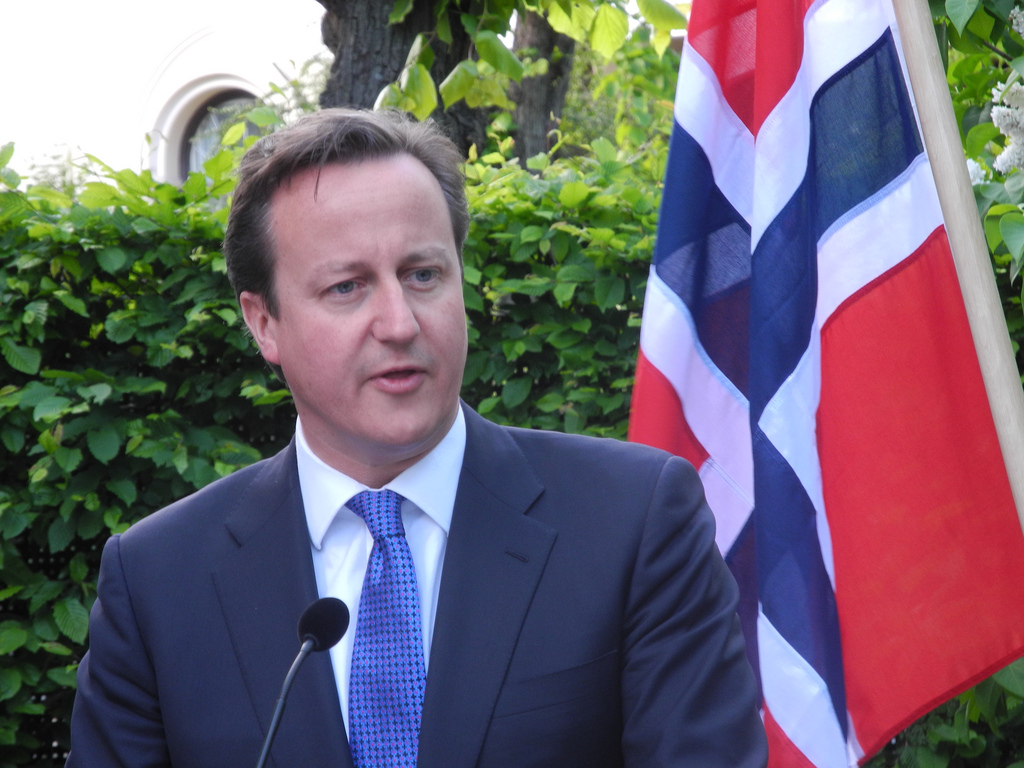
This is an international law declaration. It’s an agreement that 28 nations have signed in good faith. It’s a step forward. The prime minister negotiated in good faith and he’s achieved, what I consider to be, an improvement on the status quo. However, it’s also important that we recognise that until there is what the prime minister has called ‘full on’ treaty change, that the European Court of Justice is not bound by this agreement.
Michael Gove, the justice secretary, speaking to the BBC on February 24
The justice secretary, one of the high-profile members of the Conservative cabinet campaigning for Britain to leave the European Union, believes the deal reached on February 19 by 28 heads of state that make up the European Council is not legally binding.
The first thing to understand is that this is an “intergovernmental decision” (in the words of the Legal Counsel for the European Council), made at a summit of the European Council – rather than a new EU treaty or an amendment of a EU treaty. As such, the decision is a legal instrument regulated by the Vienna Convention on the Law of Treaties, rather than an EU ordinary decision.
A reform of the existing treaties would have meant following the reform procedure, which includes a ratification by each member state through lengthy national processes. A new EU Treaty would have been unnecessary and would take even longer.
However, an intergovernmental decision like this can, in principle, avoid the need for ratification by each country signing the agreement. This would follow a similar mechanism used in the past such as “Denmark and the Treaty on European Union” drawn up when Denmark joined the EU in 1992, and “Ireland and the Treaty of Lisbon”, relating to Ireland’s ratification of the 2009 Treaty of Lisbon. Ratification by the other member states wasn’t needed in either of these cases.
If any of the signatories of the new agreement with the UK wanted to follow a ratification procedure in their respective countries, they would have had to do so before entering into the agreement (article 12 of the Vienna Convention), and this was not the case. In fact, the agreement sets out a mechanism to trigger its effectiveness in page two of the new deal document: “On the date the government of the United Kingdom informs the secretary-general of the council that the United Kingdom has decided to remain a member of the European Union.” So, if the UK votes to stay in the EU, then the agreement would enter into force.
Position of the European Court of Justice
When Gove says that the European Court of Justice (ECJ) might not feel bound by this agreement, he may be not considering the fact that the ECJ has only authority to deal with the acts of the EU institutions. As stated above, the deal reached in February is an act taken by the the sovereign states. So it is outside of the EU, albeit with effects within.
The ECJ would have a say on the compatibility of the legislation that implemented the agreement with the treaties. For example, if there is EU legislation that limits access to social benefits, there would be a possibility that this piece of legislation would be challenged before the ECJ as against the treaties. Steve Peers, an EU law professor at Essex University has analysed this in detail.
But in reality, some of the aspects in the new UK deal, such as “abuse” of the free movement of workers, have been dealt with before by the ECJ. For example, in a 2014 case, a Romanian woman called Elisabeth Dano was denied access to social benefits in Germany because she had not come to the country looking for work.
Others aspects of the deal may require more political balancing – in other words, careful drafting of the resulting legislation, which is done by the European Council and European Parliament. It is important to remember that the treaties, which the UK will still be bound by, guarantee the principle of non-discrimination and ensure free movement of persons, but access to social benefits is the responsibility of the European Parliament and the European Council.
As long as the legislation that results from the agreement does not go against the existing treaties, there is no real risk of it being successfully challenged.
Verdict
The deal reached on February 20 is a carefully engineered agreement by the member states and the UK, which gives the UK government a guarantee that the agreed points of negotiation will indeed be binding and enforceable. It is not just an agreement in good faith – it would not be possible for the ECJ to overturn it.
Review
Paul James Cardwell, Reader in EU External Relations at the School of Law, University of Sheffield
The author of this Fact Check correctly points out that the part of the deal that Michael Gove is referring to – the declaration – is an instrument of international law. The declaration is not the only legal instrument used with the deal, as Steve Peers has detailed elsewhere. The author is also correct to point out that the European Court of Justice’s powers are limited to what is contained in the EU treaties, namely the interpretation and application of the treaties to ensure that the law is observed (Article 19 (1) of the Treaty on European Union).
A declaration is not a treaty and therefore the court cannot overturn it, but the court will take it into account when interpreting EU law. If it enters into effect, that is, if the UK decides to remain, then it remains to be seen whether a challenge is brought before the ECJ – the court cannot unilaterally decide to examine the declaration. As often occurs with complex legal questions (in all areas of law), what is “legally binding” cannot be answered with a simple “yes” or “no”.
 Paul James Cardwell is Treasurer of the University Association for Contemporary European Studies, a registered charity.
Alfonso Valero does not work for, consult, own shares in or receive funding from any company or organization that would benefit from this article, and has disclosed no relevant affiliations beyond the academic appointment above.
Alfonso Valero, Principal Lecturer, College of Business Law & Social Sciences, Nottingham Law School, Nottingham Trent University
Reviwer:
Paul James Cardwell, Reader in EU External Relations Law, University of Sheffield
This article was originally published on The Conversation. Read the original article.