
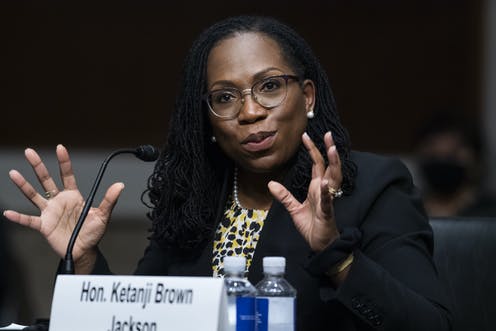
Supreme Court Justice Ketanji Brown Jackson has intensified her public criticism of the conservative-majority court's increasing reliance on its emergency docket — a fast-track legal pathway that has repeatedly been used to advance policies backed by President Donald Trump.
Speaking at Yale Law School in a closed event whose video was later released, Jackson argued that the conservative justices are intervening too hastily in cases that lower courts have not yet fully resolved. She warned that this trend has produced a "corrosive effect" on the American judicial system, creating what she called "zombie proceedings" — situations where lower courts are stripped of their authority while cases remain unresolved before them.
The emergency docket, often referred to as the "shadow docket," allows the Supreme Court to issue brief, unsigned rulings on an expedited basis, bypassing the standard process of public oral arguments and detailed written opinions. Jackson stressed that this mechanism was once reserved for rare and urgent situations, such as death row appeals, but has since evolved into a routine tool for deciding controversial policy matters.
Since Trump returned to office in early 2025, the court's use of this pathway has surged dramatically. Rulings issued through it have enabled the administration to move forward on several contested policies, including immigration enforcement, a military ban on transgender individuals, federal agency firings, and foreign aid reductions — all while legal challenges were still pending in lower courts.
Jackson cautioned that steering the nation's highest court into the center of every divisive political issue undermines its institutional credibility. She argued that emergency rulings are meant solely to prevent harm caused by litigation delays, not to establish binding legal precedent. Her remarks directly challenged Justice Neil Gorsuch's position that such emergency orders should carry precedential weight.


