
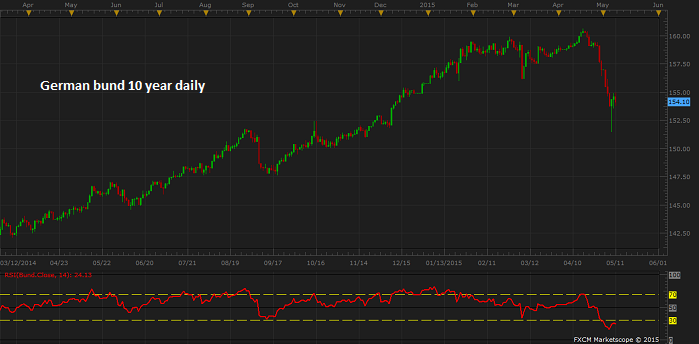
German bunds are experiencing heavy volatility and swings especially since last few weeks. German 10 year bund is trading at 0.58% as of now.
On April 17th 10 year yield reached 0.05% pushing yield curve into negative zone up to 9 years. On last Thursday 10 year yield reached 0.75% and dropped about 17 basis points to close around 0.58%.
What are the factors that affects bund yield?
- Inflation is key consideration in bund puzzle, recent moves have been fuelled by rising inflation expectation and the fact it might not be sensible to lend governments at such low rates for such long period. Whereas over the last few years fears of deflation has resulted in bund rallies pushing yields lower. Now the focus is on inflation as fear of deflation subsides.
- European Central Bank's (ECB) bond purchase program will be operating as per key contribution ratio which means that ECB will be buying largest share of German bonds among countries. This would mean overall yield would remain lower for longer time horizon than their historical average.
- Greek exit fear is another key factor for bonds across Euro zone. While German bunds face risk of contagion if Greece defaults or choose the exit route, risk aversion and rush to safety might provide initial rallies in bunds. Under such case additional measures taken by ECB remains key.
German 10 year is trading around 154.1, rally got hindered around 155. Bullish hammer in daily chart with low around 151 would keep selloff under check. Yield is hovering around 0.58%, up nearly 4 basis points today.


