Brazilian peppertree covers more than 750,000 acres in Florida, while state agencies spend nearly $3 million a year on control and federal researchers test whether thrips can reduce canopy cover and support understory recovery.
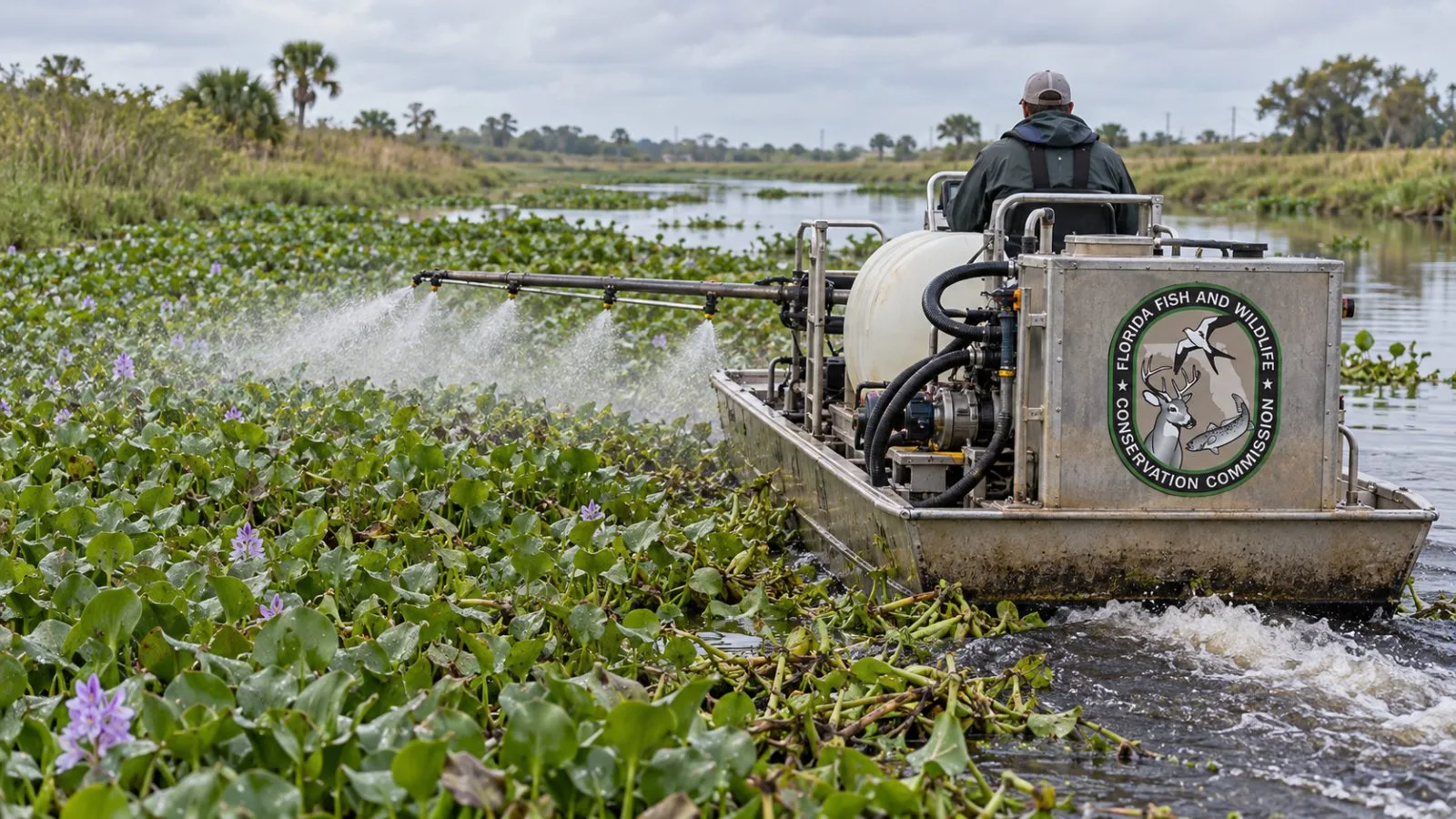
The Florida Department of Agriculture and Consumer Services (FDACS) says state agencies spend almost $3 million annually to control the invasive shrub. The U.S. Department of Agriculture (USDA) says chemical and mechanical treatments can be costly and temporary: the plant can regrow from cut stumps, and many infested areas are difficult to reach.
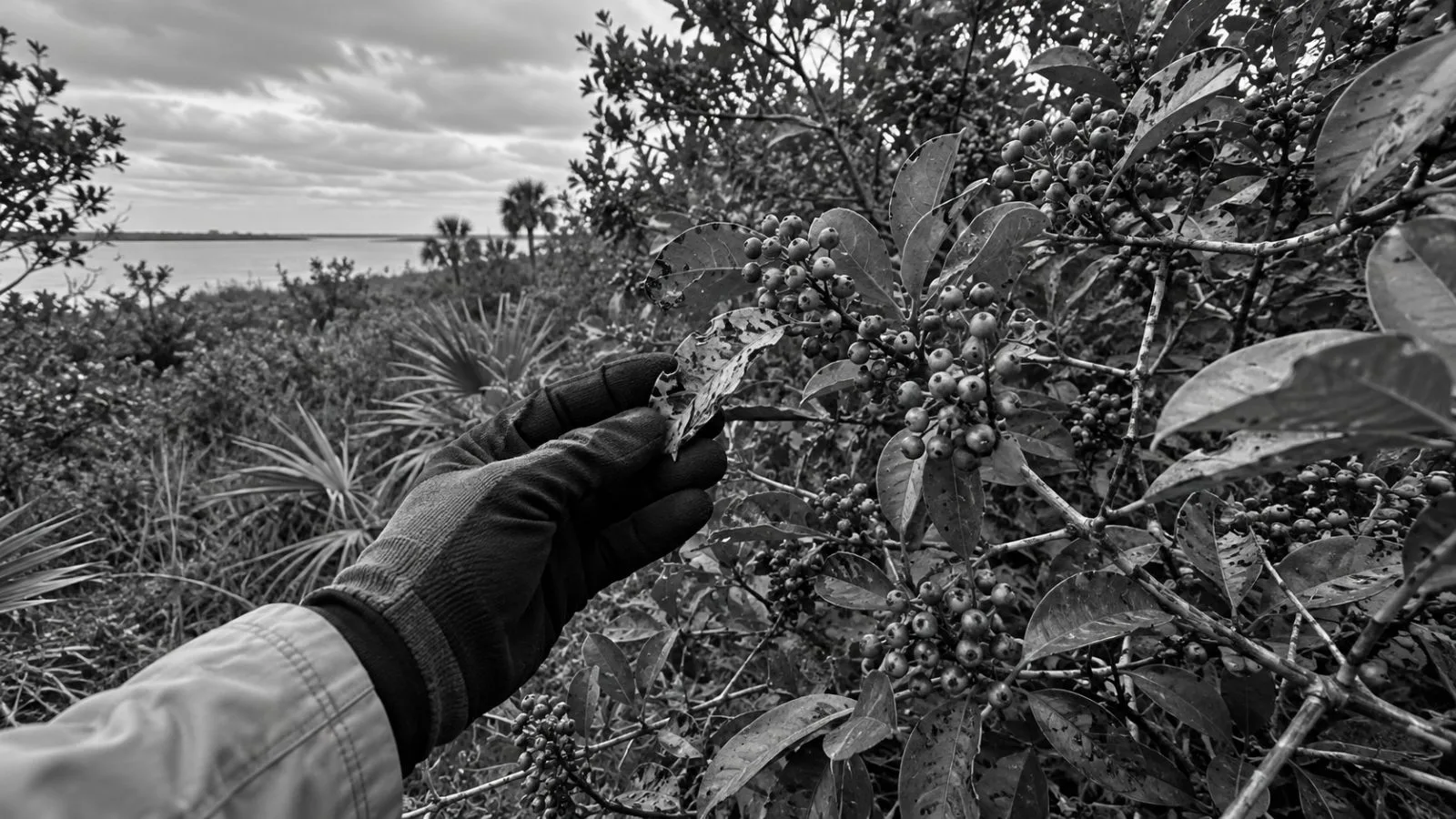
Native to South America, the shrub spreads through seeds eaten by birds and mammals, according to FDACS. The agency says dense growth can displace native vegetation.
The plant’s arrival date and route are uncertain. FDACS says it was brought to Florida as an ornamental by 1898, and possibly as early as the 1840s. The peer-reviewed account “Diversity and impact of herbivorous insects on Brazilian peppertree in Florida” describes the oldest Florida evidence it cites as specimens Ferdinand Rugel collected in the 1840s, without giving their locations. The account also records seeds sent to a USDA plant introduction center in Miami in 1898 and 1899, and seeds planted in Punta Gorda in 1926.
Brazilian peppertree thrips (Pseudophilothrips ichini), native to Brazil, were approved for release in May 2019 after testing. FDACS says the insects feed on the plant’s new leaves, stems and growing tips; damage to those tips can affect flowering and fruiting.
A 2022 study by Wheeler et al. in Florida Entomologist recorded 2,136,583 thrips released at 567 Florida sites from May 2019 through December 2021. In follow-up surveys of 223 sites where at least 60 days had passed since release, the study detected thrips at 77 sites, or 35%. The detection rate reached 60% in some survey intervals. These findings showed thrips persisted at some surveyed locations, not that they had controlled the plant across Florida.
The USDA Agricultural Research Service (ARS) reported nearly 400,000 thrips released in fiscal 2025. Its update reported an average canopy damage score of 27%; 19 sites had damage scores of 70% or higher. Those figures measure visible damage, not a reduction in the plant’s overall coverage.
USDA says established thrips populations decline during summer. Researchers are comparing them with a population from a warmer part of Brazil to assess heat tolerance. A five-year study at two field sites remains underway, tracking canopy cover and understory recovery.