


 Cardano Price Eyes $0.30 as ADA Whale Activity Surges
  Ethereum Price Drops Below $2,600 as Long Liquidations Hit 4-Month High
  Wall Street Analysts Weigh in on Latest NFP Data
  Moody's Upgrades Argentina's Credit Rating Amid Economic Reforms
  Circle Stock Falls 4% as Crypto Selloff Overshadows SAP Pay Expansion
  Evernorth XRPN Nasdaq Listing Delayed to October 12
  Oil Prices Dip Slightly Amid Focus on Russian Sanctions and U.S. Inflation Data
  Stock Futures Dip as Investors Await Key Payrolls Data
  Solana Targets 200ms Block Time in Major Network Upgrade
  UBS Predicts Potential Fed Rate Cut Amid Strong US Economic Data
  Bank of America Posts Strong Q4 2024 Results, Shares Rise
  Crypto Liquidation Flush: BTC & ETH at a Glance
  Gold Prices Slide as Rate Cut Prospects Diminish; Copper Gains on China Stimulus Hopes
  Gold Prices Fall Amid Rate Jitters; Copper Steady as China Stimulus Eyed
  Moldova Criticizes Russia Amid Transdniestria Energy Crisis
  Urban studies: Doing research when every city is different


 Add as a preferred source on Google
The British economy advanced 0.5 pct on quarter in the three months to September of 2016, slowing from a 0.7 pct expansion in the previous period and in line with the preliminary estimate. Net external demand was the main driver of growth, while household expenditure and fixed investment rose at a slower pace.
But GDP forecast for 2017 has been revised up to 1.0% and remove our call of a rate cut early next year. Rather, we expect the BoE to remain on hold over the forecast horizon.
We also highlight that trend growth has decreased in recent years to about 1.5% today. Brexit, if anything, poses downside risks to this estimate.
Inflation and retail sales data released this week came in on the strong side, while the labor market report showed that employment fell and claimants increased.
The discounted gloomy UK outlook both prevents a new bold depreciation and a much stronger currency. The technical picture suggests a new turbulence and bearish pressures.
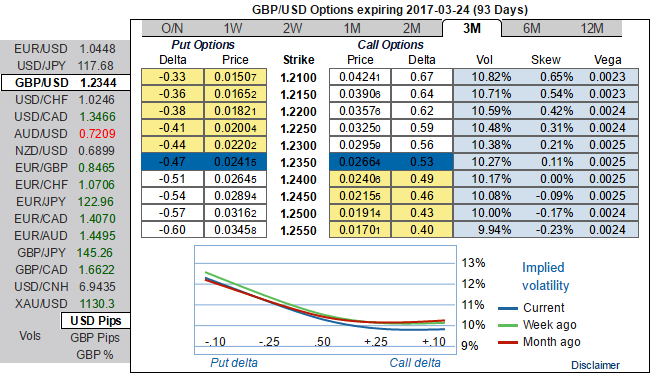
Owing to the above fundamental factors, GBP vols and risk reversals have been unchanged but to remain negative flashes to mitigate bearish risks in long run, while IV skews are also bidding OTM put strike which is line with the risk reversal indications.







