
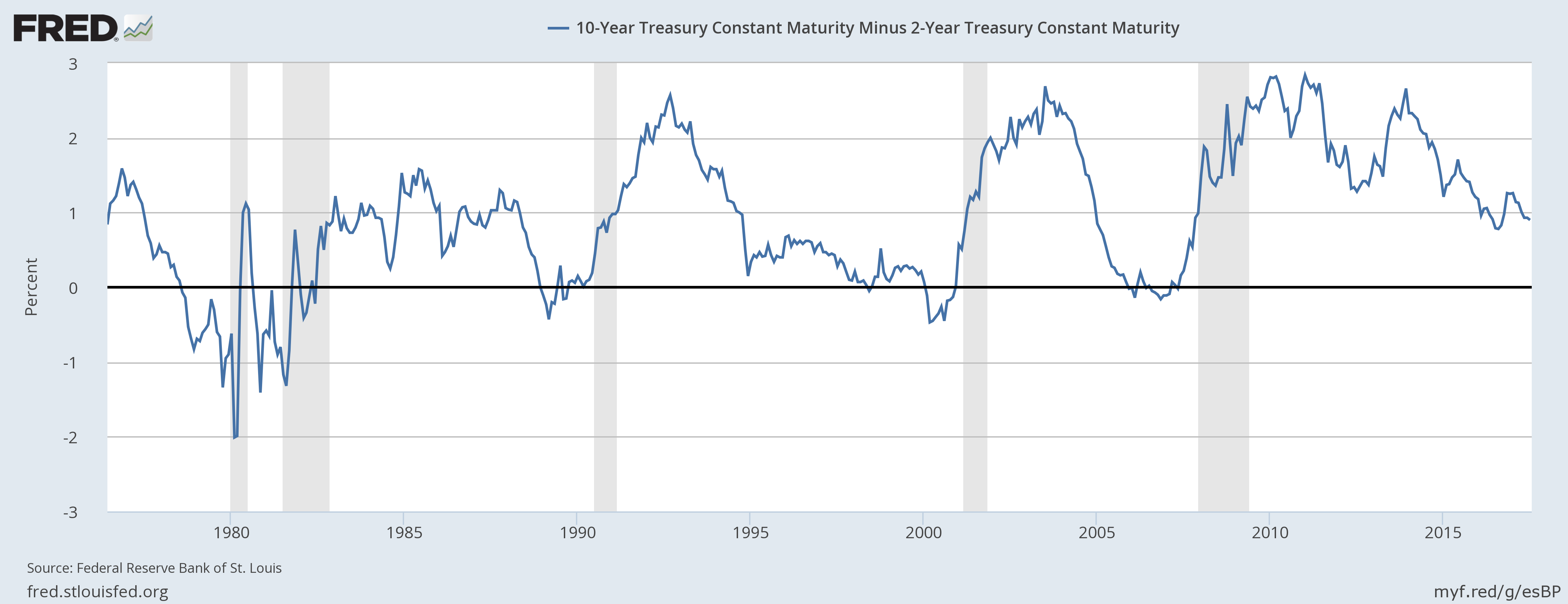
There are many indicators like PMI reports, jobs reports, inflation, industrial output, business sales etc. that we take a look into in determining whether the US economy is slowing down and heading for a recession but there is one indicator we are not losing sight of which is widely considered as the most reliable predictor of a recession and that is the yield difference between a 10-year U.S. treasury bonds and a 2-year treasury bonds.
This chart from the St. Louis Fed’s economic dashboard shows that the spread has correctly predicted last five recession. Every time before the US economy suffered a recession, the spread dipped below zero. After dipping to just 78 basis points in last August, the spread jumped to as high as 1.26 on the back of the election of Donald Trump. But as the optimism fades over President Trump’s economic agenda, the spread has taken a dive lower. It is currently at 90 basis points.
Despite the downturn, a journey towards zero is likely to be a long process and the possibility of an immediate recession in the United States remains a far-fetched idea.

