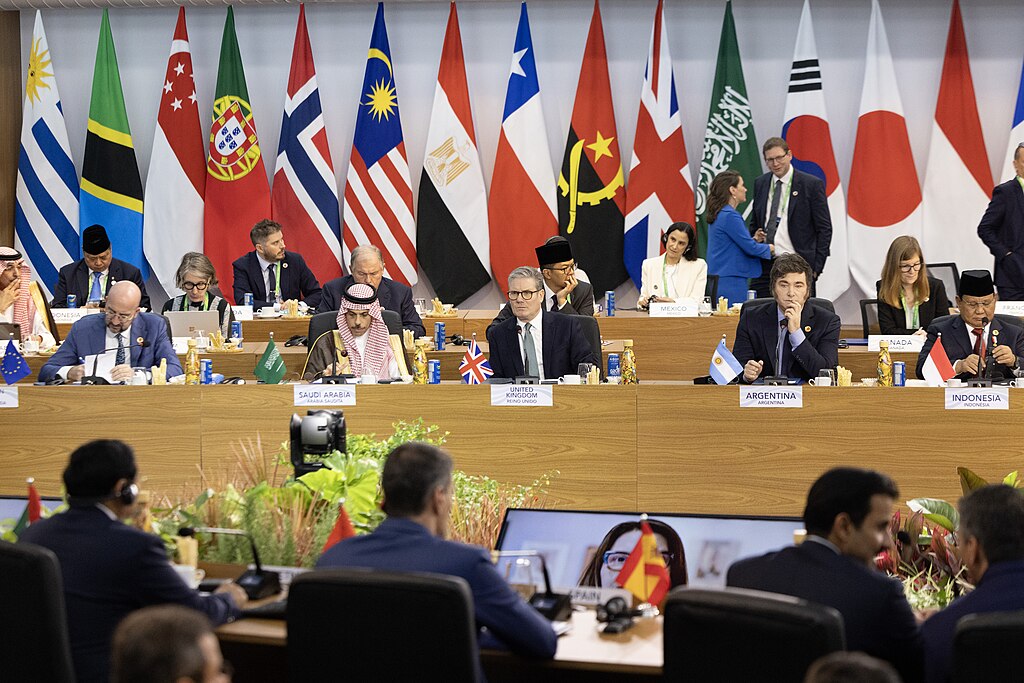
A U.S.-led effort to tackle excess industrial capacity and non-market economic policies failed to secure unanimous support from Group of 20 trade ministers, highlighting persistent divisions among the world’s major economies.
The U.S. Trade Representative’s office said most G20 members supported a draft ministerial statement addressing industrial overcapacity, but a “handful” firmly opposed establishing a framework for coordinated action. Washington, which holds the G20 presidency this year, did not identify the countries that rejected the proposal.
China had previously opposed a similar G20 statement criticizing forced labor and non-market policies that contribute to excessive exports. Beijing has repeatedly rejected U.S. claims that Chinese industrial subsidies are creating global overcapacity, arguing that Western governments are using the issue to justify protectionist trade policies.
The disagreement comes as USTR conducts a Section 301 investigation into trading partners over excess industrial capacity, raising the possibility of additional U.S. tariffs. Trade Representative Jamieson Greer has said negotiated tariff arrangements will be considered when Washington determines potential action following the investigation.
G20 members were even more divided over forced labor. Only Mexico and Argentina joined a U.S.-led statement calling for greater cooperation to eliminate goods produced using forced labor from global supply chains. The Trump administration has imposed tariffs of 10% or 12.5% on imports from 59 countries and the European Union, citing inadequate enforcement of forced-labor restrictions.
Despite the disagreements, G20 trade ministers reached consensus on opposing the use of food trade as a tool of economic or political coercion. Members warned that restricting or redirecting food and agricultural supplies to extract unrelated geopolitical concessions creates humanitarian and economic risks.
Ministers also discussed possible changes to the World Trade Organization’s most-favored-nation tariff system. Greer has argued that current WTO rules limit countries’ ability to respond to economies using non-market policies, while some G20 members expressed willingness to consider broader exceptions or new interpretations of existing rules.