


 Oil Prices Fall as Trump Ceasefire Claim Shifts Market Focus to U.S. CPI
  UK Finance Minister Healey Calls for Fiscal Discipline Amid Global Risks
  Asian Currencies Steady as Dollar Nears 18-Month High Ahead of US CPI
  Samsung, SK Hynix Shares Plunge as China Chip Competition Grows
  US Dollar Near 18-Month High Ahead of Inflation Data
  Trump Defends Russian Diesel Deal Amid US Sanctions Backlash
  Wall Street Ends Mixed as Investors Await CPI and Bank Earnings
  Deutsche Bank CEO Urges Faster German Economic Reforms
  European Auto Stocks Rise as EU-China Trade Deal Targets Hybrid Imports
  European Stocks Rise as Oil Prices Fall Ahead of US CPI
  US Stock Futures Rise as Oil Prices Fall Ahead of Q3 Earnings
  IMF Maintains 2027 Global Growth Forecast at 3.4% Amid Rising Risks
  Bank of America Predicts Yen Rebound as USD/JPY Faces Risks
  Gold Prices Rise Above $4,200 as Russia-Ukraine Energy Truce Eases Oil Concerns
  Global Stocks Mixed as Oil Falls Ahead of US Earnings
  US Dollar Rises for Fourth Week as Fed Rate Hike Bets Grow
  Trump Secures Russian Diesel Deal as US Fuel Prices Surge


 Add as a preferred source on Google
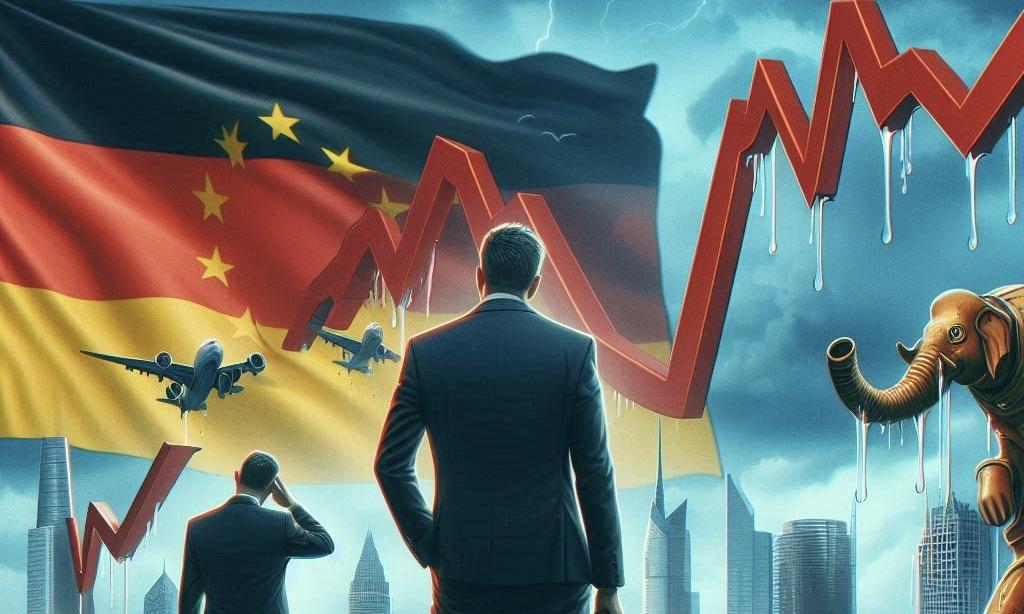
German business morale declined for the third straight month in August, as the Ifo Institute's business climate index dropped to 86.6, down from 87.0 in July. The survey of around 9,000 managers revealed increasing pessimism, signaling a challenging road ahead for Europe's largest economy.
German Business Confidence Declines for Third Month, Delaying Economic Recovery Hope
A survey conducted on August 26 revealed that German business morale declined for the third consecutive month in August, which has delayed the expectation of a recovery in Europe's largest economy.
The Ifo Institute reported that its business climate index decreased from 87.0 in July to 86.6 in August. However, it exceeded the 86.0 reading predicted by analysts polled by Reuters.
"The German economy is increasingly falling into crisis," said Ifo president Clemens Fuest.
In its survey of approximately 9,000 managers, Ifo discovered that companies were more pessimistic and perceived their situation as worse.
Ifo discovered that the industry's atmosphere has significantly declined, and service providers have also experienced a decline.
"The German economy has settled into stagnation," said Ifo economist Klaus Wohlrabe, citing a lack of order across all sectors and weak investment and adding that consumers were reluctant to spend due to uncertainty over inflation.
Wohlrabe anticipated that the German gross domestic product (GDP) would experience an additional decline in the third quarter, following an unexpected 0.1% contraction in the second quarter.
The present conditions index decreased from 87.1 the previous month to 86.5, while expectations were slightly lower at 86.8 from a slightly upwardly adjusted 87.0.
"There are not too many reasons for optimism at the moment," said LBBW bank's Elmar Voelker.
He identified a tumultuous global economy, geopolitical risks, and the impending U.S. presidential election in November as potential factors that could discourage optimism for any recovery before the end of the year.
VP Bank Economist Warns of Stagnation as German Economy Struggles Between Recession and Minimal Growth
Thomas Gitzel, the chief economist at VP Bank, also predicted that there would be no economic recovery shortly.
"The German economy continues to ride on a razor edge between recession and minimal growth," Gitzel said.
The most recent purchasing managers' index (PMI) data indicates that business activity contracted in August for the second consecutive month and was more than anticipated, consistent with the Ifo survey.
Combined, they are part of a series of indicators that have indicated an anemic expansion for the economy thus far this quarter.
The Bundesbank of Germany stated that a recession was improbable last week, although the general outlook remained subdued.







