Retailers in Germany, Greece and Italy reported suspected intrusions into refrigeration controls, extending a European series in which businesses have discarded food and officials have cited weaknesses in some store systems.
Anadolu Agency’s detailed account listed incidents in seven countries and said Finnish retailers were checking whether their temperature irregularities were connected.
In Germany, Tagesschau reported that overnight control changes caused supermarket units in North Rhine-Westphalia and Bavaria to heat instead of cool. Affected stores discarded large quantities of food. A regional manager for Arbeiterwohlfahrt (AWO), which operates the affected CAP supermarkets, confirmed an attack to the German Press Agency, Tagesschau said; police in Lower Bavaria are investigating suspected data espionage and data manipulation at an Edeka branch in Reisbach.
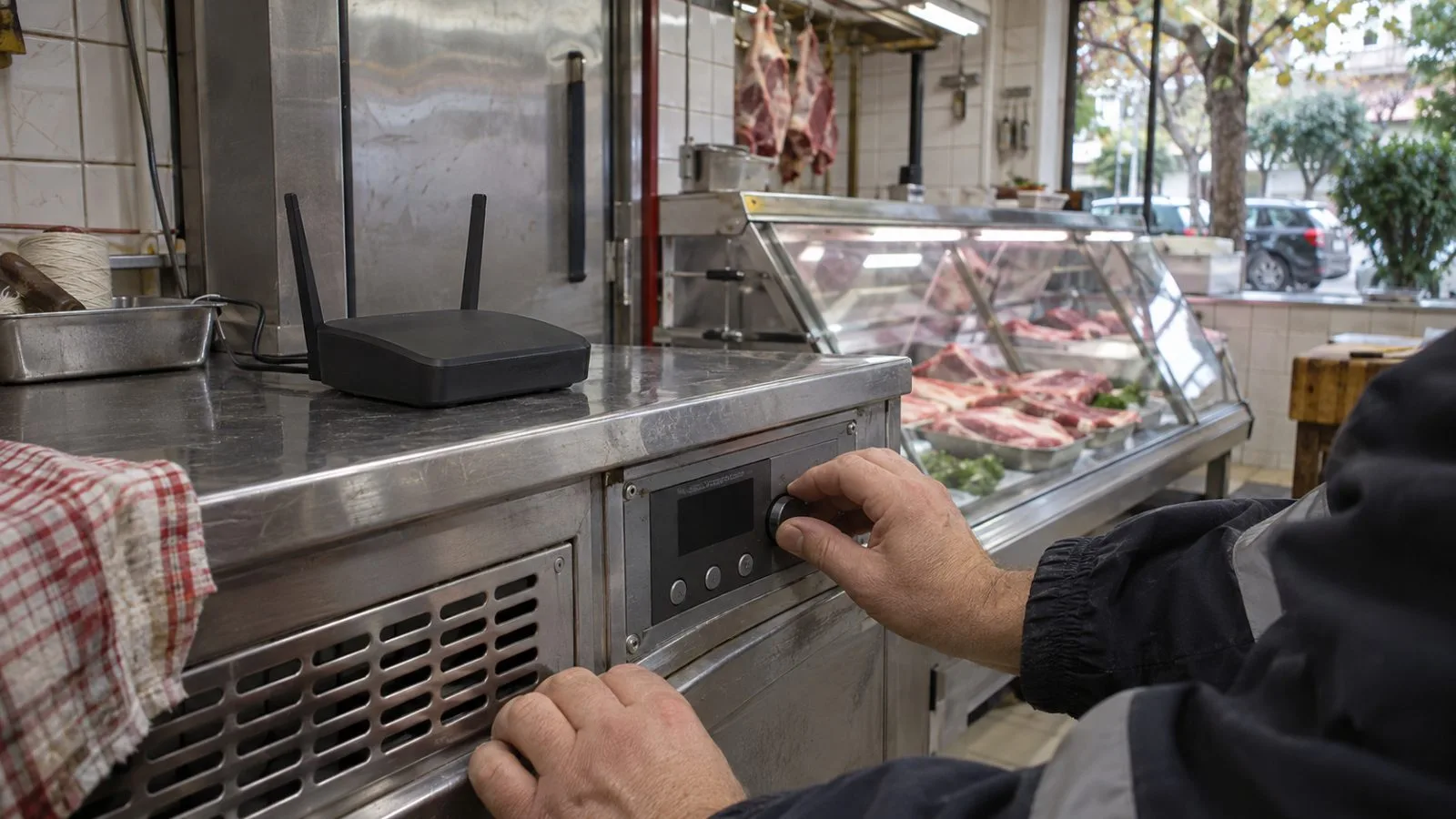
Capital reported that the controls at butcher shop owner Giorgos Boumpas’ business in Kifisia, Athens, had been set to 150 degrees Celsius (302 degrees Fahrenheit), leaving staff unable to change the setting manually. The report concerned the control setting; it did not establish that the refrigeration equipment itself reached that temperature. Boumpas said a technician restored access after two hours and the shop switched off its Wi-Fi.
Conad said five stores were affected in Italy — two in Veneto and three in Sicily — and technical teams intervened to limit merchandise losses. Meloni’s office said the overall impact was limited and it had no reports of public-health risks connected with thawed frozen food. The office cited Italy’s National Cybersecurity Agency (ACN) in describing outdated systems, internet-accessible interfaces and weak authentication at some stores; it said most of the food distribution chain had updated its protections. The reporting did not establish those weaknesses as the confirmed entry point in each attack.
Tagesschau also noted a French supermarket incident about three weeks earlier. In the Nov. 2 wave, Sweden’s Coop disconnected refrigeration systems at seven stores, a response covered in EconoTimes’ report on Coop’s action at seven Swedish stores.