


 Gold Prices Fall Amid Rate Jitters; Copper Steady as China Stimulus Eyed
  Best Gold Stocks to Buy Now: AABB, GOLD, GDX


 Add as a preferred source on Google
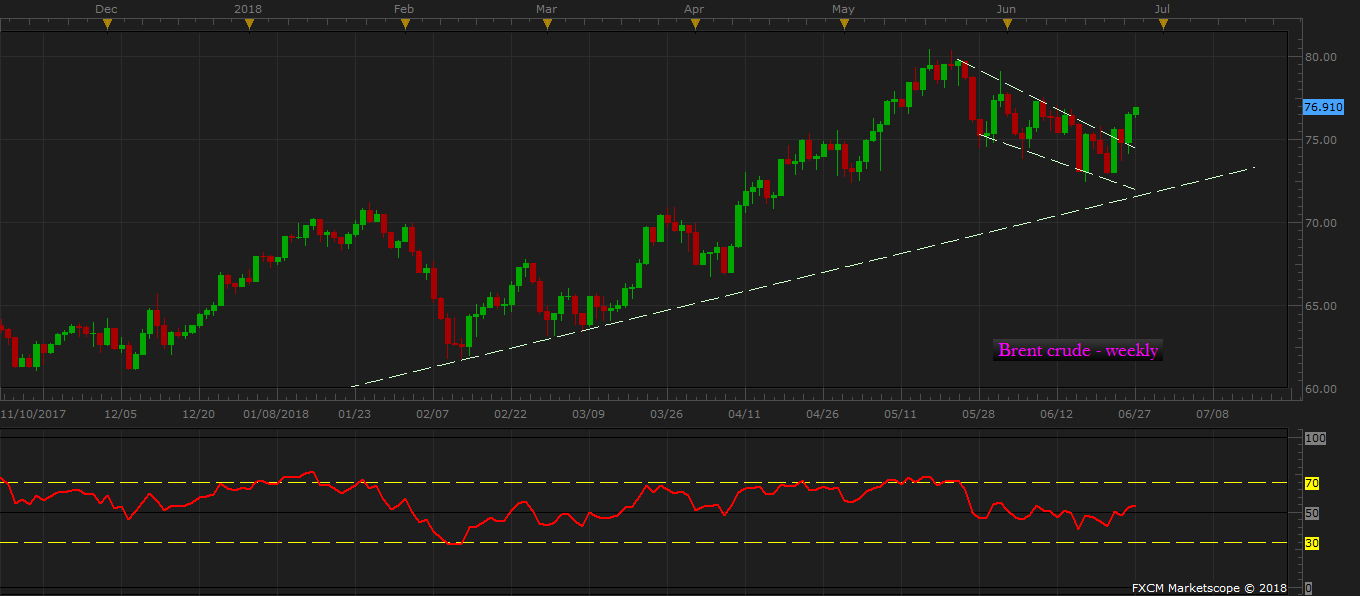
Oil bulls have found their lost momentum after OPEC meeting last week thanks to geopolitical risks cloaking the oil market. The price of Brent has been declining since May this year after reaching $80.5 per barrel, the highest level since 2014. Ahead of the last week’s OPEC meeting, the price of Brent declined to as low as $72.5 per barrel.
At the OPEC meet:
At the OPEC meeting, there was no clear message with regard to output cut. OPEC announced that it would increase production in such a way that the compliance to the agreement declines from 147 percent to 100 percent, which is around 560,000 barrels per day; not much. However, Saudi Arabia announced that the production barrier was eased by a million barrels per day. Russia said that it would ease production by 200,000 barrels per day. Kuwait and Qatari officials suggested numbers ranging from 600,000 barrels to 800,000 barrels per day. Iran suggested 500,000 barrels per day.
Geopolitical risks:
As the amount of easing along with the methods to achieve it remained vague, the bulls focused on the geopolitical risks and found the lost momentum back. At one hand, there is steady risk stemming from the conflict between Saudi Arabia and Houthi rebels of Yemen, on the other battle to take control over the oilfields in Libya clouds production outlook for this African country. So, as reports came out suggesting that the U.S. state department is urging its allies to cut imports of Iranian oil by November as the U.S. will re-impose its sanctions. The very first round of sanctions would go live in August 2018 and the rest by the end of the year.
Brent is currently trading $76.9 per barrel and we expect it to soon retest its May peak.







