Gold prices declined sharply on Thursday as a stronger U.S. dollar and rising inflation concerns increased expectations that the Federal Reserve may raise interest rates later this year. Investors also closely monitored geopolitical developments during President Donald Trump’s visit to China and the ongoing tensions involving Iran.
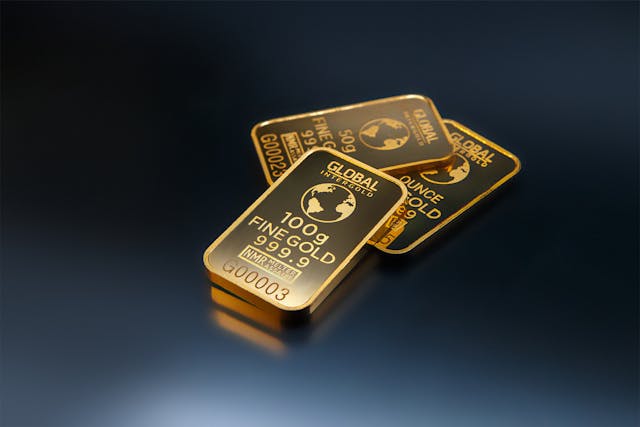
Spot gold dropped 0.9% to $4,652.46 per ounce, while gold futures slipped 1.1% to $4,655.35 per ounce. Other precious metals also recorded losses, with silver falling 4.8% and platinum declining 5.5%. Analysts noted that gold has struggled against the strengthening dollar and growing market expectations of tighter monetary policy in the United States.
Recent economic data added pressure on the gold market. U.S. consumer price index and producer price index reports both showed stronger-than-expected inflation levels, while April retail sales increased 0.5%, signaling that consumers are still spending despite higher prices. Rising oil prices linked to Middle East tensions have also contributed to inflation concerns across global markets.
Higher inflation has prompted traders to scale back expectations for Federal Reserve rate cuts. According to market analysts, investors are now increasingly betting on additional rate hikes instead. Since gold does not generate interest, it often becomes less attractive when borrowing costs rise and the dollar strengthens.
Meanwhile, political and economic developments in China remained a major focus. President Trump and Chinese President Xi Jinping reportedly discussed trade, artificial intelligence, and Iran during their summit. Market sentiment improved after reports that several Chinese companies received approval to purchase Nvidia’s advanced H200 AI chips. Boeing shares also gained after Trump announced that China had agreed to purchase 200 aircraft from the U.S. aerospace giant.
Investors continue to monitor global inflation trends, U.S. monetary policy, oil prices, and geopolitical tensions, all of which are expected to influence gold prices and broader financial markets in the coming months.