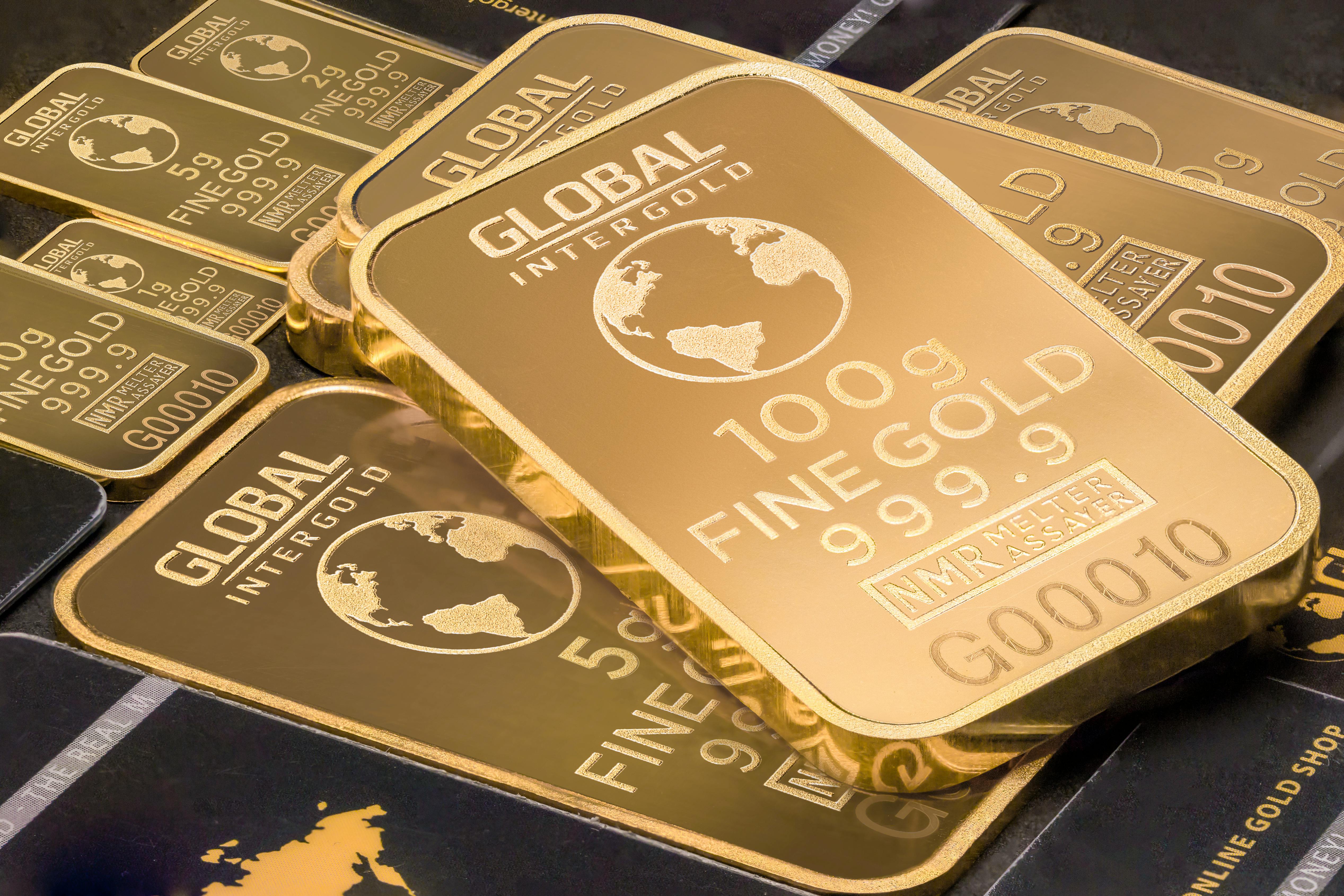
Gold prices tumbled sharply on Friday, recording their biggest weekly decline since mid-March as a stronger U.S. dollar and growing expectations of Federal Reserve rate hikes weighed heavily on the precious metals market. Rising inflation concerns tied to escalating Middle East tensions and higher oil prices also pushed investors toward the dollar, reducing demand for non-yielding assets like gold.
Spot gold fell 2.4% to close at $4,540.14 per ounce, while U.S. gold futures dropped 3% to settle at $4,543.60 per ounce. On a weekly basis, spot gold lost 3.7%, and gold futures declined 4%, reflecting increased market volatility and shifting investor sentiment.
Other precious metals also faced steep losses. Spot silver plunged 9% to $75.9795 per ounce, while platinum slipped 5.1% to $1,985.20 per ounce. Copper prices also weakened, with London Metal Exchange benchmark copper futures falling 1.5% to $13,938.50 per ton and U.S. copper futures dropping 4.9% to $6.2895 per pound.
The U.S. dollar strengthened significantly after hotter-than-expected U.S. CPI and PPI inflation reports signaled that rising oil prices linked to the Iran conflict were driving broader inflationary pressures. Investors now expect the Federal Reserve to maintain a more aggressive monetary policy stance, increasing the likelihood of additional interest rate hikes in the coming months.
A stronger dollar typically hurts gold prices because it makes bullion more expensive for overseas buyers. Analysts also noted that elevated metal prices may be starting to weaken industrial demand, particularly in China.
Meanwhile, President Donald Trump concluded his visit to China without major breakthroughs on trade, artificial intelligence, or the Iran conflict. Although Trump claimed China agreed to increase purchases of U.S. oil, Boeing aircraft, and agricultural products, few concrete details were released. Markets also remained cautious over ongoing geopolitical tensions involving Iran and uncertainty surrounding the Strait of Hormuz.