


 European Auto Stocks Rise as EU-China Trade Deal Targets Hybrid Imports
  IMF Maintains 2027 Global Growth Forecast at 3.4% Amid Rising Risks
  As the Black Summer megafires neared, people rallied to save wildlife and domestic animals. But it came at a real cost
  How ongoing deforestation is rooted in colonialism and its management practices
  Meta Launches Muse Wonder AI Models, Shares Rise 3.7%
  Nasdaq Falls as Oil Prices Surge Ahead of Bank Earnings
  Swimming in the sweet spot: how marine animals save energy on long journeys
  PepsiCo Slashes Poppi Earnout Valuation as Growth Slows
  US Stock Futures Rise as Oil Prices Fall Ahead of Q3 Earnings
  How is Antarctica melting, exactly? Crucial details are beginning to come into focus
  LA fires: Long-term exposure to wildfire smoke is poorly understood − and a growing risk
  Burkina Faso and Mali’s fabulous flora: new plant life record released
  Gold Prices Rebound as Dollar Weakens Ahead of US Inflation Data
  Rice feeds billions of people – but its role in fueling climate change is growing
  Fungi are among the planet’s most important organisms — yet they continue to be overlooked in conservation strategies
  Samsung, SK Hynix Shares Plunge as China Chip Competition Grows


 Add as a preferred source on Google
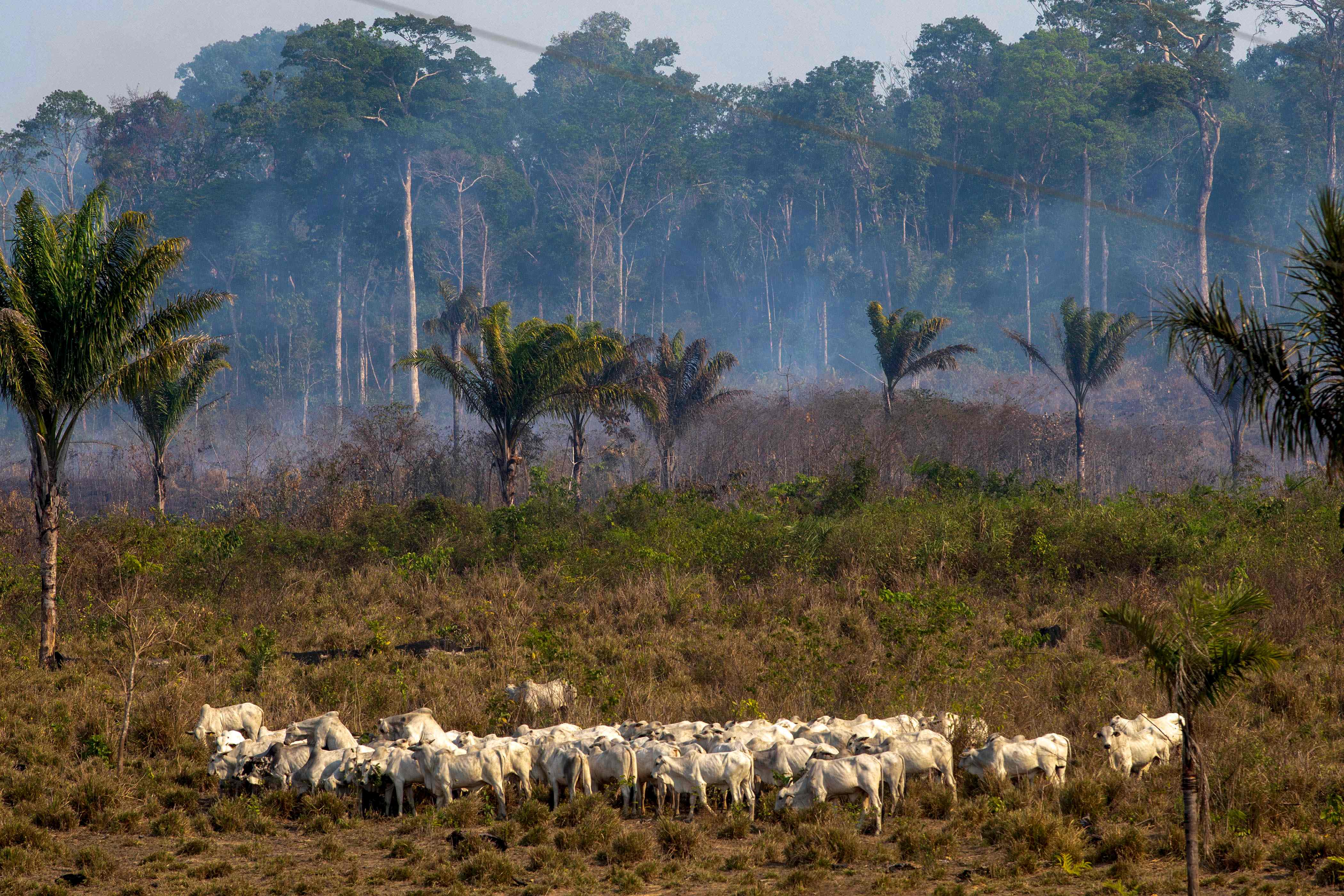
A new report from sustainability organization Slow Factory Foundation and Stand.earth found that cattle farmers who produce leather for fashion brands such Nike, Adidas, H&M, Zara, and Coach are intensifying the deforestation of the Amazon rainforest.
The organization tracked down the leather exports and customs data and identified two main industries buying it: the auto industry for car seats and the fashion industry for shoes, handbags, and accessories.
The group also identified dozens of fashion brands that source hides from Amazon.
Greg Higgs, who led the study as director of research at Stand.earth, noted that cattle farming was a big part of the problem because ranchers clear the forests to create land for cows to graze.
While cutting down trees for cattle farming is illegal, the practice is unregulated.
Higgs says small-scale farmers, many living below the poverty line, shouldn't be blamed.
Rather, the fault belongs to the companies who are buying their hides.
According to the United Nations trade data, about 20 percent of leather is derived from the Brazilian Amazon.
The Amazon rainforest is crucial in fighting global warming because its trees absorb millions of tons of carbon dioxide annually.
Thus, by sourcing leather from the Amazon rainforest, fashion brands contribute to the problem.
The study's authors suggested that the fashion labels could change this by choosing more sustainable leather alternatives.
Adidas, Nike, and Coach all said that they are against Amazon deforestation and are part of the Leather Working Group, a nonprofit that certifies that leather is sustainably sourced.
However, the LWG only rates tanneries on their ability to trace leather back to slaughterhouses, not farms.
Meanwhile, H&M claims it has banned leather from Brazil since 2019 but admitted that it could be hard to trace the leather in its supply chain.







