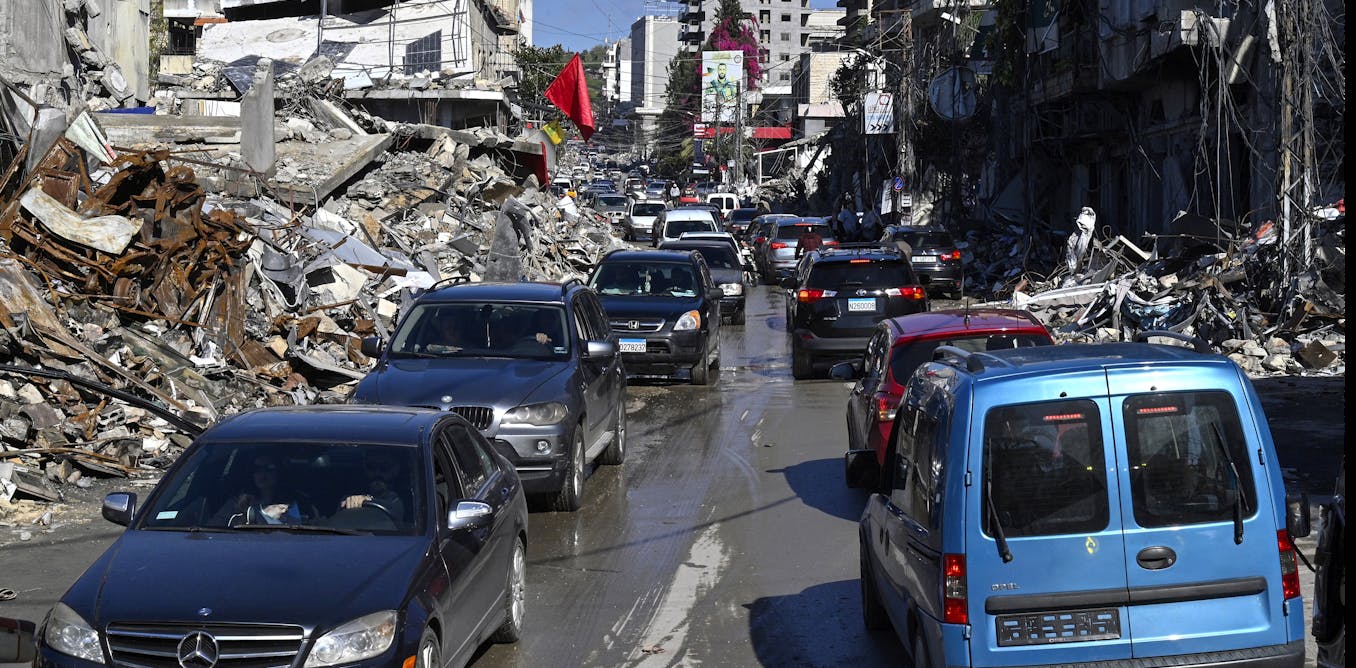
Israel launched airstrikes across Lebanon on Monday, targeting positions linked to the Iran-backed Hezbollah group after the militant organization fired missiles and drones toward Israeli territory. The escalation marks the first cross-border attack by Hezbollah since the beginning of recent U.S. and Israeli military operations against Iran.
According to the Israel Defense Forces (IDF), the strikes were aimed at neutralizing threats posed by Hezbollah following its decision to join the broader regional conflict. The Israeli military stated it would not allow the group to endanger the security of the State of Israel. Explosions were reported in Beirut, particularly in the southern suburbs of the Lebanese capital, an area widely regarded as a Hezbollah stronghold. Lebanese security sources confirmed that Israeli forces carried out strikes in that district.
Hezbollah said its missile and drone attacks were launched in response to Israel’s killing of Iran’s Supreme Leader Ayatollah Ali Khamenei and what it described as ongoing Israeli violations against Lebanon. In an official statement, the Shi’ite militant group emphasized its right to defend itself and retaliate against Israeli military actions, including targeted assassinations of its leaders and members.
The latest exchange of fire raises concerns about the stability of the 2024 U.S.-brokered ceasefire agreement between Israel and Lebanon. That agreement ended more than a year of intense fighting that significantly weakened Hezbollah’s military capabilities due to sustained Israeli airstrikes. Since the ceasefire, both sides have accused each other of repeated violations.
Lebanon’s presidency recently stated that the U.S. ambassador had assured officials that Israel would refrain from escalating the situation, provided no hostile actions were initiated from Lebanese territory. However, the renewed Israel-Hezbollah conflict highlights the fragile security situation along the Israel-Lebanon border and increases fears of a broader regional war involving Iran and its allies.