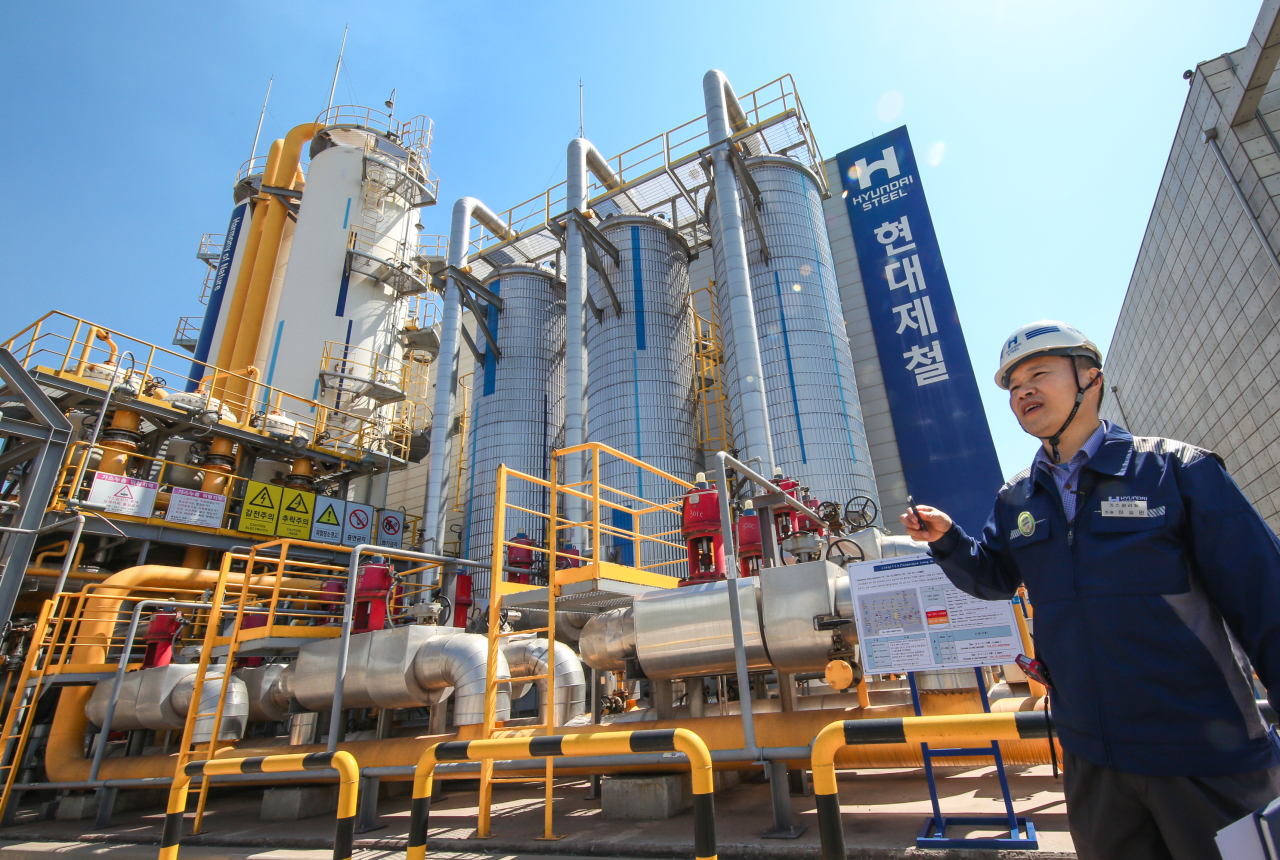
Hyundai Steel Co. will launch the production of high-end steel materials by establishing Hy-Cube, a new electric furnace-based steel production system.
The Hy-Cube technology is based on a new electric furnace concept known as Hy-Arc, which is an improved version of an existing electric furnace whose sole goal is to melt garbage to produce molten iron.
In addition to this function, Hy-Arc may melt steel components, remove impurities, and add new components.
To minimize carbon emissions, Hyundai Steel wants to make high-end steel plates, notably those for cars, using scraps, molten iron, and direct reduced iron (DRI).
By 2030, the business hopes to start producing high-end low-carbon steel plates by switching to a hydrogen-based steel manufacturing system.
According to Hyundai Steel, they’re already producing over 10 million tons of electric furnace products per year.
Compared to blast furnace products, electric furnace products can reduce carbon emissions by 75 percent due to the characteristics of components and processing, putting the company in a more advantageous position to achieve carbon neutrality than other blast furnace-centered steel companies.