


 Dollar Near 18-Month High as Euro, Yen and Pound Weaken
  Trump Opens Tax-Exempt Dyed Diesel Access as Fuel Prices Surge
  Oil Prices Rise as Gulf Hurricane and Middle East Supply Risks Mount
  Gold Prices Fall as Stronger Dollar Weighs on Bullion
  Deere, CNH and AGCO Stocks Fall as FTC Launches Farm Equipment Probe
  UK House Prices Flat in September as Mortgage Rates Weigh
  Asian Currencies Mixed as Yen Weakens, Dollar Holds Firm
  Iran Tanker Attacks Surge as Hormuz Oil Flows Near Prewar Levels
  Japan Real Wages Rise 1.5%, Supporting BOJ Rate Hikes
  Gold Prices Rise as Dollar Weakens, Treasury Yields Ease
  Wall Street Falls as Fed Minutes Signal Another Rate Hike
  Crypto Market Selloff Wipes Out $100B as Bitcoin Falls Below $83K
  S&P 500 Hits Record High as AI Rally Lifts Wall Street
  US Dollar Hits 18-Month High as Fed Signals More Rate Hikes
  Australia Consumer Confidence Plunges as RBA Rate Hike Hits Households
  Oil Prices Rise as Hormuz Risks Offset IEA Stock Release
  Bangladesh GDP Growth Accelerates to 4.6% on Industrial Rebound


 Add as a preferred source on Google
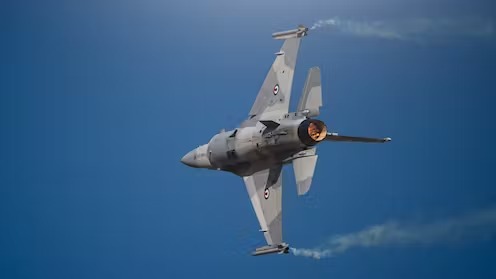

We know that war is bad for the environment, with toxic chemicals left polluting the soil and water for decades after fighting ceases. Much less obvious are the carbon emissions from armed conflicts and their long-term impacts on the climate.
Colleagues and I have estimated that the US military alone contributes more greenhouse gas emissions than over 150 countries, but too often discussions of the links between militaries and climate change focus only on future risks to global security in climate-affected settings. There are many tepid attempts by militaries to green their war machines – developing electric tanks or navy ships run on biofuels – yet there is very little discussion of how they contribute to climate change, especially during war.
Militaries are not very transparent and it is extremely difficult to access the data needed to run comprehensive carbon emissions calculations, even in peacetime. Researchers are essentially left on their own. Using an array of methods, colleagues and I have been working to open this “black box” of wartime emissions and demand transparent reporting of military emissions to the UN’s climate body, the UNFCCC.
Here are some of the ways militaries create emissions, and how we go about estimating them.
Direct and indirect emissions
Some military emissions are not necessarily specific to wartime, but dramatically increase during combat. Among the largest sources are jet fuel for planes and diesel for tanks and naval ships.
Other sources include weapons and ammunition manufacturing, troop deployment, housing, and feeding armies. Then there is the havoc that militaries cause by dropping bombs, including fires, smoke and rubble from damage to homes and infrastructure – all amounting to a massive “carbon war bootprint”.
In order to account for all of this carbon, researchers must begin with basic data surrounding direct “tailpipe” emissions, known as Scope 1 emissions. This is the carbon emitted directly from burning fuel in the engine of a plane, for instance. If we know how much fuel is consumed per kilometre by a certain type of jet plane, we can begin to estimate how much carbon is emitted by a whole fleet of those planes over a certain amount of missions.
Then we have emissions from heating or electricity that are an indirect result of a particular activity – emissions from burning gas to produce electricity to light up an army barracks, for instance. These are Scope 2 emissions.
From there, we can try to account for the complex “long tail” of indirect or embodied emissions, known as Scope 3. These are found in extensive military supply chains and involve carbon emitted by anything from weapons manufacturing to IT and other logistics.
To understand combat emissions better, my colleagues have even proposed a new category, Scope 3 Plus, which includes everything from damage caused by war to post-conflict reconstruction. For example, the emissions involved in rebuilding Gaza or Mariupol in Ukraine will be enormous.
Concrete problems
Our most recent research, looking at the US military’s use of concrete in Iraq from 2003 to 2011, illustrates some of the calculations involved. During its occupation of Baghdad, the US military laid hundreds of miles of walls as part of its urban counterinsurgency strategy. These were used to protect against the damage caused by bombs planted by insurgents, and to manage civilian and insurgent movements within the city by channelling residents through authorised roads and checkpoints.
However, concrete also has a massive carbon footprint, accounting for almost 7% of global CO₂ emissions. And the concrete walls in Baghdad alone – 412km (256 miles) – were longer than the distance from London to Paris. Those walls caused the emission of an estimated 200,000 tonnes of CO₂ and its equivalent in other gases (CO₂e), which is roughly equivalent to the total annual car tailpipe emissions of the UK, or the entire emissions of a small island nation.
Ukraine war has the carbon footprint of Belgium
In Ukraine, colleagues have begun the colossal task of adding up all the above factors and more in order to calculate the carbon effects of Russia’s invasion. This work is revolutionary as it attempts to do the very difficult task of accounting for the emissions of war in almost real time.

An unexploded missile in Ukraine, April 2022. Drop of Light / shutterstock
These researchers estimate the carbon footprint of the first year of the war to be in the region of 120 million tonnes of CO₂e. That’s roughly the annual emissions of Belgium. Ammunition and explosives alone for around 2 million tonnes of CO₂e in that period – equal to almost 1 billion beef steaks (150g), or 13 billion kilometres of driving.
A focus on conflict emissions is particularly timely given the Ukraine and Israel-Gaza wars, but also because of draft legislation concerning the 27 legal principles on the protection of the environment in relation to armed conflicts (Perac) that was passed by the UN general assembly in December 2022. While Perac is a major step forward, it still has little to say about greenhouse gas emissions during conflict.
Governments should adhere to their obligations to transparent and accurate reporting of military emissions. People are beginning to link armed conflict, greenhouse gas emissions and environmental protection, but the topic remains under-reported and unresearched – it’s time to shine a spotlight on this hidden aspect of war.







