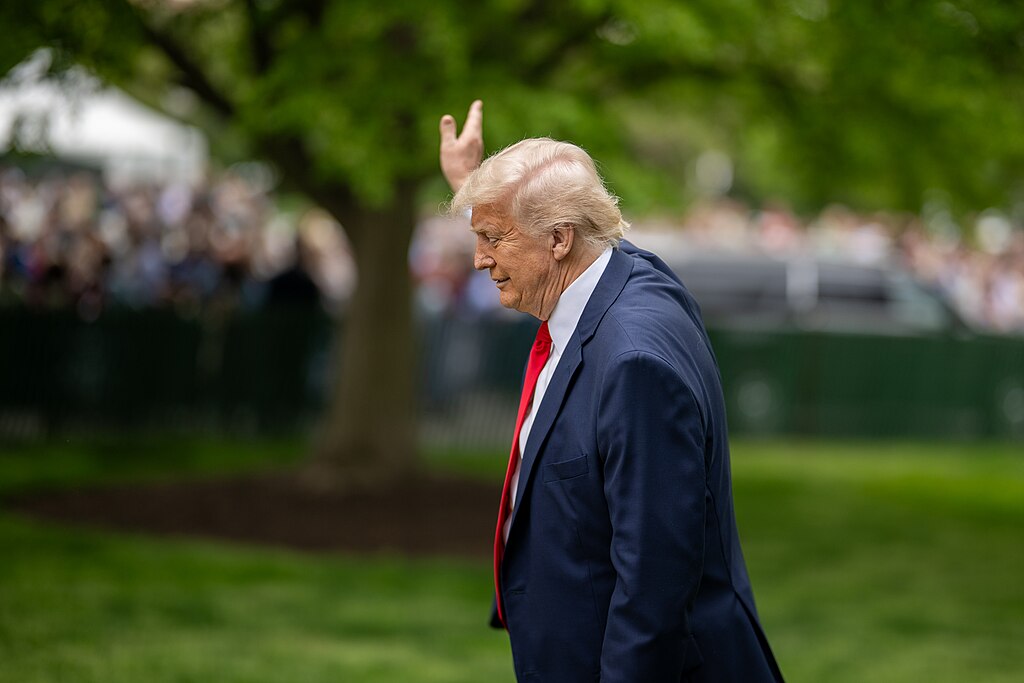
Human Rights Watch has raised serious concerns about the state of democracy in the United States, warning that key democratic institutions and human rights protections are under threat during President Donald Trump’s second term. In its latest annual global report, the New York-based human rights organization highlighted U.S. policies on immigration, voting rights, and civil liberties as major factors contributing to what it described as a rapid decline in democratic standards.
In the introduction to the report, Human Rights Watch Executive Director Philippe Bolopion focused heavily on the United States, arguing that Washington has retreated from its traditional role as a global defender of human rights. He said the Trump administration has not only shown little interest in restraining authoritarian governments, but has at times praised or aligned with them, including countries such as Russia and China. According to Bolopion, this shift risks encouraging other governments to weaken human rights protections worldwide.
Bolopion warned that the future of human rights will be shaped most decisively in the U.S., with global consequences. He cited a hostile political environment, increased polarization, and what he called a sharp deterioration in the quality of American democracy. Human Rights Watch also criticized the administration’s immigration crackdown, alleging degrading treatment of migrants and asylum seekers, mass deportations to a high-security prison in El Salvador, and the growing presence of masked, militarized immigration officers in U.S. cities. These developments have sparked protests across the country, even as Trump’s tough immigration stance proved popular with voters in the 2024 election.
The White House rejected the report, accusing Human Rights Watch of political bias and dismissing its findings as “Trump Derangement Syndrome.” A spokesperson said President Trump has advanced human rights by ending wars, protecting religious freedom, and rolling back what the administration calls government overreach under President Joe Biden.
The report also criticized China for systematic repression of free expression and religion, Russia for intensifying its crackdown on dissent, and Israel for escalating military operations in Gaza. Separately, Human Rights Watch acknowledged internal controversy after two staff members resigned over the organization’s decision to pause publication of a report on Palestinian refugees, adding to scrutiny of its leadership and editorial independence.