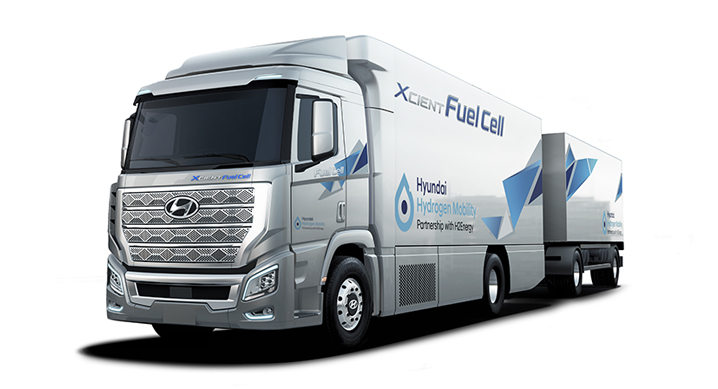
Hyundai Motor Co has shipped 10 of its XCIENT Fuel Cell hydrogen trucks to Switzerland to mark the country's first exportation of hydrogen-powered commercial vehicles.
Hyundai Motor will deliver 40 more of its hydrogen fuel-cell electric trucks to the European country by year's end as part of its long-term contract.
It would export a total of 1,600 XCIENTs to Switzerland by 2025.
A single charge, which takes about eight to 20 minutes to complete, allows the XCIENT hydrogen truck to travel about 400 kilometers.
Hyundai Hydrogen Mobility, a joint venture between Hyundai Motor and Swiss hydrogen solutions provider H2 Energy, will operate the 10 hydrogen trucks.
H2 Mobility Swiss Association will put up seven hydrogen charging stations by December and another 73 by 2025.
Hyundai aims to penetrate the US and other European markets such as Germany, the Netherlands, Austria, and Norway.



Tesla Q2 Deliveries Lift Chinese Auto Suppliers as EV Demand Improves
Super Micro Employees Detained in Taiwan AI Server Export Investigation
Switch Seeks $2 Billion Funding at Nearly $50 Billion Valuation Ahead of Potential IPO
Chinese Copper Foil Maker Londian Files U.S. IPO as EV Battery Demand Grows
Sodexo Raises 2026 Revenue Outlook After Strong Q3 Sales Beat
Suncorp Cuts 2026 Premium Growth Forecast as Australia, New Zealand Markets Weaken
easyJet Agrees in Principle to £5.23 Billion Castlelake Takeover Offer
BHP Workers Approve New Labour Agreement at WA Iron Ore Operations
Samsung to Invest $90 Billion in South Korea to Expand AI Chip, Display, and Battery Production
Meta Cloud Ambitions Could Challenge AWS, Azure, and Google Cloud, Says Morgan Stanley
DOJ Seeks Dismissal of Gautam Adani Bribery Case, Citing Foreign Scope
Citi Raises TSMC Price Target as AI Chip Demand Strengthens Growth Outlook
OpenAI Proposes 5% U.S. Government Stake Amid AI Policy Talks
Texas Man Charged After Fatal Tesla Full Self-Driving Crash in Katy
Anthropic Tightens AI Access Controls After Reports of China-Based Workarounds
EU Chip Industry Faces Growing Risks From China Export Controls and U.S. Technology Dependence: Report 


