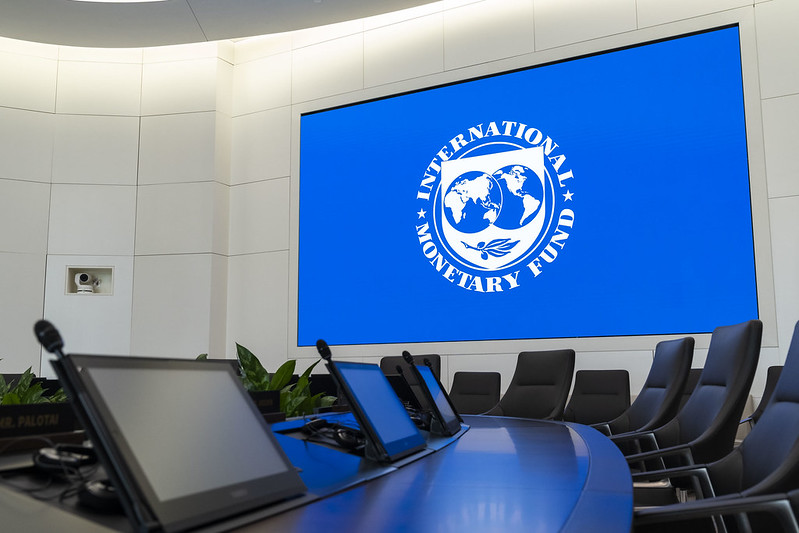
The global economy continues to show remarkable resilience despite trade tensions triggered by U.S. President Donald Trump’s tariffs, according to IMF Managing Director Kristalina Georgieva. Speaking at the IMF and World Bank annual meetings in Washington, Georgieva credited the decision by most countries to avoid retaliating against U.S. tariffs as a key factor stabilizing global growth. “The world, so far, has opted not to retaliate and to continue to trade under the existing rules,” she said, warning that escalation could have been far more damaging.
Earlier, the IMF raised its 2025 global GDP growth forecast to 3.2%, up from 3.0% projected in July, reflecting stronger-than-expected performance. However, the organization cautioned that a renewed U.S.-China trade war could pose significant risks to global output. Georgieva added that the effective U.S. tariff rate has been lower than initially feared. While initial estimates placed the average rate at 23%, subsequent trade deals with the European Union, Japan, and others reduced it to around 17.5%. After accounting for exemptions and adjustments, the effective tariff burden is now between 9% and 10%, she noted.
Georgieva also highlighted that improved domestic policies and private sector reforms have supported growth, alongside corporate agility in managing supply chains and mitigating tariff impacts. However, she warned that stretched valuations in global markets—particularly in the technology sector—could test this resilience. “This is a very big bet,” she said. “If it pays off, we’ll see higher productivity and growth. But if not, the consequences could be serious.”
IMF Chief Economist Pierre-Olivier Gourinchas added that while the ongoing AI investment boom could trigger a correction similar to the 2000 dot-com crash, it is unlikely to cause a systemic financial crisis since it is not heavily debt-driven.