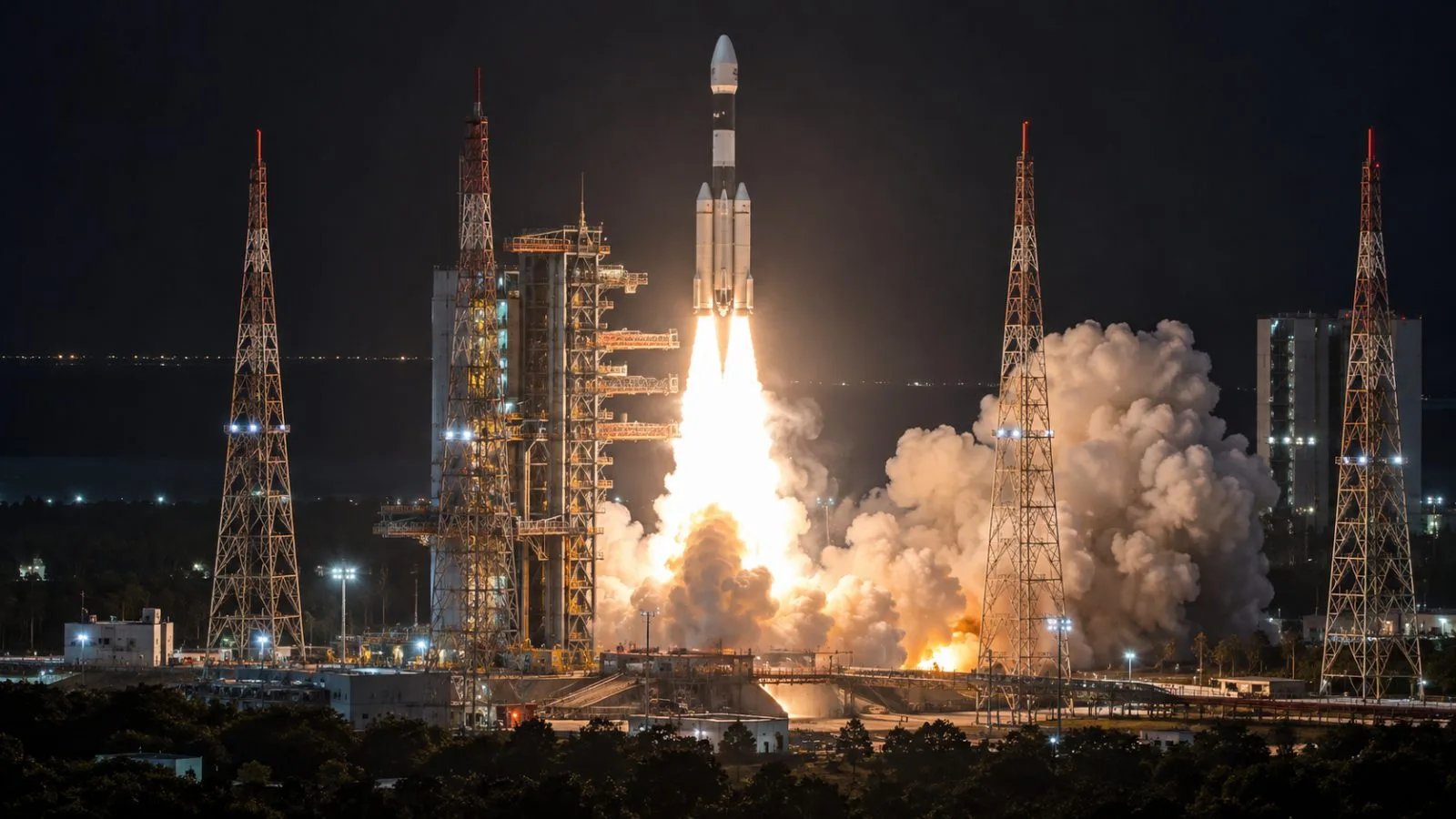
India’s GSLV-F18 rocket placed NVS-03 in geosynchronous transfer orbit Friday, a milestone for the Navigation with Indian Constellation (NavIC), India’s regional positioning, navigation and timing system.
The Indian Space Research Organisation (ISRO) said the mission was the 20th flight of the Geosynchronous Satellite Launch Vehicle (GSLV). The rocket lifted off from the Second Launch Pad at Satish Dhawan Space Centre in Sriharikota. Liftoff occurred at 2:21 p.m. ET (18:21 UTC) Friday, Oct. 30, corresponding to 11:51 p.m. India Standard Time listed in ISRO’s launch-day post.
ISRO identifies NVS-03 as the third spacecraft in its next-generation navigation series, intended to help sustain NavIC services. The system’s primary service footprint reaches across India and into a surrounding zone about 1,500 kilometers beyond the country’s land boundary, the agency says.
The satellite carries an atomic clock developed in India as well as procured atomic clocks. ISRO says NVS-03 carries an L1 signal alongside NavIC’s L5 and S signals. The agency confirmed the orbit placement but gave no date for the start of operational service.