


 Asian Stocks Rise as Bond Yields Ease Ahead of U.S. Inflation Data
  Nvidia China Chip Sales Report Sends Chinese Semiconductor Stocks Lower
  ECB May Stop Rate Hikes After December, Capital Economics Says
  Asian Currencies Mixed as Yen Slides on BOJ Rate Signals
  Fed Unveils Stablecoin Rules Under GENIUS Act
  Trump Demands Powell Resign Over Fed Renovation Cost Overruns
  BOJ Set for 25-Basis-Point Rate Hike as Yen Weakness Fuels Inflation
  Gold Prices Slip as High Treasury Yields Weigh on Bullion
  Dollar Eases Near Two-Month High as Yen Rebounds
  India Manufacturing Growth Hits Seven-Month High in September
  South Korea Exports Surge 83.5% on AI Chip Boom
  Fed Unveils Stablecoin Rules Under GENIUS Act
  Oil Prices Jump Nearly 3% as Iran Holds Firm on Hormuz Conditions


 Add as a preferred source on Google
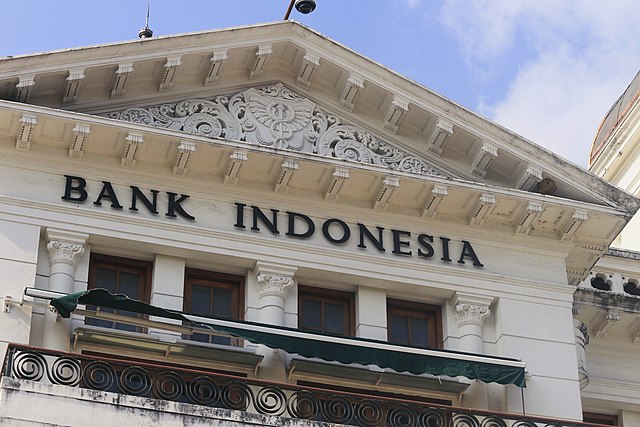
Bank Indonesia will reduce its secondary reserve requirement from 5% to 4% starting in June, freeing up 78.45 trillion rupiah (approximately $4.84 billion) in liquidity for banks, a move aimed at boosting loan growth and economic expansion. The policy adjustment was confirmed by Solikin M. Juhro, head of macroprudential policy at Bank Indonesia, during a press conference on Monday.
The central bank had announced the reserve cut last week, alongside its third benchmark interest rate reduction since September, signaling a more accommodative monetary stance to support Southeast Asia’s largest economy. These steps reflect Bank Indonesia’s ongoing efforts to provide monetary stimulus as the country grapples with global economic uncertainty and seeks to maintain growth momentum.
Additionally, Bank Indonesia will raise the cap on foreign borrowing by local banks from 30% to 35% of their capital, also effective in June. This increase is designed to enhance banks’ access to foreign funding and broaden their capacity to extend credit.
The twin policies—lower reserve requirements and expanded foreign borrowing limits—are expected to ease liquidity constraints and encourage stronger lending activity across Indonesia’s financial sector. Bank Indonesia’s coordinated easing comes amid a broader regional trend where central banks are turning to policy tools to stimulate domestic economies without fueling excessive inflation.
These changes reinforce the central bank’s commitment to maintaining financial system stability while supporting economic growth. Analysts see the measures as part of a broader macroprudential strategy to ensure ample liquidity flows into productive sectors, helping sustain Indonesia’s post-pandemic recovery.
The central bank’s policy shift positions Indonesia to better navigate global headwinds while promoting domestic credit growth and financial resilience in the second half of 2025.







