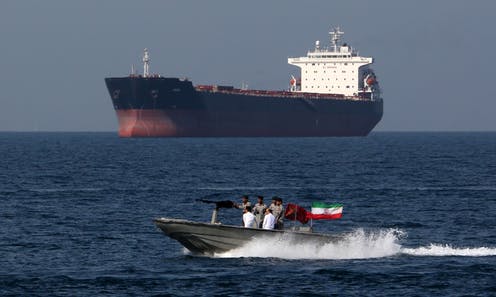
Iran said Wednesday it attacked 10 vessels near the Strait of Hormuz after U.S. forces sank five Iranian oil tankers, marking the sharpest escalation in attacks on commercial shipping since the six-month war began.
The renewed fighting rattled global energy markets, pushing Brent crude futures above $100 per barrel for the first time since July. At least one seafarer was killed and another remained missing following the maritime attacks.
Iran also launched ballistic missiles toward a U.S. military base in Jordan. Jordanian authorities said 18 missiles were intercepted, while two landed in unpopulated areas without causing damage. A U.S. official said all American personnel were accounted for.
Iran’s Revolutionary Guard warned that further U.S. attacks would trigger a stronger response. Tehran also plans to establish an expanded restricted maritime zone stretching toward Chabahar, near Pakistan.
President Donald Trump accused Iran of attempting to influence November’s U.S. midterm elections and predicted the conflict would end immediately afterward. However, the Wall Street Journal reported that senior White House officials, including Vice President JD Vance and Secretary of State Marco Rubio, have privately warned that the war could continue through the remainder of Trump’s presidency. Reuters could not independently verify the report.
The U.S. military said it destroyed five Iranian tankers overnight after the Revolutionary Guard twice targeted an American warship with ballistic missiles. Washington has now adopted a policy of striking Iranian tankers in retaliation for attacks threatening U.S. naval vessels, with 10 reportedly hit over the past week.
Iran said its forces responded by targeting two U.S. ships and eight tankers. The Hercules Star was struck while anchored off Dubai, killing one crew member and leaving another missing. Separately, the New Andros, carrying 2 million barrels of fuel oil, caught fire after a drone strike in Iraqi waters.
Shipping through the Strait of Hormuz has fallen sharply. Rystad Energy estimated flows dropped to around 2 million barrels per day from 8 million to 9 million before fighting resumed on August 30. The disruption has also driven U.S. diesel prices to a record above $5.94 per gallon.