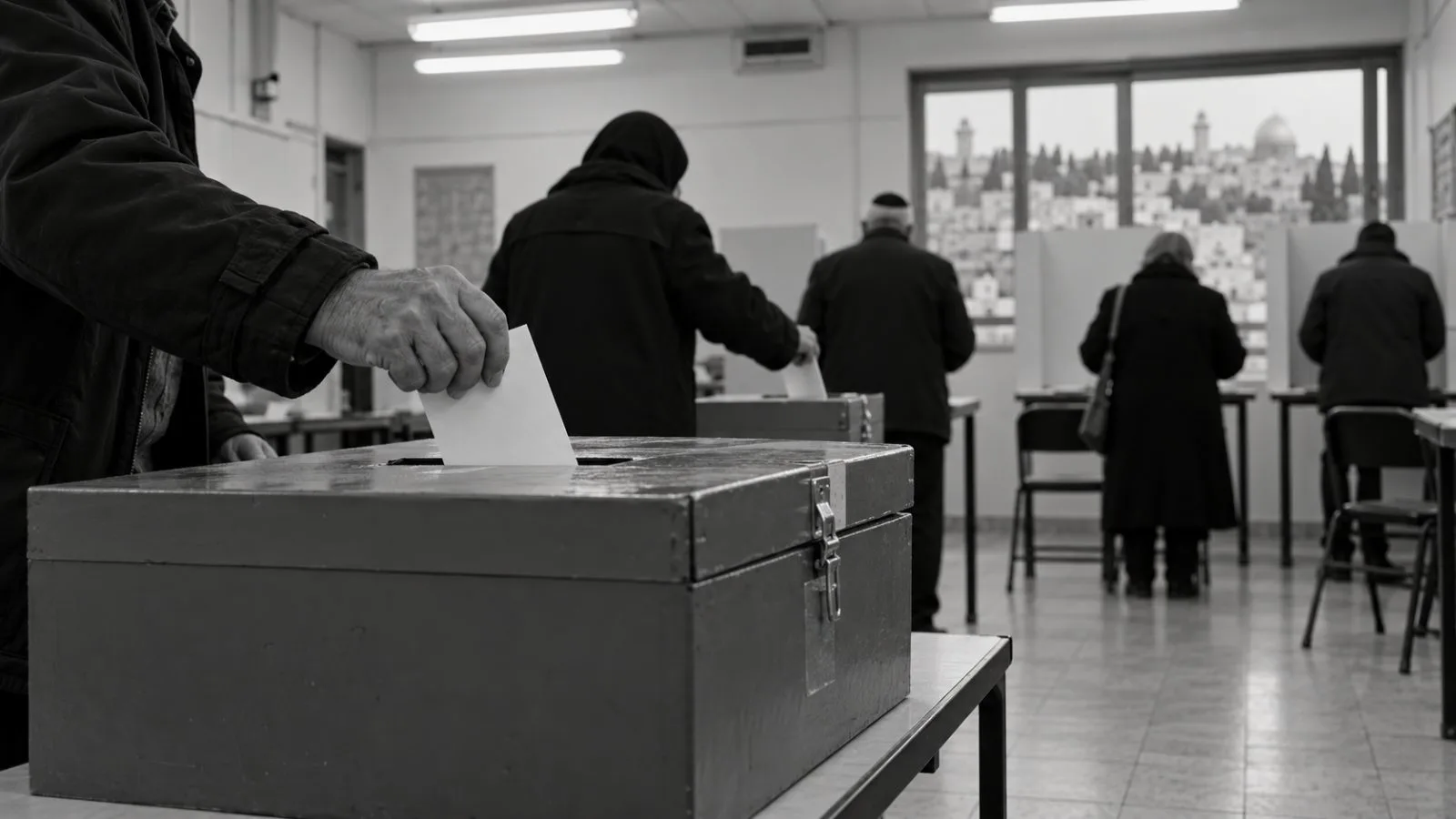
Preliminary returns from Israel’s Oct. 27 election left the path to a new government uncertain as the shekel weakened and stocks fell Wednesday, with final results due by Nov. 4, 2026.
The Bank of Israel’s exchange-rate table showed a representative rate of 3.1280 shekels per U.S. dollar on Oct. 28, 1.624% above its previous reading. The bank says the rate indicates market levels but does not require parties to use it in transactions. The higher dollar rate means more shekels were needed to buy one U.S. dollar. Reuters reported that the TA-35 index closed 1.81% lower Wednesday.
The National separately described an intraday decline of about 2% in the shekel. Its account and the central bank’s daily representative rate use different timings and measures, so the figures are not directly comparable.
The National quoted Naser Mufrej, a professor of finance and economics at Arab American University in Ramallah, as saying the election itself was not expected to determine economic effects. He said the central question is “who will form the government.”
In July, the International Monetary Fund’s (IMF) baseline put Israel’s real GDP expansion at 3.5% for 2026 and 4.4% for 2027, conditional on the ceasefire continuing. The fund said ongoing hostilities are expected to keep defense spending high and constrain labor supply. It cited military mobilization and reduced availability of non-Israeli workers as pressures on the workforce. The combination, it said, compounds long-standing structural challenges and limits the medium-term outlook.
France 24 reported that Israel’s cost of living is among the highest in the region and that rising defense spending has added to pressure on household finances. EconoTimes previously examined household economic pressures ahead of the vote.
The Central Elections Committee’s timetable sets Nov. 4, 2026, as the date for publication of election results.